


Selin Olmsted Studio

Selin Olmsted Studio

Beyond Standards Driven by Eyewear Passion

“Silmo Istanbul offers local and international brands and manufacturers the opportunity to collaborate and expand into new markets such as Türkiye, Eastern Europe, the Middle East, Russia, Central Asia, and North Africa.”

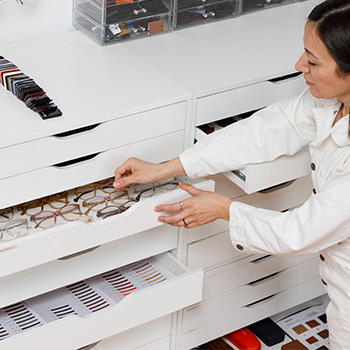
Selin Olmsted Studio was founded in 2015 in New York by designer Selin Olmsted, who stands out not only for her talent but also for her visionary identity and deep awareness in the field as the first independent eyewear design studio in the United States. At the heart of her studio, Selin Olmsted has placed a commitment to ensure that design is both aesthetically striking and commercially viable, a continuous approach to learning and growth, readiness for emerging trends and technologies, close connections with partners and eyewear artisans, the sharing of knowledge with future generations of designers, and contributions to society through social responsibility initiatives. We present an exclusive interview with the renowned designer on her perspective on eyewear, her studio, and the full scope of her creative work.

Hello Ms. Olmsted, could you introduce yourself to our readers and share the story of how you first entered the industry?
Hello, I’m Selin Olmsted and originally from Istanbul. I began my career as a menswear designer and worked in that field for over a decade before transitioning into eyewear. My path changed when I joined Warby Parker in New York—first as a freelancer, then full-time. There, I had the privilege of learning from Kenny Schwartz, co-founder of Oliver Peoples and an industry legend whose mentorship was invaluable. After nearly three years as a senior designer, I founded the first independent eyewear design studio in the U.S. Now celebrating its 10th year, our studio supports global eyewear brands with design, trend forecasting, product development, import, and production services.

How did Selin Olmsted Studio come to life, and on which core goals and values did you build your brand?
During my time at Warby Parker, I had the chance to attend Vision Expo East in New York, which opened my eyes to the creativity and originality of independent eyewear brands. Around that time, I also met Selima Salaun from Selima Optics, and our conversation really stuck with me. We talked about how the U.S. lacked formal eyewear design programs and local manufacturing, and how most designers—myself included—had entered the industry from other creative or optical fields almost by accident. It became clear that there was a gap: independent brands needed dedicated design support. That realization inspired me to launch Selin Olmsted Studio as the first independent eyewear design studio in the U.S.

What does eyewear design mean to you, and which elements most strongly influence your creativity?
Eyewear design is more than a profession for me—it feels like my purpose. When I see someone wearing glasses on the street, I imagine how the shape and color suit them, and what other combinations could create something new and beautiful. Yes, it solves a medical need, but it is also a style statement we wear on the most visible part of our faces, often for 10–12 hours a day. That gives us, as designers, both responsibility and opportunity: eyewear must fit well, look great, and give confidence. Creatively, I enjoy blending different worlds into a single design—merging sport with lifestyle, sport with fashion, or reinterpreting the dandy aesthetic with a minimal, modern lens. I also love reimagining familiar shapes through unexpected materials, colors, or details. At the same time, I’m deeply inspired by advances in manufacturing. Refinements in tooling, innovations in CNC surfacing, and multi-color lamination techniques broaden the possibilities and move the process forward.

Do factors such as functionality, facial fit, and lightness limit the creative process in your view? How would you define your design Dna?
On the contrary, these factors ensure that creativity results in something both meaningful and wearable. For us, design means resolving every angle, radius, and surface with care. The front and temple must flow seamlessly, avoiding awkward transitions, so the eye perceives harmony. Every part of the frame—even the hidden details—deserves thoughtful attention. I love when subtle elements are discovered later by the wearer, creating a personal and genuine connection. When evaluating a design, I often remind my team: Would I spend my own hard-earned money on this? Would I feel confident wearing it on a date? These questions keep us honest. Our mission is to design eyewear that evokes emotion, instills confidence, and carries a touch of magic. We also prioritize delivering the highest perceived value at the intended retail price point. And when projects allow, we explore bio-friendly materials, advanced manufacturing techniques, and sustainable packaging—because today, design carries responsibility beyond aesthetics.


What are the main advantages and challenges of working with manufacturers based in Italy, Japan, and China?
Italian manufacturers offer advantages such as low minimum order quantities, flawless polishing and tumbling in acetate, and superior color applications in injection plastics. However, compared to China, they are more limited in production innovations. High mold costs remain a challenge in Italy, and the country’s more limited production capacity can sometimes lead to delays. Japanese manufacturers excel in titanium craftsmanship and attention to detail, as well as polishing and color variety in acetate, but long lead times and design restrictions can be challenging. Chinese manufacturers stand out for fast communication, innovation, and adaptability to our requests, though their minimum order quantities are higher compared to Italy and Japan, which can pose difficulties.

In your collaborations with prestigious brands, you maintain your unique design identity while reflecting each brand’s character. How do you achieve this balance, and are there any upcoming partnerships?
We always start by putting the brand’s identity and its customer at the center of the design process. When developing a front shape, temple, or color story, we ask ourselves repeatedly: Would this customer wear it? Would they want it? Would they purchase it? Sometimes we even create or reference visuals of the customer so we can picture them clearly and design with that person in mind. The brand’s Dna acts as our roadmap—it guides decisions, helps us edit, and ensures we’re staying true to their character while still bringing our design language forward. We recently wrapped up some exciting Spring/Summer 2026 sun eyewear styles for Raen’s collaborations with world-renowned surfers Mikey February and Coco Ho, set to launch in Q1 of 2026.

How do the concepts of sustainability and environmental responsibility influence your choice of materials? Which materials stand out in your collections?
A few years ago, several of our clients began shifting from standard materials to bio-acetate and bio-based nylons such as bio-TR90. That encouraged us to deepen our own research into sustainable material options and manufacturing techniques—not just for eyewear, but also for packaging. What we’ve found is promising: while many of these materials are not yet 100% bio-based (most are around 66%), ongoing R&D is steadily improving the ratios, and we expect fossil-fuel ingredients to be replaced bit by bit over time. One material we’re particularly excited about is CRT-Acetate (Acetate Renew), developed through Eastman’s patented molecular recycling technology. It transforms discarded plastics into virgin raw material for acetate production through molecular recycling, while still giving us access to the full range of traditional acetate colors. Beyond frames, we’re also inspired by bio-based /plant-based bonded fabrics for eyewear cases, which help extend the sustainability story into packaging.


Your models Kosmos and Myrtle are truly captivating. Could you share their key features and the details that excite you most?
Kosmos and Myrtle were designed for Carla Colour, a New York-based independent fashion eyewear brand. Kosmos is a sculptural, futuristic bat-eye frame—bold, playful, and otherworldly. It was conceived to evoke the feeling of a cosmic journey, transforming how you see and how you are seen. Myrtle was inspired by Gena Rowlands’ unforgettable character in the 1977 cult film Opening Night. It’s an oversized geometric aviator with gold detailing, embracing pure drama and presence. Both are crafted from Italian eco-acetate and paired with bio-nylon lenses that provide 100% UVA/UVB protection. They come in cases made of the world’s first sustainable cactus leather-like fabric, along with 100% recycled cleaning cloths.

You present extensive and influential work on global eyewear trends. How do you prepare your Eyewear Trend Reports, and what are the key highlights you foresee for 2026?
Preparing our reports is a year-round process. We track inspiration from multiple sources—fashion runway shows, cultural movements, art, design, neighboring industries and material innovations—then filter them through the lens of eyewear. We also pay close attention to retail data and talk with industry partners to understand what’s moving in the market. The goal is to distill all of this into clear themes that not only inspire but also serve as a strategic foresight tool for brands. For 2026, we have identified several guiding themes: Sculptural, which focuses on bold architectural forms and frame structures that feel like wearable art; Sentimental, which leans into nostalgia, craft, and the imperfect beauty of handmade details; Punk Quotidien, which captures everyday rebellion with attitude, grit, and individuality; Ultralight, which emphasizes minimalism, lightness, and advanced comfort; and Surrealism, which takes eyewear into an otherworldly-like territory, playing with unexpected proportions, visual tricks, and a sense of the uncanny. When all these themes come together, we see the new year steering the industry toward eyewear that is more expressive, technically more innovative, and capable of forging a deeper emotional connection with the user

You have shared your expertise at many events, such as last year’s Silmo Istanbul Akademik. What are the main benefits of the rise in industry-specific education for the optical world?
Industry-specific education is one of the most important developments for the optical world right now. For so long, eyewear has been treated primarily as a medical device, but not always as a fashion accessory or style product. The rise of dedicated education helps bridge that gap. For optical store owners and opticians, education means gaining a deeper understanding of trends, product and material innovations, and customer behavior. This knowledge supports smarter decisions in retail. Just as importantly, it builds stronger connections with manufacturers and designers. For optical students and young designers, it shows that there is a real path in eyewear design as a career. It introduces them to the creative and technical sides of the field, helps them connect with industry players, and inspires them to bring fresh perspectives into the industry. For me personally, speaking at places like Silmo Istanbul Academik is about sharing knowledge but also planting that spark—because when education grows and connections are made, the whole industry advances together.

Silmo Istanbul Optical Fair will be held for the 12th time from Nov. 19–22, 2025. How would you assess its development and contributions to the industry?
Silmo Istanbul has grown into one of the most important platforms for the optical industry in the region. Over the years, it has expanded in both scale and influence, attracting not only Turkish professionals but also a steadily growing international audience. This creates a valuable meeting point where independent brands, distributors, major manufacturers, opticians, and designers can connect and exchange ideas. It provides visibility and opportunities for local and international brands and manufacturers to collaborate and expand into new markets, such as Turkiye, Eastern Europe, Middle East, Russia, Central Asia and North Africa.

Thank you very much for this valuable interview. Lastly, we would appreciate your thoughts on our magazine, 4 your eyes.
Thank you—it’s an honor to be included. 4 your eyes plays an important role in Türkiye and neighboring countries by creating a platform that informs, inspires, and connects optical professionals. I truly value how you combine business insights with creative directions, giving readers a fuller view of where the industry is headed while showcasing new seasonal collections from both independent brands and major fashion houses. It’s a publication that makes a real contribution, and I’m delighted to be part of it.

September 2025
Rodenstock

Rodenstock

Rodenstock Heralds A New Lightness Era With Its Frames…

For Rodenstock, ultra-lightness has become more than just a functional feature – it is now a defining element of the brand’s aesthetic vision, reshaping its identity as part of a broader repositioning.

As one of the leading representatives of German engineering in eyewear design, Rodenstock brings over 145 years of heritage to the industry, standing as both a brand and a legacy of technical mastery. Headquartered in Munich, the company is renowned for pioneering technologies in the eyewear sector, offering high-precision lenses and sophisticated frame designs. Rodenstock’s philosophy is rooted in the perfect synergy of function, aesthetics, and innovation – delivering optical excellence and comfort in equal measure. With decades of expertise in medical optics, Rodenstock has established itself as a distinctive name in frame design as well. Its eyewear products stand out not only for their advanced technical components but also for their bold, timeless forms and minimalist aesthetic language – all developed through precise engineering solutions. The brand’s collections combine the clean, understated tradition of German design with boundary-pushing details inspired by contemporary minimalism.

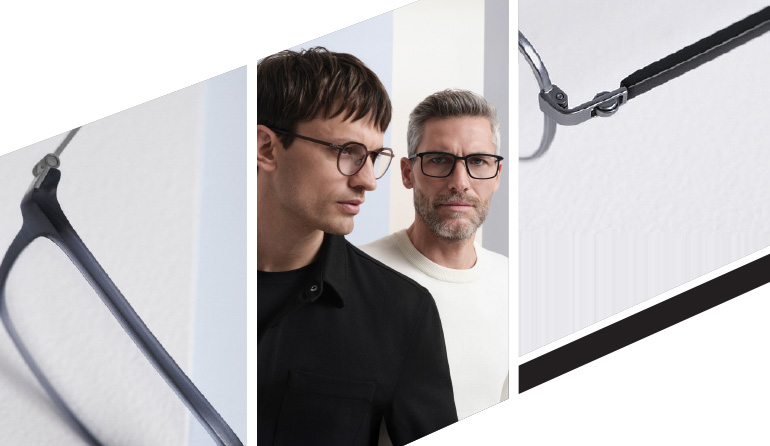
With the repositioning, the idea of lightness, which embedded in Rodenstock’s Dna, has become central to both the functional and visual identity of the brand. The guiding principle ‘Form Follows Lightness’ informs every design decision – from the use of various titanium alloys and flexible hinges to screwless constructions and semi-transparent color palettes. Every detail is carefully developed to ensure the frames integrate harmoniously with the face, complementing the wearer’s personality rather than overpowering it. Each Rodenstock collection reinterprets the motto “Design is simple – but never ordinary.” The dynamic silhouettes of the Loop collection resonate with younger audiences, while Orbit’s rimless constructions reflect Bauhaus thinking. InfiniTec, on the other hand, highlights visible engineering details with bold precision. We present the interview with Head of Design and Engineering Benjamin Heirich about the brand’s design philosophy and the technical and stylistic implications of its new products.

Hello Benjamin, Rodenstock is currently undergoing a repositioning. What’s driving this strategy?
As part of this strategic repositioning, we have redefined the Rodenstock brand with a clear design language, a structured collection framework, and a long-term outlook. At the heart of our design process lies the principle ‘Form Follows Lightness’ – our entire development is driven by the ambition to design ultra-light eyewear. We combine minimalist aesthetics with maximum lightness in pursuit of this goal.

Rodenstock puts a strong emphasis on technology and data-driven innovation. Would you say this is typical for a German premium brand?
Absolutely. German premium brands are globally associated with precision and quality. This concept of “German engineering” is deeply embedded in our product philosophy. Our approach is defined by efficiency, perfection, and engineering excellence – values that are reflected in every detail of our frames. Thanks to our comprehensive database, we’re able to analyze technical parameters and ensure optimal fit and maximum comfort in our designs.

You often refer to a ‘new era of lightness’. How is this concept translated into practice?
It means developing eyewear that is exceptionally featherlight – because less weight translates to more comfort. Our entire focus is on achieving physical and visual lightness. By utilizing advanced technologies and new materials, we create ultra-lightweight designs that strike a precise balance between material selection, construction, and design. Our core promise is maximum comfort – because ultimately, what wearers care about is a frame that feels almost invisible on the face.

How does the idea of ‘lightness’ influence your frame design?
Lightness informs every aspect of our design approach. We use reduced forms, clean lines, and simplified shapes to achieve a timeless aesthetic. At the same time, we optimize material usage without compromising durability. By working with ultra-light materials like titanium and RXP®, we significantly reduce overall weight. Transparent and semi-transparent colors reinforce the sensation of lightness, both visually and physically. Innovations such as screwless hinge systems and exposed flex zones further enhance comfort. As a result, our minimalist frames integrate seamlessly with the face and bring forward the personality of the wearer.

How do you address aesthetic considerations in your collection design process?
Our design guideline is “Pure Aesthetics,” inspired by Bauhaus and minimalism. This principle shapes our timeless, stripped-down visual language. Our frames unite function and lightness and are characterized by a modern, enduring design approach. Through our collections, we offer users a refined experience of lightness, invisibility, German-engineered precision, and advanced ergonomics.

Materials play a key role in the overall weight of eyewear. Which materials do you typically work with?
We often combine materials to achieve the optimal balance between stability and comfort. In our in-house prototyping lab, we constantly test and refine materials to push weight reduction even further. This process is central to our pursuit of maximum lightness. Titanium and RXP® are our key materials. For nose pads, we exclusively use medical-grade silicone, which is skin-friendly and available in various forms to ensure ideal comfort.

Which types of titanium are used in which parts of your frames?
We use specific titanium alloys depending on the part of the frame to ensure the right balance of strength, flexibility, and precision. For example, we use pure titanium in the front, bridge, and endpieces because of its durability and strength. Beta titanium, known for its high flexibility, is used in the temples and rimless designs. Nanometer titanium is used in the spring hinge components, where both precision and function are paramount.

What makes RXP® unique, and how do you incorporate it into your designs?
RXP® is a high-tech polymer developed in Switzerland, recognized for its exceptional lightness and durability. That’s why we use it to manufacture slim-profile frames. It’s also skin-friendly and easily adjustable, making our frames particularly comfortable for daily wear.

The Loop, Orbit, and InfiniTec collections are especially popular. What sets them apart?
Each collection has its own distinctive design language and technical innovation. Yet all Rodenstock frames share key attributes: high comfort and individual adjustability. Loop features advanced engineering with a precision hinge and temples made from pure titanium, offering strength, lightness, and durability. It’s especially popular among younger users who appreciate modern design. Orbit stands out with its screwless construction, which requires no maintenance. It draws on Bauhaus principles and circular geometry. Made from ultra-light materials like RXP® and titanium, the rimless model from this series received the German Design Award 2025. InfiniTec focuses on making technology visible. The exposed flex hinge is both a functional and stylistic highlight. The spring component is made from nanometer titanium to guarantee the highest level of precision.

Thank you fort his valuable interview. Finally, could you describe the target audience for Rodenstock?
Our repositioning has helped us define our target audience more clearly. We primarily address men aged 35 and older who appreciate high-quality, durable products and precise engineering. Comfort is a top priority for them. Their style leans toward timeless, pared-back, and functional design.

Source: Spectr

August 2025

Paloceras

Paloceras

The Rising Star

Paloceras, which prioritizes creative aesthetics over function in eyewear fashion, has begun to draw significant attention with its striking innovations in both design and production techniques.

YThe emerging eyewear brand Paloceras has been quietly yet steadily making its mark on the global fashion map since its founding in 2022. Last month marked a major milestone for the brand with a high-profile launch in New York, showcasing two new silhouettes added to its widely admired Pebble collection, alongside a striking array of new colours and combinations across the entire range. This impressive debut further cemented Paloceras’ place in the global eyewear scene. We are pleased to present an interview with Paloceras co-founders Mika Matikainen (Creative Director) and Alexis Perron-Corriveau (Design Director), where they share insights into the brand’s origins, its pursuit of innovation, and the unique design philosophy that sets Paloceras apart.

What were you working on before starting Paloceras?
Alexis: I grew up in Montreal and began my career as a woodworker, creating bespoke furniture and architectural pieces. That hands-on experience led me to pursue product design at university in Montreal. After working locally, I felt the need to look beyond Canada and applied to ECAL in Lausanne to study in the Master’s program in Design for Luxury & Craftsmanship. That’s where I met Mika. We both completed the program, and from there, Paloceras began to take shape.

Mika: My background is in digital design. I had been working as an art director at an advertising agency in Finland, and later with tech companies, mostly in digital product design. After years of working in digital environments, I started longing for something more physical. While living in London during a COVID lockdown, I took a walk with a designer friend and we spoke possible futures and a Swiss design school ECAL came up. I applied, was accepted, and that decision shifted everything. Alexis and I met there. I was coming from digital, seeking tactility, while he was coming from craft, interested in digital. Our skills were complementary, and we felt it made sense to try something together, though we had no fixed idea of what that would be. Toward the end of the programme, Alexis began exploring sunglasses in his thesis. We started prototyping and eventually committed to making eyewear. We had no idea how complex the field would turn out to be.

How did you come up with the name Paloceras and begin to build the brand?
Mika: Once we decided to do something together, we needed a name. I was still living in Switzerland at the time and one day, while walking through a park, I saw butterflies. I started thinking about the Latin word for butterfly, Rhopalocera. I removed the “Rho,” added an “s,” and checked availability. To our surprise, everything was free – domains, handles, all of it. I called Alexis immediately.

Alexis: We met at a small African café in Lausanne and decided that was it. We registered the name right there. That was even before we had thought of the Pebble collection.

The Pebble collection quickly gained attention in fashion circles. Was that the goal from the beginning?
Mika: We wanted to approach eyewear as a functional object with emotional and aesthetic impact. The category often views itself through a technical or optical lens. We wanted to see what would happen if we looked at it through fashion. I have always been interested in the point where design, technology and business meet. For me, staying in one of those domains would not have been enough. With eyewear, it was not just about designing something new. It was about building something with a broader creative ecosystem. We now collaborate with artists, especially through our London atelier, where we craft bespoke designs. These partnerships allow other creative visions to exist within Paloceras, which makes the brand more than a product, so it becomes a platform.

Alexis: It began as a creative experiment, but always with the ambition to connect with people. My Master’s thesis focused on sunglasses and their cultural significance. What I realised was that the eyewear world is full of gatekeepers. There are few independents, and it is a difficult industry to break into. That challenge pushed us further.

How long did it take to develop the inflated acetate aesthetic, and where are the frames made?
Alexis: It was a long journey. We set out to make something that felt unfamiliar in a category where most designs seemed too similar. While we are not claiming to reinvent eyewear, we wanted to create shapes that would be immediately recognisable as Paloceras. We experimented with acetate and used physics software and digital tools to explore unconventional forms. That led us to inflated shapes. We reached out to manufacturers in Italy and France, both close to our base in Portugal, but the technology to produce the shapes we wanted was not available. Eventually, I travelled to Shenzhen, where we found a small, highly skilled team with the right capabilities. Their process uses a moulded approach closer to injection moulding, specifically adapted for acetate. At the time, this technique wasn’t available in Europe, and even now, it’s far from common. The real expertise still lives in Shenzhen, so we had to go straight to the source. The moulding process requires different machinery and skills compared to traditional acetate manufacturing. This combination of design intent and technical execution is what allows us to push boundaries. I have visited the team in Shenzhen several times. It was important for us to see the production first-hand, to understand the working conditions and ensure they met our standards. We are transparent about our partnership there because the work is excellent and the collaboration is strong.

You recently introduced two new shapes: VX Aviator and DX Diamond. What led to these designs?
Mika: The collection started with one square and one round shape. That was never going to be enough. Aviators and cat-eyes are popular, but we wanted to reimagine them through our own language. Colour has been a big part of our evolution this year. Beyond classics like black and tortoise, we are introducing dual laminations and full tones based on our own experiments. Some are made using Mazzucchelli’s custom laminates, others we developed ourselves by combining different magnetic colours. It is a big leap forward for the Pebble collection.

Alexis: There is a delicate balance between making a sculpture and making something wearable. That tension drives us. The Aviator is bold and recognisable. The Diamond has an angular, edgier character. It nods to the cat-eye but is more neutral. We want our pieces to be for everyone, so we avoided a fully feminine silhouette. These new shapes also respond to what people have been asking for – more variety, new forms, and more colour.

You are based between Portugal and Finland. How does that structure work for you?
Mika: Most of our team is in Finland now. Alexis is still based in Lisbon, where we do the biggest part of our prototyping and have the design studio.

Alexis: Portugal was the original home of the brand. For the first year, everything was developed there digitally. When Mika returned to Finland for family reasons, we adapted and found a rhythm that works for us both.

What’s the next goal for Paloceras? Should we expect any surprises?
Mika: We are preparing to unveil our first optical collection.

Alexis: Development is already under way. We plan to present the collection in September at Silmo in Paris. Having an optical line is important for our retail partners. These new pieces are designed for everyday wear, while keeping the same creative ethos as our sunglasses.

Source: Eyestylist

July 2025

Design Eyewear Group

Design Eyewear Group

Courage in Design

Claire Ferreira, Co-Creative Director at DEG, began her impressive career with Face à Face. “When designing eyewear, even a tenth of a millimeter can shape the overall expression. The slightest curve of a line can completely change the attitude a frame conveys,” she says.

Claire started her professional journey in 1995 at Face à Face, founded in France by Pascal Jaulent, Nadine Roth, and Alyson Magee. When the independent brand joined Design Eyewear Group in 2015, Claire continued to evolve her career within the group, marking over 15 years in the industry. Today, she serves as one of DEG’s Co-Creative Directors, contributing her distinctive voice to three of the group’s nine brands. Claire is known for her iconic designs that merge aesthetics, innovation, and individuality, creating frames that truly stand apart. In this interview, she opens up about her sources of inspiration, her creative approach, and how she turns technical limitations into design opportunities.

Hello Claire. How did your journey in eyewear design begin and evolve?
I was drawn to design early on. I first earned a high school diploma in Applied Arts, then went on to complete a BTS at École Boulle and a DSAA at Olivier de Serres. Later, I did my master’s in Product Design at the Royal College of Art in London. This gave me two very different but complementary perspectives—one sociological and conceptual, shaped in France, and one more artistic and experimental, shaped in the UK. After my studies, I began working at Face à Face as a frame designer and have been in this profession for 15 years, evolving alongside the brand. Since joining Design Eyewear Group, which currently develops and markets nine brands, I co-direct the artistic vision of three of them.

What are the main challenges you face when working on a new design?
I’d say there are four key challenges. First, there’s the need to move beyond what’s already been seen and create something truly new. Then there are technical challenges—especially when trying to push manufacturing boundaries to meet design goals. For example, I love using sharp angles in Face à Face designs, but polishing processes tend to smooth everything out. We constantly work to preserve or reintroduce that sharpness. The third challenge is market-based: as a global brand, we must adapt our style DNA to fit the diverse preferences of different regions, in terms of color, shape, and sizing. And finally, there’s the balance issue—we aim to create something bold and surprising with every new collection, but it must also be elegant, wearable, and not feel like a caricature.

How do these challenges affect your design process?
They actually fuel creativity. All of these constraints become opportunities. I remember during my master’s program, when we were asked to design with complete freedom, I sometimes felt creatively blocked—there were just too many possibilities. Constraints provide a framework in which diverse personalities can be expressed. Just like in comic book illustration, in eyewear design, even a tenth of a millimeter can alter the emotion conveyed. The tiniest bend in a line can express boldness, kindness, or severity.

Where do you draw inspiration from when designing a new collection?
Our sources of inspiration are incredibly diverse. Being based in a showroom in the heart of Paris means we’re constantly influenced by galleries, museums, and even daily street life. We follow contemporary art and fashion closely. Paris Fashion Week, the ‘Première Classe’ accessories fair in Jardin des Tuileries, and Milan Design Week are all must-attend events for us. But inspiration goes even further—we’re passionate about our work, so new ideas often emerge while immersing ourselves in the optical world.

Which model are you most proud of, and what makes it stand out?
I’m especially proud of the Sotsas model from Face à Face. It was inspired by the legendary Italian designer Ettore Sottsass. We wanted to fuse eyewear and sculpture, using Sottsass’s bold colors and playful spirit. The temple design of the frame is a reinterpretation of the cylindrical armrest he once created for a sofa. Attaching a cylindrical shape to a hinge and integrating it into the temple design was technically challenging. Aesthetically, it’s become one of our most iconic models—surprising yet elegant. We later adapted the concept into a more refined optical version, the Kyoto model.

Do you believe it’s possible to design a frame that suits everyone?
Some brands aim for universal appeal. As a designer brand, we intentionally take more risks with bolder choices—this can evoke either strong love or strong dislike. However, we are working on more inclusive, innovative aesthetics. We follow what I’d call a “universal template,” designing shapes and proportions that suit a wide range of people while still feeling fresh and original.

Beyond commercial success, how do you define success in design?
Let’s take the example of the Eames chairs. Their success lies in perfectly capturing the essence of the object. This results in a unique, iconic form combined with strong functionality. So, I’d say success in design means creating something that stands apart aesthetically while performing its function beautifully.

It can be difficult to know what suits you when choosing new frames. Any tips?
There are many factors, and some are deeply personal. But a good general tip is to make sure your pupils are centered horizontally in the lenses. If you have a larger face and prefer smaller frames, I suggest rounder shapes. Square or rectangular frames should be proportionate to your face size. If you have a slimmer face, you have more flexibility. Oversized frames instantly give a more fashion-forward look. But whatever you choose, don’t rush—it’s not just an accessory; it’s a part of your personal expression.

Design Eyewear Group operates across Denmark, the UK, and France. Do you see distinct design sensibilities in each country?
Without falling into clichés, yes—there are definite regional sensitivities. Each of our three design teams reflects this. In Denmark, form follows function; there’s a minimalist, radical design ethos—less is more. In France, the approach is more Latin, bold, and free, with strong emphasis on storytelling and concept. In the UK, the end user’s style is more prioritized, and new forms are often inspired by street fashion.

How does your global customer profile influence your product line?
We definitely take regional differences into account. In the U.S., consumers tend to prefer classic, rectangular, or butterfly shapes—less risky, more conventional styles. Spanish, Italian, and French customers usually go for longer, squarer, and more colorful frames. That’s why all our models are available in two shapes and six colors. This variety allows us to offer multiple alternatives that cater to different tastes.

Source: Parisee

June 2025

Caroline Abram

Caroline Abram

A Journey Shaped By Fashion And Design…

Caroline Abram, who offers women elegant and joyful styles, wins hearts with her distinctive approach that makes eyewear an essential part of the look.

After studying law and economics, Caroline Abram decided to pursue a career in fashion and design. She began her career in the fashion industry, working for credible fashion houses such as Balmain, Celine and Chloé before transitioning to eyewear design. In 2008, Caroline Abram launched her eponymous eyewear line, focusing on creating high-quality, fashion-forward frames that could be worn for years. With a background in fashion and a passion for eyewear, Caroline Abram has created a signature style that combines classic elegance with a modern flair. Caroline Abram Eyewear collection stems from the French eyewear designer known for her sophisticated and timeless designs. We present an interview with French Designer Caroline Abram about how she met the world of eyewear, her passion for design and what inspires her collections.

You were born and raised in the world of eyewear. Was following in your family’s footsteps inevitable for you?
Not really. In fact, in my early teenage years, eyewear didn’t mean much to me. My true passion was drawing. But my mother insisted I earn a diploma, and I was very good at math, physics, and technical drawing. So, I thought I would get my diploma and then move on to a different field. But everything unfolded naturally. I started working at my mother’s optical store, while also attending ceramic workshops in the evenings. I knew how time-consuming this business was and wasn’t sure if it was something I’d want to do for the rest of my life.

What led you to focus on design?
I felt the need to create. Honestly, everything happened quite by chance. When I was 18, I spent a year in Senegal with my father and fell in love with someone there. I had to find a way not to feel stuck in Paris. At the time, there were amazing shops in Senegal selling handcrafted beads – silver beads, Mauritius beads, wooden ones… I had the idea of creating chains to sell in my mother’s store using these beautiful beads. When I went to the beach to see my boyfriend, I would make these chains while he was working. Back in Paris, I displayed them at the store. Until I founded my own eyewear brand, I kept creating collections simply because people loved them and I enjoyed the process – it felt like play. But over time, I realized I had a passion I couldn’t quite explain. I loved drawing, painting, working with color. So, finding myself in the world of design felt completely natural.

Your first eyewear collection received widespread acclaim. How did you prepare for it?
At first, I was planning to pair my feminine chains with ready-made reading glasses. I designed a collection that only matched butterfly-shaped frames. I knew there was a market for this. But I actually saw them as “women’s glasses.” I quickly realized that when the frames sit right at brow level, they visually lift the face – almost like a mini facelift. That’s when I decided to design joyful, feminine eyewear that lifts the facial features. Even young people embraced this style right away, and I knew I was on the right path.

Why is it important for you to appeal to women? Who wears Caroline Abram glasses?
Because my glasses are a reflection of my world. To me, eyewear is jewelry, makeup, and a mini facelift all in one. I always felt that women wore rather “melancholic” glasses. I wanted them to wear eyewear like they would apply blush or eyeliner. I wanted to help them achieve a chic but understated, beautiful but not bizarre look. Any woman who enjoys playing with her appearance, her individuality, or simply her femininity can wear Caroline Abram. I work a lot with structure. My frames are usually very refined. They’re not invisible, but they adapt well to different faces. I focus on how the glasses integrate with the person and subtly enhance her beauty – even if you can’t quite explain why. Just like makeup. I don’t like makeup that looks “too much.” The same applies to eyewear. You shouldn’t see the glasses – you should see the woman behind them. That’s my entire goal.

Why is your desire to empower women so strong?
It’s purely passion – it’s part of who I am. Since I was little, I’ve always sought harmony and wholeness. I never followed trends just because they were in fashion. Like everyone else, I’ve been unconsciously influenced by visuals around me, but my style has always been my own. I wear Stan Smiths and elegant dresses; I like tight fits and loose ones – I simply enjoy being a woman. That’s why I’ve always admired the 60s. Women looked like living dolls – carefully styled hair, dresses in vibrant colors… so full of life.

Where do you draw inspiration when designing your collections?
Inspiration always comes from the material or the shape. Take nylon, for example – the moment I saw this material, I wanted to design a collection around it. I “warmed” the material with my color palette, added soft, wavy curves to the temples to bring in femininity, and used titanium to preserve its lightness. I usually design in a way that honors the material. In a talk I gave in Australia, I used a first date analogy: You work out, wear your best dress, carefully pick your bag and shoes. But once you’re at the table, the man across from you sees only your glasses all evening! Everyone laughed – but it’s true. That’s what inspires me. Every time I see a woman put on my glasses, look in the mirror, and like what she sees – that’s when I say, “This is what I’m meant to do.”

What inspired you to create a collection for children?
Just as I hoped women would feel better wearing my glasses, I wanted the same for children. Wearing glasses often affects kids emotionally, especially since they’re frequently teased at school – it’s a cliché by now. That’s exactly why I designed a children’s collection that closely mirrors my adult line. The aim was to enhance their appearance while preserving their childlike essence. I once met a little girl who got a pair of Caroline Abram glasses and was absolutely over the moon. When she went to school, everyone loved her glasses and wanted to go to the eye doctor too. She was as happy as if I had sold her high heels. That’s exactly the kind of effect I want to create. Little girls who wear glasses shouldn’t be teased – they’re already beautiful.

As the founder of a globally recognized design brand, what’s your next goal
Growth is exciting for most people, but I don’t have a specific plan for what comes next – and I’m fine with that. For years, I worked outside of my comfort zone; I had to learn the business and take each step carefully. Now, I just want to keep creating things that people love. I feel a sense of responsibility to those who connect with the brand. I want to preserve my human and family-oriented side. I have no intention of growing any bigger.

Source: Pret a Voir & Lunettes Originales

May 2025

Lapima

Lapima

Brazil’s First Luxury Eyewear

With a high-fashion approach, Lapima refines the curves and volumes of its designs through precise millimetric calculations, achieving a perfect balance between light and shadow.

Gustavo and Gisela’s inspiration focuses on capturing intricate details, describing the unique places, intangible sensations and sensual atmospheres of Brazil. They translate these elements into the poetic essence of a brand. We know that beauty often arises from the union of two different souls. Gisela brings grace and lightness, having been a dancer with a marketing degree, while Gustavo contributes his entrepreneurial spirit, holding a business degree. Together in both life and work, they founded Lapima in 2016, the first Brazilian luxury eyewear brand, quickly gaining global acclaim with features in leading magazines. Lapima is shaped not only by their personal journey but also by Brazil’s natural and architectural landscapes, its sensual atmosphere, the wind, summer, unique light, sea, and deep-rooted traditions, all of which play a significant role in the brand’s identity. Combined with their passion, these elements defined the soul of Lapima, making it one of the most significant and formidable brands to emerge in recent years. We present an interview with Gisela Negrão Assis, Co-Founder of Lapima, about the brand.

Hello Gisela. Please tell us about you and Gustavo’s background, where you come from, your origins…
Gustavo and I have been together since 2002. At that time he was already an entrepreneur with several fashion stores. We met in Campinas. We’re both from Campinas, a city in the countryside of São Paulo State, Brazil, South America. Gustavo graduated in Business and I studied marketing after spending three years in Germany and Switzerland studying classical ballet. We became business partners in 2010 after being together for 8 years and having two kids. It was only in 2014, after a successful period working together, that we started dreaming of Lapima.

What is the meaning of the name Lapima, and why did you choose it?
Our oldest, Guga, at the age of 2, couldn’t pronounce ‘Lá em cima,’ which means ‘up there’ in Portuguese. Instead, he said ‘Lapima.’ We loved the word, its meaning, and the way it sounded. In addition, it’s easy to write and read in any language, so it made sense for our brand.

How is Lapima’s dedication to revitalizing and preserving sunglass craft executed today?
When we researched the market and planned the Lapima, we aimed to create a new aesthetic for sunglasses. We wanted to be the first luxury eyewear brand from Brazil, handcrafted in our own atelier. The essence of the brand is a Brazilian way of life translated into disruptive design and high-quality products. Our philosophy is of a haute couture business. We produce on demand, we don’t waste materials, and we don’t accumulate stock. Lapima works at a slower pace. Each piece is hand-designed, prototyped, and crafted, and the process of developing a new collection can take up to one year. We know that the client can see and feel the love in each purchased frame. To be able to provide the 30 artisans working in the atelier, in Campinas, where the sun shines three hundred days a year, (of which 25 are women) a great environment, a feeling of belonging, and the certainty to be crafting a unique product, it’s absolutely priceless for us. It’s what makes us happier and happier each and every day.

What are the materials you prefer for Lapima collections?
As Lapima, we partner with an Italian acetate manufacturer that does not use petroleum acetate, but cotton-based acetate. The lenses are all certified by the European Community and the FDA. Hinges are made in Germany by a family-owned business. We don’t produce stock, because we produce by demand, similar to a haute couture house, and as I mentioned earlier, all of Lapima employees are from our local community.

You and Gustavo draw inspiration from Brazil, but also from your hearts and souls. What are your other inspirations?
Lapima reflects what we live and feel. Brazil and its unique spots are our biggest inspiration. The nature, colours, architecture, and the designers that preceded us, are all influential. We have a rich culture, and what we show is what we see. Additionally, our states of mind and surrounding feelings inspire us greatly. In an artistic, authorial process, the inspirations begin with drawing on paper, made by hand, and going through millimeter calculation, the curves and volumes of each frontal, the perfect game of light and shadow harmony. And then color comes into play, the desired tone to better serve that inspiration. Lapima has many journeys ahead; there’s much to show and discuss and we’re excited about what’s to come.

How would you describe a Lapima wearer?
Lapima was launched in 2016 in the art gallery environment, and coincidently most of our clients around the world share the same love for art, architecture, and nature. Confident women, who know what they want and have no need to express themselves through logos. Also very confident men are discovering the Lapima World, as our “X Collection” (sculpture pieces that offer longer temples and wider noses) welcomes anyone with larger features.

Source: Eyebook

April 2025

Einstoffen

Einstoffen

Avant-Garde Elegance

The independent Swiss brand has drawn inspiration from the intricate lines and curves of flowers, utilizing a unique milling technique. The result, the stunning 2025 collection, Sopraterra…

Founded in 2008 by Ramon and Raphael Büsser and Christian Gisler, Einstoffen is an independent Swiss eyewear brand known for its use of natural materials such as wood and stone, as well as its passion for experimentation and combination. Einstoffen creates eyewear and fashion for free-spirited individuals who are mindful of their surroundings and enjoy life. The brand’s products are designed in Switzerland and crafted through a meticulous process, sometimes incorporating unconventional materials or bold details. While their passion lies in natural elements like wood and stone-handcrafted to form the core of the organic and sustainable Einstoffen aesthetic-the brand is ultimately defined by its drive for experimental design. Einstoffen believes that truly groundbreaking and boundary-pushing designs emerge only when one dares to embrace the unconventional. Committed to remaining independent among other premium brands, Einstoffen welcomes 2025 with its latest collection, Sopraterra. This collection stands out with its finely crafted milling details and premium eyewear chains. Now, we present an exclusive interview with Einstoffen’s co-founder, Ramon Studer, discussing the brand’s latest meticulously designed frames from the Sopraterra collection.

Hello Ramon, you chose the name Sopraterra for your new collection. Could you tell us why?
We are a brand that values nature and especially the earth. Our philosophy is based on our respect-oriented bond with our employees, business partners and society, as well as the earth-nature. During the creation of our new collection, we wanted to create designs inspired by flowers and botany. We focused on glasses that capture and emphasize natural structures and colors. That was our starting point. Then one Friday evening, Raphael and I were sitting in a restaurant, and there was this flyer on the table for a band called ‘Sopraterra’. We spontaneously went to their concert, and afterward, it was clear that this would be the name for the new collection.

It’s really unusual. Sopraterra is a derived name, not in the dictionaries. So what do you associate with the name?
Sopraterra means “a view above the earth” to us. Our association with the name is best described in the words from our collection text: “We look upward, into the sky, into infinity. Our eyes, framed by our glasses, are the windows to our soul. Like flowers blooming toward the sun, we also reach for the light. Sopraterra, a name that evokes the beauty and fragility of existence, stands as a testament to the human desire to see, understand, and dream.” 

How does this special theme, embracing Einstoffen’s Dna, reflect in the new collection?
About two years ago, we embarked on an intensive research and experimentation process to bring our unique milling techniques to life. Drawing inspiration from nature’s flawless geometry, we skillfully incorporated the organic forms of flowers into modern eyewear design. Each model is shaped with both elegant and dynamic details, carrying the harmony of nature into our frames. From material selection to craftsmanship, we have preserved Einstoffen’s innovative spirit and distinctive aesthetic at every stage.

In what ways did flowers influence the design of your frames in the Sopraterra collection?
We draw inspiration from the intricate lines and curves of flowers. To translate nature’s organic forms and fluid contours into our eyewear, we first digitize these elements and then engrave them into our frames using precise milling techniques. Each model is shaped with details that reflect the graceful asymmetry and rhythm of flowers. These delicate engravings create a play of light and shadow, evoking a natural texture on the surface of the frames. Our color choices also draw from nature’s rich palette, infusing the collection with warm hues, deep textures, and striking contrasts for a dynamic aesthetic.

What are the biggest challenges in this technical process?
Creating our frames involves a multi-stage process. After fine polishing, the frames undergo a second manual micro-milling process, where each frame is precisely adjusted, and the milling machine is recalibrated to achieve maximum accuracy. To perfect the designs, we sometimes add laser engravings, which are then polished again for a flawless finish.

Let’s talk about the eyewear in the Sopraterra collection…
The Sopraterra collection includes 22 optical frames and 22 sunglasses, each available in 3 to 5 colors. A large part of our collection is unisex; it appeals to both women and men. Women’s models often feature fun and bold freezes, while men’s models tend to stand out for their simple and elegant lines. In addition, the Haute Couturier and Voyante models in the collection are both milled and laser engraved. These models are produced in a limited edition of 200 pieces.

Another striking feature of the new collection is your eyewear chains. What does this accessory mean to you?
Our eyewear chains are a natural extension of the collection. Using the same premium acetate as our frames and incorporating real stones creates a cohesive and harmonious look. These chains are not just functional accessories but also highlight the attention to detail that defines our eyewear.

You’ve embraced an avant-garde approach with Sopraterra. We will still see the design language of your Basic collection, right?
The Basic collection is the heart of our lineup. Even as we push boundaries with Sopraterra, our classic models remain a cornerstone of our identity. They embody timeless elegance and premium craftsmanship. Of course, we don’t compromise on the love for small details that make an Einstoffen frame unique. For us, basic never means standard or boring.

Source: Spectr

March 2025

Salt.

Salt.

Black Bear Collab

US-based Salt and the famous clothing brand Black Bear have created an exclusive collaborative project consisting of only one style of sunglasses with gold details.

Salt is an independent premium eyewear brand from coastal California that is committed to quality construction and timeless design inspired by effortless beauty. Since its founding in 2006, Salt wants its wearers to have the finest and most comfortable fitting glasses, that is timeless and lasts. The Californian brand, which has unveiled so many different collabration collections to the optical world since its foundation, now launches another high-profile partnership. The partner of Salt Optics this time is Black Bear Brand. The apparel brand, which is known for its exceptional craftsmanship and high quality products, is a perfect fit for Salt. We present the interview with Salt Optics’ Marketing & Sales Manager Brice Gollnisch about his valuable insights into the collaboration between the two US-based brands.

Hello Brice, what are the reasons why collaborations are so important for Salt Optics?
Relationships and connections with people and the highest quality craftsmanship are the values that Salt stands for, and collaboration projects are at the heart of that representation. The fact that we are making connections with people outside the industry is a great way to create unique products that are sometimes very technical, sometimes a little bit outside our Dna. Collaborations encourage us to constantly push our boundaries and strive for more.

What does a collab partner basically have to bring to the table so that you can imagine working together?
Rather than just looking at what a partner can bring to the table, we look more at the end-result we can achieve by working together. If you look back our previous collaborations with Aether, Northsails, Radford and others, whether it’s apparel, automobiles or eyewear, we have always shared the same vision with our partners in terms of quality, technique, expertise and the desire to make the best possible product.

Could you elaborate for our readers on the common values that led Salt and Black Bear to collaborate?
We have long had a deep connection with the Black Bear brand. Like Salt, Black Bear has a passion for heritage and a philosophy that reflects design, manufacturing and a relentless pursuit of excellence. We also share a common value in delivering products that last. Because longevity is the aspiration of every premium brand that wants to endure and build a lasting relationship with its users. And Black Bear and Salt aim to create pieces that will last for generations. We also overlap with Black Bear in visual language. Both Salt and Black Bear focus on timeless designs. Trends are fun but they come and go, right? So if you want your product to last, you need to go beyond trends instead of following them. That’s exactly what Salt and Black Bear are trying to achieve, and while it may seem simple, it’s a lot of work.

Could you tell us about how Salt’s collaboration with Black Bear started?
We worked with Joshua Sirlin, the Creative Director and indeed the mind behind the Black Bear brand, for some time. Already Salt has always been Joshua Sirlin’s personal eyewear brand of choice. The first project we did was a custom Horween Leather case handcrafted in the USA. After this project, as Salt team, we talked to Joshua Sirlin about the possibility of working on a custom eyewear piece. For us, human connection is a priority and the timing was right to work with Black Bear on a custom eyewear model that reflects our sensitivity to premium handcrafted works.

To what extent did Black Bear Brand get involved in the product design?
Josh had a particular style that he liked, so he took aspects that he liked and built on that. Josh Sirlin and his team were involved in the whole process. From the packaging to the smallest detail, it was a true collaboration. Allow me to actually quote Joshua here. “Designing this collaboration with Salt feels like the culmination of a journey, a convergence of two worlds steeped in the pursuit of making the best. These glasses are more than just accessories; they’re an expression of what I love about eyewear.”

In this collaboration project you focused on a single model, Sirlin. Could share the features of the model?
Just like for any other Salt piece of eyewear, we focused on the delicate balance of fit and style. The Sirlin is 100% made in Japan using the highest quality Japanese hardware. We have custom thickness transitions to ensure rigidity, durability and a proper fit. Also, like any other Salt sunglasses, we use 100% polarized optical grade CR-39 lenses offering superior optics. However there are also features that make this frame unique and that we haven’t tried before at Salt. It’s the first time we’ve used precious metals to create custom hardware! We have 24K goldplated hinges and core wires, as well as solid gold functional rivets. We have a custom temple tip etching for enhanced grip and a detectable gold inner skeleton on all 3 colors.

Black Bear Brand is a very masculine brand. Could your collab glasses also appeal to women?
Black Bear Brand is focused primarily on menswear, that is true. However, the exclusive collaboration style we developed together is very unisex. We worked to achieve a sunglass that would fit a wide variety of face shapes and sizes, and the color palette we landed on is very timeless for both men and women.

Source: Spectr

February 2025

Rodenstock

Rodenstock

‘Because Every Eye is Different’

I was really impressed with Silmo Istanbul. The fairground, the quality of the stands and the energy of the event was very high with the presence of all the
leading quality companies.

Hello, Mr. Lucas Gestin. You joined the Rodenstock Group in 2021. Could you share how you started your career in the industry, your role at the company, and what you’ve pursued during this time?
In 2021, I joined Rodenstock after spending a certain amount of time in the optical industry in Asia. I have been drawn by the company’s exceptional commitment to innovation and research & development capabilities. Moving to Munich to be part of such a storied organization was a thrilling opportunity, as Rodenstock consistently brings groundbreaking solutions to the market that enhance vision for individuals around the globe. The company’s motto, “because every eye is different,” resonates deeply with me, reflecting a genuine dedication to tailoring products to meet the unique needs of each patient. Additionally, I am particularly excited about our biometric engineered lenses, which represent a unique offering that elevates the personalized approach Rodenstock champions in this industry. Joining this team not only aligns with my professional aspirations but also fulfills my passion for making a positive impact on people’s lives through better vision. My role in the company is to enable the offer or our products in numerous markets around the world.

German optical expertise and engineering have been synonymous with Rodenstock since 1877. Could you share the company’s enduring core values with our readers?
Rodenstock embraces three enduring core values: trust, innovation and care. Rodenstock builds trust through collaboration, transparency and open-mindedness. We reinforce this trust by delivering consistent, high-quality products and keeping our promises to the end consumer. For us, innovation means striving for excellence and breaking new ground. Through innovation, Rodenstock strives to challenge the status quo and seek new solutions that go beyond current performance. Our last enduring core principle is caring, which for us means fostering a culture of respect, appreciation and responsibility. As an company, we are committed to respecting and treating every individual fairly. The most important goal of our company is to create our products to consistently meet the highest quality and standards in order to offer better vision to the whole world. These values guide Rodenstock’s mission to provide superior visual precision and comfort, and our vision to deliver unique biometrically enhanced vision experiences worldwide.

Through innovations such as the DNEye® Scanner and DNEye® Pro, what contributions has Rodenstock made to the global lens production industry, and what promises does it hold for users?
Rodenstock’s innovations, such as the DNEye® Scanner and DNEye® Pro, have significantly contributed to the global lens production industry by introducing advanced biometric technology to lens manufacturing. Rodenstock’s introduction the concept of Biometric Precision to the optical industry with the development of the DNEye® Scanner. The DNEye® Scanner measures over 7,000 data points of the eye, including its length, curvature, and refractive power. This data enables the creation of biometric lenses tailored to the individual’s unique eye structure, setting a new standard in lens customization. DNEye® Pro, on the other hand, refers a revolution in lens design. Rodenstock uses biometric data to create the DNEye® Pro lenses, which account for factors such as pupil size under various lighting conditions. This approach enhances the precision of lens designs compared to traditional methods. The integration of Rodenstock’s cutting-edge technology into the lens production process has streamlined manufacturing, reduced errors, and ensured consistently high-quality products.

Could you share details about your product portfolio, which you’ve unveiled with the philosophy ‘B.I.G. Vision™ For All’, and how these products differ from previous ones?
Rodenstock’s innovations embody the future of ophthalmic optics with its med-tech approach, combining technology, data analytics, and user-centric design. Our products portfolio serves the demands of all age groups. At this point, I would like to emphasize that in Turkey we offer Impression B.I.G Norm, Multigressive B.I.G Norm and Progressive B.I.G Norm in progressive, near vision and single vision lenses, from the B.I.G. Vision™ product portfolio. The most distinctive feature that distinguishes these products from their predecessors is the Artificial Intelligence Powered lenses in the B.I.G Norm portfolio. This is because it combines AI data analysis in real time with Rodenstock’s own algorithm “Approximate Biometric Eye Model” and conflates it with the user’s prescription to provide the most user-centered design lens. In this way, Rodenstock promises users lenses that are uniquely crafted for their eyes, an unparalleled visual experience and greater satisfaction. In addition, biometric lenses provide users with up to 40% sharper vision, especially in peripheral areas, compared to conventional lenses. They enhance depth perception and improve focus across all distances. B.I.G Norm personalized lenses reduce visual fatigue and ensure better adaptation, even for first-time wearers. They address specific needs like night vision challenges or dynamic viewing in multifocal lenses.

Why have Myopia Management lenses become so popular in recent years? What solutions set Rodenstock apart from other lens manufacturers in this area?
By 2050, it is projected that nearly half of the world’s population will be myopic, making interventions increasingly necessary. This trend is driven by lifestyle changes, increased screen time, reduced outdoor activities, and a deeper understanding of the long-term health risks associated with myopia, such as retinal detachment, glaucoma, and cataracts. Rodenstock’s Unique Solutions in Myopia Management is called MyCon. Rodenstock MyCon are designed to project light onto the retina in a way that controls peripheral defocus, a key factor in slowing myopia progression. This advanced optical design reduces the stimuli for axial elongation of the eye. Studies have demonstrated that the lenses can reduce the progression of myopia by 40%, depending on the treatment protocol. Beyond lenses, Rodenstock promotes a holistic approach, incorporating advice on lifestyle changes (e.g., increased outdoor activities and reduced screen time) to support myopia control. MyCon lenses are lightweight, durable, and available with protective coatings such as blue light filters and UV protection to address modern visual challenges.

Could you tell us about Rodenstock’s projects for 2025 and its global plans for the near future?
After a successful 2024, Rodenstock will continue to work tirelessly to make sure our products and solutions are being accessible around the globe. Rodenstock remains committed to advancing its lens technology. With B.I.G. VISION™ lenses as its flagship lens technology, representing a paradigm shift in lens design by recognizing the unique biometric parameters of each eye, we will not stop here but challenge ourselves to the next level of AI lens evolution! Rodenstock plans to unveil next level B.I.G. Exact™ Sensitive in Mido 2025, the world’s first spectacle lenses optimized for individual visual sensitivity and biometry. It’s the next generation lens of the highly precise B.I.G Exact Lens which is possible with only DNEye® Scanner machine providing the sharpest and unmatched biometric precision. Now with B.I.G. Exact™ Sensitive, Rodenstock have leveraged their extensive knowledge, experience, and data to delve deeper into understanding visual sensitivity which helps your brain & vision coordination to see more of the world. Other technological advancements in diverse areas can also be expected!

With the change in your distributor partnership in Türkiye what innovations and contributions do you aim to bring to the Turkish optical industry and optical stores?
We decided that our best business partner in the new distributor change in Türkiye would be Cemfa Optik. Cemfa, an optical family business, has been manufacturing and importing spectacle lenses in this sector for over 38 years. We saw that they organized really good, detailed trainings for both ophthalmologists and opticians on optics in the name of the profession. Since the team is quite experienced and well-informed, we believed that they would tell our B.I.G Vision products to opticians in the best way possible and all these happend in short time. We have a very good cooperation in Türkiye I hope we will be together with Cemfa for many years. We want to offer more technology, new products and training opportunities to the Turkish optical sector together with Cemfa. Our work on this subject continues without letup.

With your sectoral experience particularly on the Asia-Pacific region, how would you evaluate the current state and near future of the Turkish optical industry?
The Turkish optical market is a developing market. Every year millions of people become presbyopic in this country. The demographic structure of the country is getting older. The rate of using lenses is increasing every year. We believe that Rodenstock lenses deserve a better place in this market. Turkey is geographically very close to Europe. As Rodenstock, we distribute lenses that we produce with superior technology and send them more quickly to Turkey.

You attended the 11th Silmo Istanbul Optical Fair, held in collaboration with Silmo. How would you describe your experience at Silmo Istanbul, its growth over the years, and the value it brings to the industry?
It was my first time at Silmo Istanbul Optical Fair. I was truely impressed by Silmo Istanbul. The fairground, the quality of the stands and the energy of the fair was quite high with the presence of all the leading quality companies in the sector. I believe that it would be very appropriate to organize more events for opticians to show interest in the fair. It is also very important that the fair strengthens the support it has started to give to open sessions and sector trainings. I think that better representation of opticianry students at the fair will be a valuable support for the Turkish optical sector. I wish the Silmo Istanbul team success in the new fairs.

January 2025

OptiSwiss

Optiswiss

Swiss-Made Precision

Silmo Istanbul reflects the vibrancy of the Turkish market and meticulously highlights its role in shaping the future of the optical industry.

Optiswiss stands out as a premium, independent Swiss brand with a focus on quality, sustainability and innovation. Founded in 1937, the company collaborate with universities and research institutions to drive innovation and conduct market-relevant wearer trials, ensuring that its products meet the highest standards and customer expectations. Optiswiss’ facilities use renewable energy, recycle water through advanced closed-loop systems, and reduce waste by repurposing production materials. By combining sustainability and profitability, Optiswiss continue to strengthen its position in competitive markets. We present our exclusive interview with Frederik Zimmermann, Director Business Development & Global Expansion, about this respected Swiss lens manufacturer.

How did your journey that brought you together with a deep-rooted Swiss brand like Optiswiss begin?
My journey with Optiswiss began earlier in 2024, leveraging my long-time experience in global business development and distributor partnerships in the optical industry. Optiswiss’ commitment to sustainability, precision, and Swiss-made quality resonated strongly with my professional values.

Could you tell us about the products you produce with Swiss engineering in Basel?
Optiswiss produces a comprehensive range of lenses, including single-vision, progressive, sports, and specialty lenses, all manufactured exclusively at our Basel site. Our production facilities use 100% renewable energy from Swiss providers, reflecting our commitment to sustainability. State-of-the-art automation ensures precision and quality, with thousands of lenses produced daily.

The concepts of quality, dedication, and trust tell a lot about Optiswiss. What are the principles and approaches internalized by the brand?
Optiswiss upholds quality through rigorous production standards, sustainability initiatives, and continuous investment in cutting-edge technologies. Dedication is reflected in our collaborations with industry partners, which strengthen our innovation capabilities. Trust is built through transparent business practices, reliable delivery, and a clear focus on the well-being and equality of employees, as evidenced by our CSR certification and initiatives.

With which innovative technologies do you make a difference in the sector as Optiswiss? How do you ensure product quality standards?
Optiswiss sets itself apart by combining expertise in lens production with innovative solutions. For instance, Biometrics lenses are tailored to individual anatomical measurements, offering unmatched personalization and visual performance. Additionally, ‘Smyle’, a specialized lens for myopia management, represents a key innovation. We adhere to stringent ISO standards across our production processes and, in some cases, set tolerances that exceed these norms, ensuring exceptional precision and reliability. The premium quality is ensured through rigorous testing and leveraging feedback from customers and partners.

Today, responsible production has become a duty for sustainability… What methods does Optiswiss use in responsible production?
Optiswiss is deeply committed to sustainable practices. Innovations like heat recovery for building heating and the use of eco-friendly materials in marketing and logistics are just a few examples of how we integrate sustainability into every aspect of our operations. Achieving CSR certifications like RSE-Engagé underscores our dedication to these values.

What kind of work do you do in your product developments in order to turn the competitive conditions in lens production in your favor?
Strategic partnerships and customer-centric innovation are central to our development efforts. For instance, our collaboration with IOT and Brian Holden Vision Institute resulted in SMYLE, a lens designed to address the growing need for myopia management solutions.

How does feedback from your users affect your innovation processes?
Feedback plays a central role in shaping our innovations. For instance, the demand for high-quality, sustainable products has driven advancements in our coatings and lens designs. Collaborations with partners and opticians also provide valuable insights that help us refine our offerings, ensuring they meet both current and future needs.

Which technologies and trends do you think will come to the fore in lens production in the near future?
The lens production sector is moving toward sustainability, digital integration, and personalized solutions. Technologies like myopia management lenses and advanced progressive designs are becoming more prominent. Partnerships, such as ours with IOT, are key to staying ahead by driving innovation and ensuring a competitive edge in an evolving market.

Which strategic steps are you taking to position Optiswiss brand in the global arena?
Optiswiss positions itself as a premium, independent Swiss brand focused on quality, sustainability, and innovation. Strategic collaborations enable us to offer exclusive technologies and differentiate ourselves globally. Participation in major trade fairs, such as Silmo, combined with our CSR commitments, further enhances our visibility and positions us as a trusted partner in more than 20 countries.

Could you tell us about your plans and goals with your new distributor in Turkey?
Our partnership with Opka Optik marks a significant step in expanding Optiswiss’ presence in Turkey. By combining our expertise with their market knowledge, we aim to offer innovative campaigns, robust training programs, and fast, sustainable delivery services. Dealers can expect exclusive access to cutting-edge products and support, enhancing their competitive edge in the market.

What are your comments on the development of the 11th Silmo Istanbul Optical Fair and the values it adds to the optical industry?
Silmo Istanbul Optical Fair has grown into a key event for the optical industry, fostering innovation and collaboration. For Optiswiss, Silmo Istanbul is an opportunity to showcase our 100% Swiss-made precision, sustainability initiatives, and new technologies developed through strategic partnerships. Silmo Istanbul reflects the vibrancy of the Turkish market and meticulously highlights its role in shaping the future of the optical industry.

January 2025