

Mykita

Unique and Sophisticated

Choosing new materials and technologies, finding new structures and producing them in a unique way, with its own methods and identity, defines Mykita’s Dna.

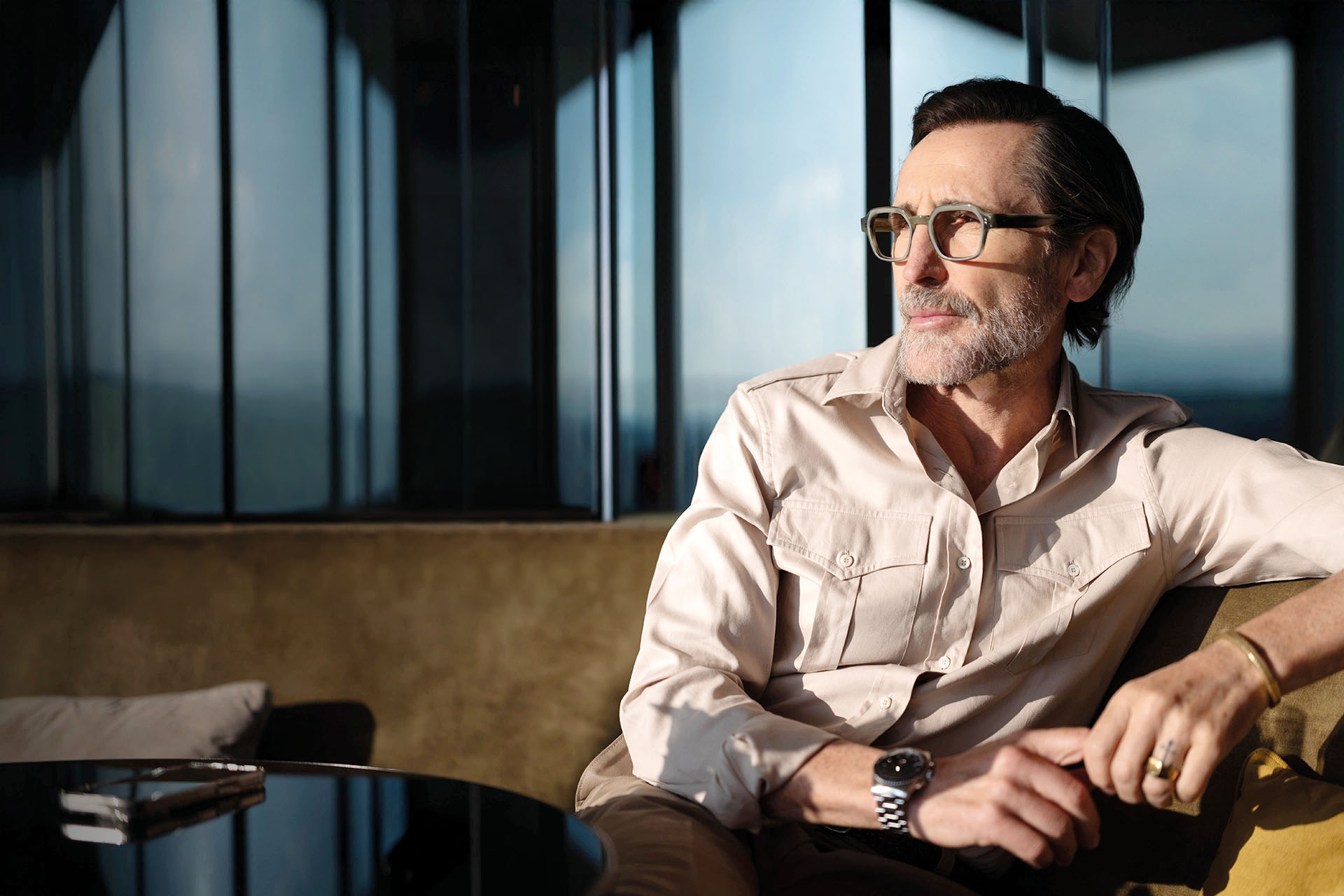
Berlin-based Mykita, one of the world’s best independent eyewear brands, continues to unveil its unique and sophisticated collections without compromising its Dna. Mykita, which prepares every collection from design to production in its own kitchen, has crowned its 20th anniversary with the Silmo d’OR 2023 Responsible Company award. We interviewed Moritz Krueger, Ceo and Creative Director of Mykita, about this meaningful award and much more at the Silmo Istanbul Optical Fair held between November 23-26, 2023.
Hello Moritz Krueger, Mykita is 20 years old and one of the best independent brands in the world. What motivated you the most when you started your brand? When you look back, did you make all your dreams reality?
First of all, I take it as a compliment that you think we are one of the best independent brands in the world. Thank you very much. I also know that you have been following our development for a long time, which is really great. I think our motivation for the foundation was born out of a pure desire to create our own brand and to reveal our autonomy, to make our own decisions, to find an unconventional path in the world of eyewear. As for the question of have we realized our dreams and goals, I think you always have to keep dreaming and keep evolving in some way. So it’s a never-ending, never-ending thing. But we didn’t get to where we are now with a grand strategy and forward thinking like the next step, so I would say that Mykita’s development has been an organic journey. When our dreams came true, we had the chance to work with so many great people around the world and customers who share the same passion as us.

What would you say if we asked you to describe the Dna of Mykita?
Well, I would say we are a wild child in a way. So we want to find our own way instead of accepting somebody else. So I think the foundation of the company is really based on the fact that we are self-producing, and the fact that we are self-producing has always been maybe the biggest inspiration for us to develop further. I call it our kitchen where we do our own production, so new technologies, choosing new materials, finding new structures and constantly trying to really innovate and do things in our own way and in our own unique way with our own identity; that’s the Dna of Mykita. I think it’s very rare to have everything integrated under one roof. From the idea to the design to the production, I think we work in a really, really integrated way.
As a world-renowned eyewear designer, are your sources of inspiration constantly changing? What inspires you the most to design?
I think the reason why our inspirations vary is again, first of all, to understand what’s going on in our kitchen and to try to make sure that we’re constantly renewing our ingredients and finding more and more things that we can use for eyewear. And there is no such thing as a primary source of inspiration. Because yes, I have my inspirations, but you know, I have a great team and design team working with me. We all have our individual talents. When we design our eyewear, we try to look at the world, we try to see what is needed in each market. But of course from a more conceptual point of view we are trying to reach new aesthetics that are some of the more surprising ones, but it has to do with working with materials and trying to identify new options in production for us as well. So it’s really goes hand in hand.

Let’s talk about Mykita’s latest collection and the highlights of the models…
Obviously the two years of Covid were important. We tried to focus on ourselves and rebuilding the foundation of the organization, so that we could launch new products and collaborations again, so we created our last collection to celebrate what we have as Mykita, so looking at the other collections that we have presented over the decades from our first collection, we created a collection that has a real consistency with our code software and our Dna, without trying to find new ways of expression and aesthetics.
You crowned your 20th anniversary with the Silmo d’OR 2023 Responsible Company award. What are your thoughts on this and will your sustainability projects gain momentum in 2024?
Yes, absolutely. We were very excited when we heard that Silmo was giving an award for sustainability and Corporate Social Responsibility, because you know these issues have been very important for Mykita from the very beginning. We produce our own products, we source our own materials. It’s a continuous journey and we are constantly trying to optimize and improve things. That’s why it was incredible for us to receive this award in Paris. Because this award was not given to one product of Mykita, it was given to all our employees and all our partners in a much more holistic approach.

What are your favorite sunglasses and optical glasses in Mykita collections and why?
It is very difficult for me to answer this question, because I can say that I don’t have a single favorite. I can’t have a single favorite because for us, our portfolios are a little bit like a little family. There are so many different models and the one that I really like right now, or the one that I think is very, very cool, is a collaboration with a company based in Berlin. I think it’s a really desirable model. It has a very strong stance in its design and it stands out with its material. The material is an innovation of ours and we first introduced it to the market in 2009, so the product serves as an ideal example to really explain how we developed this material, how our processes have evolved. With our partner in Berlin we have reached a new aesthetic with this product, so it’s like a real celebration of Berlin at the same time.
Should we expect surprise collaborations, collections or openings from Mykita in the new year?
I have to say very clearly that you will see surprise developments from us. But unfortunately I can’t give details yet, but I can give you a big news, even if it’s not a collaboration or an opening. We are moving to a new building. We are really lucky to have found a new Mykita House in Berlin. The new building is in the center of the city and we will move in July next year. The new building is only 10 minutes on foot from where we are now. We think it is a really great location and we believe that we are taking the right step for our future. This move is really important for us because house has always been Mykita’s manifesto.

You are represented in Turkey through your distributorship. How would you evaluate this cooperation and Mykita’s position in the Turkish market?
First of all, we are very grateful and very lucky to have this great team in Turkey. We started our cooperation in 2008, they became our customers as wholesalers. Three years later they became our distributors. Since then we have been working really closely, we are together like a family. Every year of our cooperation we try to listen to each other better, to help and support each other. I can really feel the passion and commitment that the whole team brings here, it’s something very special to me and it’s also exciting to see how well the brands are represented with the independent, big presentation at Silmo Istanbul. When I came to Istanbul, we visited about 10 or 12 clients in their stores and we had a beautiful presentation and all the stores, the clients were very happy and very excited. Everybody was talking about the future, which I think is very important and they want to understand how we can be better partners and grow together. I think in the eyewear world, where everything is somehow more and more consolidated, it’s very important to have strong independent brands that have their own uniqueness and aesthetic. I think it’s also very important to work with the best opticians to really serve the end customers in the most ideal way.
We are very happy to have you with us at Silmo Istanbul Optical Fair. Finally, could we learn your evaluations about Silmo Istanbul, which celebrated its 10th anniversary?
We are also very happy to be here. As soon as we landed in Istanbul on the second day of the fair, we attended the magnificent night you organized at Çırağan Palace. We had a wonderful night with a great concept in that beautiful building that really smells of history. For this reason, we are celebrating our 10th anniversary. Moreover, we see that you hosted a really great organization at the Silmo Istanbul Optical Fair, which I attended for the first time. Maybe this success was not so clear to you when you first started the show with your team, but you continued to dream and believe. Moreover, it is really great that your geographical location connects Europe with the Middle East and the Far East. We can easily say that Silmo Istanbul has achieved a great success with its increasing number of visitors and exhibitors in its 10th year. Silmo Istanbul continues to grow and attract attention. We congratulate you.

December 2023

Philipp Plein

Redefines Luxury

Philipp Plein offers luxury eyewear that resembles jewelry with its design, details and high quality as a result of its collaboration with De Rigo.

Founded by German fashion designer Philipp Plein, the luxury brand continues to gain worldwide acclaim for its distinctive, high quality and unique products. With its collaboration with De Rigo, Philipp Plein has proven that it is also assertive in eyewear fashion with its rapid global rise. We interview Philipp Plein, the brand’s Founder and Creative Director, about his successful De Rigo partnership, the inspirations behind his designs, the features of eyewear collections and the future goals of the brand.

You founded your brand when you were only 20 years old. What motivated you the most for this bold initiative? Could we say that you realized all of your dreams at that time when you look back from today?
Well, we have just started actually. We are expanding the brand and we started with eyewear business two years ago together with De Rigo. This partnership has been a big global success. We are very excited about this partnership with De Rigo, because it gave us the opportunity to bring our brand into a new market of optical frames and sunglasses, where we were not presented before. So as you can imagine, we have just started to expand in many new markets with new product categories. For instance, we now have also watch business, which is new to us, hotel business and now the next step will be also opening the restaurant, which we are starting from next year in Milano, and yes many more dreams are yet to come.

What does the fashion industry mean to you as a designer who has achieved great success?
Fashion is something, which never stops. Fashion is always moving very fast and changing. Fashion lives some changes. We are here to adapt ourselves. Our society is changing, our clients are changing, and the fashion is changing too. So, its something, which is very fluent and very fast.

You create collections for many product groups. Are your sources of inspiration constantly changing? What encourages you the most to design?
I always find inspiration from everywhere. You just have to be ready to led the inspiration come to you. A lot of people think that they have to travel to foreign places, but that’s not true. You get the inspiration whenever you are ready to be inspired and you can get inspired by anything. It can be a beautiful dinner or a meal, it can be just walking on the street. You can find inspiration all over the place. Inspiration is all around us.

Compared to your other products, does eyewear design require different qualities?
Yes, if you want to have a success in this business, first of all you have to learn how to translate your brand into a pair of eyewear. Eyewear design does not give you so much space. If you design a dress or a t- shirt, you have a lot of space to explore and to put your prints or designs on it. But with eyewear we have a speacial product here. It is very defined and you have to be very precise. Then of course design has to follow function and this is very important. We have to design a product, which is wearable. Because you can may be wear crazy dress, but if you put something straight in your face you have to have the comfort, the functionality and never forget it is on your face. People are very particular when it comes to their face. So designing eyewear is a really challenge, but I think we did something very well. Because we have a product, which is definitely different than the most of the other products in the market, so it stands out.

What are the main features that distinguish a pair of Philipp Plein eyewear from others?
You can just look at the details. The logo is on everywhere in small spaces. There is small logos inside the temple. Its all in the details and a pair of Philipp Plein eyewear is like a piece of jewelery. It is not even anymore just a a pair of shades, it is a piece of jewelery. When you look at the everything of a pair of Philipp Plein eyewear, you can find these features. It is really something special and of course the quality is outstanding. Because we are working with best of the best, with our partner De Rigo. We have the the best suppliers and manufacturers in the world.

You entered the eyewear industry with your collaboration with De Rigo. Could you tell us about the reasons of this choise?
De Rigo is one of the four big players in the market. De Rigo is a family company, which is very traditional and successful in what they do since many years and it is all about their approach and also the fact that they have the quality and understanding of quality which is very necessary to design outstanding eyewear. Because you can find beautiful product, but then the quality is not the same. This is why we decided to go company, which has all these features, and De Rigo definitely fullfills this. We can may be deliver the design but then you have to have right people to execute it. This is what we have with De Rigo. It is hard to find something at the moment, which is better and higher in terms of quality and design than the a pair of Philipp Plein eyewear. De Rigo also understood the vision, and applied the best the price positioning.

Yakın zamanda De Rigo ile Plein Sport markanıza ait gözlükler için de küresel bir lisans anlaşması imzaladınız. Plein Sport koleksiyonunu ne zaman piyasada görebileceğiz? Nasıl bir koleksiyon olacak?
Plein Sport çok ilginç bir proje, çünkü Philipp Plein Eyewear’dan tamamen farklı. Çok daha ticari bir yaklaşıma sahip ve çok daha geniş bir dağıtıma odaklanacak. Tasarım açısından daha demokratik. Spor bir marka ve konumlandırma açısından Oakley’e daha yakın olabilir. Koleksiyon bu yılın sonunda, gelecek yılın başında piyasaya çıkacak. Yani 2024’ün ilk çeyreğinde Plein Sport gözlük koleksiyonunu piyasaya süreceğiz ve bu bizim için çok heyecan verici. Çünkü Plein Sport markalaşma, logolar gibi özellikler açısından tamamen farklı bir proje, markanın Dna’sı kesinlikle farklı. Teknik olarak hafif çerçevelerimiz, spor çerçevelerimiz, koşmak için çerçevelerimiz, bisiklete binmek için çerçevelerimiz ve tabii ki günlük kullanım için çerçevelerimiz var. Ancak hepsine baktığımızda, işlevin en üstte olduğunu söylemeliyim.

Kasım 2023

MARKUS T

Celebrating 25th Year

Markus T, one of Germany’s leading eyewear brands, celebrates its twenty-fifth anniversary with a striking advertising campaign called 100 Seasons.

German eyewear brand Markus T is driven by an extraordinary passion for eyewear and design with technical excellence. Known as the ‘Master of Titanium’, the independent brand is constantly challenging the status quo with new technologies developed in-house. The innovative brand owes its more than forty design awards to this constant quest for progress and modernization. Markus Temming, the brand’s Founder and Creative Director, launched his first collection of titanium frames in 1999. In addition to titanium, the designer uses his proprietary material TMi, a special polyamide. After several years of research and development, TMi has become one of the lightest yet strongest polyamides among the plastic materials used in eyewear production. At 3.7 grams, Markus T frames with the combination of titanium and TMi material are absolutely lightweight. Markus Temming continues to have full control over the creative vision and product development of his brand. In addition to developing forward-looking technologies such as dyeing processes or patented and screwless connectors, sustainable production and the smallest possible ecological footprint are his and his team’s most fundamental mission. Here is an interview with Markus Temming, Founder of Markus T, who this year celebrated his brand’s twenty-fifth anniversary with the visually and design stunning campaign 100 Seasons.

Hi Markus. First of all, I would like to congratulate you for your 100 Seasons campaign, which attracted a great deal of attention. What is the reason for celebrating our twenty-fifth anniversary with this campaign?
In all industries, the twenty-fifth anniversary may represent a silver jubilee, but just calling it a silver jubilee didn’t really align with our values at Markus T. For this reason, we presented our 100 Seasons campaign, which refers to a hundred seasons, inspired by the spring, summer, fall and winter seasons that we have spent twenty-five times in twenty-five years.

What is the main message of your campaign and how do you convey this message in your campaign?
With our campaign 100 Seasons, it was our greatest wish to celebrate our birthday not just on a single day, but throughout the whole year 2023. In this twenty-five-year journey, we wanted to convey the message of how valuable our employees are to us. For this reason, we shot the 100 Seasons campaign in our own factory using our employees who have been with us for many years as models. We selected the most original ones among eight hundred almost unretouched photographs. Our campaign images will continue to be featured as black and white portraits on our website, social media, trade fair stands and PoS materials throughout the year.

Let’s take a quick look at the twenty-five-year history of your company. What do you think are your biggest milestones?
I would say that we have indeed reached many major milestones over the years. First of all, arguably one of the most important events in Markus T’s history was the ‘birth’ in 1998 with the development of Design Classic, a collection that is still in our portfolio today. Our collections, customer base, patents, design awards and headcount have grown steadily to the point where we need more space. This coincides with our move to the glass factory in Gütersloh-Isselhorst, which made 2016 another important milestone. It was a very bumpy and emotional project, often pushing the boundaries of what was feasible. Looking back, it was a very exciting time and the result is something we are very proud of.

Which materials and technologies do you think best represent Markus T?
At Markus T we rely heavily on the highest quality titanium and our proprietary lightweight plastic TMi. We have proven our expertise in both materials, from raw materials to the forming process and coloring. We perfect every step in the production process until it works exactly as we want it to. This is how we developed the patented titanium coloring process MSC in 2014, for example – a highly complex process that is still surprising us and our customers years later. MSC is the process of coating the metal with a protective oxide layer.

You create a remarkable impact in the sector with your designs. And how do you achieve this?
Yes, this is true. We want people to be able to recognize our glasses as soon as they see them, even if there is no label on the frame showing the brand. By focusing on this basic goal, we take care to use the design language that we have created uniquely for ourselves. Obviously, our frames show themselves to the users in a very ideal way. Happily, we often hear from people around us and at trade fairs that Markus T users recognize each other. I would also say that one of the reasons we stand out is that we are actively working to bring the technology to the forefront rather than hiding it.

With your new 100 Seasons campaign, we also see that you have moved away from the classic Markus T style. What are the things that have changed at Markus T?
In our twenty-fifth year, we consciously want to experiment with designs outside of what is typical for Markus T. Take for example our anniversary collection, which we raffled off at trade fairs as part of a social media campaign. As I mentioned before, we were inspired by the four seasons for our anniversary slogan. You can see the new titanium frames in the collection, carefully laser-cut. In the collection, for example, we added floral details for the spring frame. We will continue such creative experimentation throughout the year and will also include spontaneous ideas that we did not plan in advance.

So you are not fundamentally renewing your brand identity?
No, our innovative approach to these creative experiments that we have done and will do does not mean that we are turning our backs on who we are. Markus T is always open to new ideas. And this year we have chosen to be bolder and more experimental, deliberately avoiding the ‘ifs and buts’. With twenty-five years of experience, we believe it is natural to focus on innovation without changing our brand identity. ‘Achieving excellence by reducing excess’ still represents the first of our guiding principles. As Markus T, we are aware that a brand should act in accordance with its Dna even when changing direction. The genes of our Dna consist of three basic characteristics: Simple. Beautiful. Intelligent.

Could you tell us about the current state of Markus T and where it is heading?
First of all, we would like to re-emphasize that we are always changing and this is part of our Dna. This change does not mean that we blindly follow every trend. On the contrary, it means that we respond to the needs of opticians. This kind of flexibility is only possible because we manufacture our own products here in Gütersloh-Isselhorst in Germany. As a result, we have direct control over the quality of our products.

What are your favorite models from your highly acclaimed Dot Mono collection and what are their features?
What makes our popular Dot Mono collection really special is the unique hinge technology. I would like to mention three of our standout models from the collection. Although they are part of the Dot Mono collection, they also stand on their own in a way. I think the two-dimensional design of the fronts looks very cool in their simple profile. So cool that I use them myself. The shade of the rose gold 24-carat PVD coating really highlights the design and gives the frames a kind of special and elegant golden shimmer. This golden shimmer impression is inspired by the warm days we are already starting to miss. The subtle rose gold color of the satin titanium surface gives the normally technical Dot bezel a softer character and evokes summer.

What other surprises await us this year?
As a matter of fact, you may ask what you will surprise yourself with this year. Because, as I mentioned, this year is not based on our rigid planning and we will be guided by our very special and innovative ideas. We act in a spontaneous, creative and flexible way. Aware of what our strengths are, we move forward confidently and comfortably with new designs. That’s why we are as excited as you are.


Source: Favrspecs

October 2023

Face á Face

Power of Expression

Face á Face, the French designer brand known for its passionately crafted series, is inspired by the Memphis style, which breaks all codes and values the power of expression more than functionality.

Independent eyewear brands always inspire with their special stories. Because usually the companies are a bit smaller and the founders are still actively on the board. This is also the case with the French brand Face á Face. In the 90s, founders Pascal Jaulent and Nadine Roth wanted to create a modern and creative company that didn’t have to follow a predefined mold. This particular positioning, which is immediately apparent when looking at the product range, is no coincidence. Indeed, designer Pascal Jaulent, the creative brain behind the French designer brand, has his own sense of life. The resulting special perspectives on life have a strong influence on the brand. Pascal Jaulent has always had a keen interest in social issues or ethnology and actually wanted to become an urban planner. This is how he creates his designs, combining architecture and art themes. Face á Face describes itself as a chic, French and colorful high-end brand. It is no coincidence that Face á Face’s frames are developed in its own design studio. The designs resemble small, thin architectural pieces that constantly reinterpret volumes, shapes, materials and textures. Once the design language that defines Face á Face is understood, the French company’s eyewear becomes easily recognizable. After all, isn’t it the unique design language that truly defines a great designer brand, rather than fancy oversized logos? Face á Face, a premium French designer brand long known for its passionately and meticulously designed collections, has taken this attitude and turned it into a concrete motto in its new collections. The combination and interconnectedness of colors and sculptural shapes is done in Memphis style. The Parisian designers are inspired by the radical art movement of the 80s, which turned the minimalism of the time on its head. Here is an interview with Marianne Dèzes from the Face á Face Design Lab about how the Memphis style has influenced the brand’s models.

Hi Marianne, where does your love for the Memphis style come from?
The father of my Italian boyfriend, in the old days, lived in an Italian villa full of Memphis masterpieces – a crazy house! When we saw the “Memphis” exhibition in Beaubourg Museum in Paris, we rediscovered the Memphis roots and its fascinating “beautiful-ugly” atmosphere.

What are the main distinguishing features of this art movement?
Memphis is a maximalist stance against the design approach of the time, which was obsessed with minimalism and modern aesthetics. The color palette of the Pop Art movement, the geometric figures of Art Deco and the unusual aesthetics of the 1950s kitsch phenomenon inspired this movement. We can say that Memphis creates a pattern shock in reaction to the rational-minimalist dictatorship of those times. It is nonconformist, breaks all codes and values the power of expression much more than functionality.

The Memphis style is the counter-design to “form follows function” or “less is more”. Weren’t you always very close to this style with your design orientation anyway?
You could say so, but like all designers, we used to have some “rules of good taste,” such as not mixing strong patterns. However Memphis shock pushed us to try new ways to break our own rules.

The founder of the Memphis movement, Ettore Sottsass, once said “design begins where rational processes end, and those of magic start.” Does this attitude also apply to your eyewear design?
We are very much looking for this emotion as a way to validate our designs. When you like something at first sight, and you cannot explain why, you can be sure you are dealing with a strong aesthetic emotion, and that is a very exciting moment.

Which color worlds do we find in the new collections?
We enjoyed working on new purple and green combinations, black and white patterns with vivid colors, a mix of 80s and 70s colors, and daring big contrasts. We hope that you will like them.

Is there a focus on specific materials in the new collections?
Not really. It is more the art of recombining things, exploring new contrasts, but also new shades, such as duck green with smoked transparencies, deep violet shading, and burnt oranges. So maybe a spreading of 70s color in the air.

With your new collections, you appeal to the irrational and the unconventional. Which designs are special to you?
The Calder model has a titanium voluminous spiral that goes around the eyes. This concept gives a great sense of freedom and the frame seems to have been made in a single movement. But the great technical development behind it goes unnoticed. That’s why Calder is special to me. Also Gioco, which means “Play” in Italian, is one of my favorites because it evokes the playful spirit of Memphis’ basic shapes and colors. The Novva sunglasses are sophisticated and bold with sculptures, contrasts and rich transparencies.

How would you summarize the influence of Memphis on your designs?
Memphis’ theme of “elementary plays” definitely inspired us. We were looking for something between “naive childhood” and ” connoisseur knowledge” and we found it in the Memphis style.

Source: Favrspecs

September 2023

William Morris London

A British Heritage

William Morris London, which carefully carries its British identity, embraces the optical world stronger than ever after joining Design Eyewear Group last year.

Since Design Eyewear Group added William Morris London to its portfolio in Fall 2022, the British brand was showcased for the first time under the umbrella of Design Eyewear Group (DEG) at 100% Optical in the UK. William Morris London’s philosophy and brand attributes are as strong now as when it was launched twenty-seven years ago. It is still a brand that listens, adapts and sets standards. Frequently winning and nominated for awards in the optical world, William Morris London continues to present its ever-evolving original designs with the meticulous effort it puts into each collection and the British pride that runs through its Dna. We present an interview with DEG Ceo Lars Flyholm and William Morris London Founder Robert Morris about how they will develop the brand range going forward.

What does William Morris London represent in terms of the DEG portfolio? What makes the British brand different?
Lars Flyvholm: Design Eyewear Group has been building a position in the market over the last years – which is really based around our design heritage, and up until this new merger, this was very much based on our Danish heritage and French design, like Prodesign, FACE A FACE and WOOW. We had a basis and structure which therefore allowed us to take on other brands and build further, and in this search for possible acquisitions we wanted to add something different. We wanted to find a way where there was another design story and heritage which we could add on to this. Britain has an inspiring design heritage and we were attracted by the idea of adding real, authentic British design to our portfolio. William Morris London is a perfect match in terms of adding to the story of being a company focused on design labels. If you look inside the William Morris London company and what Robert and his team have established I think it has a very strong, clear identity, built over many years. From a product point of view and when we look at our portfolio, it was also filling a gap for us in terms of design and price point particularly. We have nine brands already within Design Eyewear Group, all with different targets and price points. Robert has established a very strong presence in the UK market in terms of direct sales. And this matches our organisation and our footprint worldwide – we have a strong presence in the US, and we feel there is a big opportunity over there to penetrate that market with the William Morris London Collections. The same goes for other export markets.

Could you tell us about the advantages of this merger for DEG?
Lars Flyvholm: So to summarise the advantages, there were 4 key elements that made really good sense in this merger… We have added the British design heritage, via a brand that also has a very strong identity as William Morris London. We also added a product which fitted into our portfolio with the right price and target point. Finally, we identified a real growth opportunity in markets where Design Eyewear Group has already established a very strong presence.

Do you plan to preserve the collection portfolio as it is?
Lars Flyvholm: Yes, we will offer the core William Morris London collection and the luxury William Morris line – the Black Label. Alongside them, there is also the Gallery Collection, created in partnership with the William Morris Gallery. These are the three core collections with the strong British identity. Then there is also Charles Stone New York – which has a positioning that is young, fashionable and fresh and this we consider as a second brand. We have been working with Robert and his product team in the UK and our Danish team to look at where the opportunities are here for growth and expansion. Certainly, there are plans to expand the Gallery collection in the near future, with of course a sunglasses range, which has not yet been created within this brand. The Gallery collection will see a special mini launch in August as well as an additional launch for the collection in January 2024.

William Morris London was launched at 100% Optical in the UK for the first time since the merger with DEG. Could you tell us about what your UK customers think about this merger?
Robert Morris: Yes, this is the first time that opticians here in the UK have had an opportunity to see the two companies side by side which I think is really great, it’s important – and it’s great to see that when people look at it they can really see it makes sense. There have been some really interesting conversations at 100% Optical. There are plenty of independent opticians who are buying William Morris London who might not be working with FACE A FACE or Prodesign, so they are interested to hear how Design Eyewear Group can channel that business into their stores. And vice versa. It’s important also for them to see how Design Eyewear Group have created a number of concepts to help and support independent opticians which William Morris can now offer on a broader scale. Design Eyewear Group is a real partner to the optician.

Lars Flyvholm: We have some programmes for example where we offer the opticians ways to dedicate a part of their shop to our brands within the store. We can do this with a mix of our brands. There is a financial incentive within this board programme which allows them a one to one exchange so for example if you have 60 frames from 3 of our brands you will have a rep visiting you 4 times a year – and they will be able to exchange what is not selling and optimise the board. This flexibility – and of course the financial incentive – is something that we’ve had since 2020 at Design Eyewear Group and people find it really flexible and they love the chance it gives them to try new brands. Of course, the William Morris and Charles Stone brands are now included in this programme. We also offer a loyalty programme – we call it the Ambassador programme – where if you buy more or work with more brands your benefits increase. I would also add that we are lucky that we have had no issues at all since Brexit, given our infrastructure. Everything is running very well for us. Our logistics for all brands are run out of Denmark.

Could you tell us about William Moris London’s brand history and its current position?
Robert Morris: We started out as a distribution company in 1996 called William Morris Eyewear. It was from there, that we decided to create our own brand from scratch, and that was William Morris London. From there, we saw a further demand for a more luxurious product and so we created William Morris Black Label, with a more premium price point. Traditionally, I would say around 80% of our customers have taken both William Morris London and Charles Stone New York, but this can vary from practice to practice. 90% now take William Morris London and Black Label as part of that offer.

For William Morris London, British identity is very important and we see that you carefully protect this identity.  How did you create your identity?
Robert Morris: I think product is one thing, but what is so crucial to William Morris is everything around the frame, the whole “British world” in which the collection has grown up, and all the add-ons to that such as the carefully styled POS.. At the shows in particular, it has always been great that people were able to meet the designer, to recognise the London bus which forms the basis of the stand…so it’s really important to keep the whole package alive and moving forward.

Lars Flyvholm: As we have our own team in America, we know that the story about great British eyewear will be a great success in the US moving forward. That positioning is extremely exciting. We like the fact that the branding is so strong, and that Robert is an ambassador for that. Of course, we realise also that we must ensure the brand can also standalone already, and we must find that balance…which I think comes through the design, the strength of the campaigns, which are always distinctive with colours and British details such as the Union Jack. William Morris London really has a strength here, and as Britain has this incredible recognition all over the world, we will continue to show this side of the brand’s British heritage.

Could you tell us about your thoughts on the merger of DEG and William Morris London and your future goals?
Robert Morris: The brand has to stand on its own, and I know it can, it has established itself in the UK and globally as a brand. Of course, I hope that with Design Eyewear Group the brand can be taken to a place where I perhaps couldn’t take it. I believe that with all the synergy we have this will happen sooner rather than later.

Lars Flyvholm: Certainly, we think that this merger is very good for both Design Eyewear Group and William Morris London and we will achieve great success together. We have our sights set on growth in the US, but also in Europe and in markets like France and Germany.

Source: 20/20 Europe

August 2023

Sashee Schuster

Sashee Schuster, the independent German eyewear brand with the same name as its founder and designer, dedicates its new campaign to the 1968 generation.

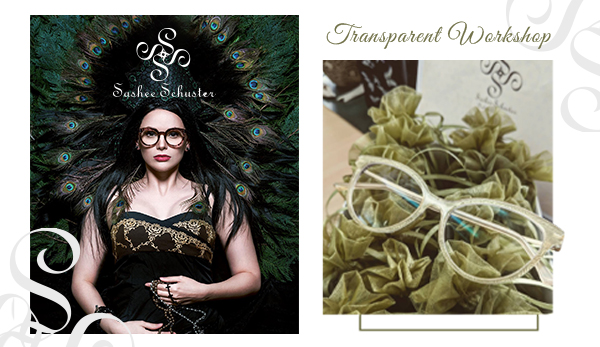
When it comes to eyewear design with an unmistakable and special finish, German label Sashee Schuster attracts attention. Founded by the eyewear designer of the same name, the independent label creates handmade acetate frames injected with real natural ingredients. The key to gorgeous frames with a recognizable look lies in a lamination technique pioneered by Sashee Schuster. It allows for incorporating elements of nature into the frames, accentuated by a form language inspired by vintage glamour. Based in the town of Kinsau, Bavaria, Sashee Schuster is part of the Funkeyewear collective of indie labels. We present the interview with Sashee Schuster about her brand and the new Spring/Summer campaign.

Hello Sashee, how did you enter the world of eyewear? How did you start designing your own eyewear?
My journey with eyewear began when I met Dieter Funk, eyewear designer and my husband, through a ‘blind date’. Since that meeting, Dieter and I have been a complete team for eyewear. With my entry into this world, I launched my first eyewear collection ‘Daddycated’ in memory of my father. My father was born in 1925 and I often felt that he was ahead of his time in many ways. Unfortunately, I lost him at a very early age. When I think back, I see the two of us foraging for mushrooms in the forest. I remember building sand castles on the banks of the Isar river, bathing in the Bibisee lake and eating traditional fruitcakes from his region. So we have a lot of wonderful father-daughter moments. I used these moments as inspiration for my first collection.

Then we can say that your father made a significant contribution to your sense of style…
From a visual point of view, old photos of my family from the 1930s to the 1950s still excite me today. Based on their stylish outfits and the shape of the glasses, I can say that they were simply stylish. Based on these vintage photos, I started to create my own design sketches. On top of that, I was fascinated by the classic frame material cotton acetate and its fantastic properties. From my love for experimentation and the idea of integrating natural materials while preserving their wonderful colors forever, I created the ‘Colours of Nature’ collection.

We know that you and your husband Dieter work together to develop the Funkeyewear collections. Could you tell us a bit about your production workshop in the Bavarian countryside?
During our rebellious years in the nineties and early 2000s, we lived together in the heart of Munich. But in 2000, we felt the desire to make an uncompromisingly radical return to eyewear design with our own production facility. So moving to our new headquarters in the small town of Kinsau was a big change for the better. We finally have enough space to prepare all of our eyewear and to create our creative ideas. We also work with the best eyewear manufacturers and technicians in our workshop.

You also run a ‘transparent workshop’ in your center, open to the public. Do a lot of opticians stop by to witness the production?
Absolutely. And it’s not just our transparent workshop, the Funk Optical Store in Berlin Mitte also produces its own glasses. Here in Kinsau, there are a lot of people who learn how elaborate the production process really is through organized guided tours.

What are the main advantages of having your own production workshop?
First of all, I would say the ability to test new designs very quickly. Also the complete independence from external manufacturers is a big advantage for us. Because we have full control over the types of models we want to prioritize for finalization and shipment.

You have developed your own eponymous brand, Sashee Schuster, aimed specifically at female users. When and how did you establish the brand?
The Sashee Schuster brand has been presenting its collections for almost fifteen years. The motivation and support of my husband Dieter and the need to develop a brand of my own was the driving force behind the founding of Sashee Schuster. I was very lucky when I started my brand because I had the know-how and assurance of a strong team by my side.

What distinguishes your own designs from Dieter Funk eyewear?
I would say the clarity and simplicity of the designs. This is actually something Dieter and I have in common. But still, my collection is quite feminine while Dieter’s is quite masculine. So I would say we have a good harmony.

Do you both work independently on your own brands or is there some kind of brand building that happens hand-in-hand for both labels?
Each brand does its own photo shoots, lookbooks and campaigns. Naturally, there is some overlap in the external presentation of our brands. But this is more accidental than intentional. Also, the fact that both of our brands are produced in the same manufacturing facility is not a negative thing. But still, to answer your question, each collection stands on its own.

Which materials do you enjoy working with the most and why?
If we are being honest, acetate is our best friend. But we are even happier when titanium is involved. Acetate is an amazing raw material. The whole surface feel is beautiful, with several stages of polishing in the polishing machine and a final manual polish. Acetate also offers tremendous longevity in eyeglass frames. This is because with polishing you can immediately remove every scratch on the surface. So you can patch things, repair things, rework things and upgrade the final product. I really don’t know of any other material that allows you to do that.

Is it true that you have a secret archive of vintage transparencies at your headquarters?
Yes, Dieter is quite fond of his vast supply of vintage acetate weighing more than eight tons with a retrospective from the 1980s to the 2000s. We continue to create small batch collections from this source on a regular basis.

Are there any designs in your collections that could be described as your typical signature style?
As a common denominator, perhaps I would say our avoidance of unnecessary gimmicks on the temples. We like the temples simple and anatomically balanced, most importantly with the goal of perfect wearability. This means you don’t need flashy logos. In my own collection, I use my special lamination and finishing technique, probably from acetate, which results in one-of-a-kind glasses.

Sashee Schuster’s new campaign is all about the 1968 generation. Where did you get your inspiration from?
My sister Renate was a woman of the 1968 generation. Untameable, wild, free, provocative. It was a fascinating generation. She told me about Afghanistan and how women there could move freely and undisturbed in miniskirts on university campuses. India, where she met many gurus and free thinkers. True, we are talking about the 1968 generation born in the forties and fifties. The hippie generation of that time is now 70-80 years old. Their grandchildren probably have houses in the city and life insurance. In some cases I’m sure they adopted typical lifestyles that they never thought of living – rejected at the time because it was too stuffy. We can learn something from the ’68ers. They started the first mega-event, “Woodstock”, intuitively and without concept, but with courage and a great passion for music. Although they were often criticized for their mindset, they exemplified what love instead of war means, how to break the conservative strings and how to see the world with colored eyes. They influenced all the generations that followed. Look at your grandmothers with different eyes. They were fiery, independent, defiant women with dreams and flowers in their hair. In heart and soul, they still are. That’s why in the campaign for my new collection I wanted to say “Embrace your hippie grandmothers, embrace their spirit, carry it forward and keep it”.

Could we say that your campaign answers the question of what the women of the ’68 generation would look like today if they were still so wild, free and provocative?
This question inspired me to create images in dialog with artificial intelligence, which I believe represents that generation. So I put on them models of glasses that emphasize the beauty of the wearer across real-life generations. The technique of laminating with acetate, refined by years of experience, makes it possible to create the most beautiful works of art in Funk’s eyewear production. We have created unique pieces with flowers, seeds, feathers, silk and much more, and the cuts that accumulate in the eyewear workshop are not thrown away, but made into earrings or necklaces. From raw material to finished eyewear, all from one workshop.

Source: Favrspecs

July 2023

Modo Embraces Summer

MODO

Embraces Summer

New York-based eyewear brand Modo is expanding its existing Air, Bold and Sun collections with new models special for the Spring/Summer 2023 season.

Modo is a New York-based eyewear label that has been creating minimalist, on-trend designs since 1990. The brand uses innovative materials and high-tech manufacturing techniques to create durable frames that are also built with longevity in mind. MODO has offices in New York, Milan, and Stockholm, and is distributed in over 50 countries. The brand is also dedicated to sustainability and social equality, supporting various charities and using eco-conscious manufacturing practices. The brand, which never uses visible logos on its products, presents the new 2023 Spring/Summer optical and sunglasses, complementing the existing Air, Bold and Sun collections.  We present you an interview with Modo’s Ceo Giovanni Lo Faro about the brand’s core values, design approach, technical features and new season models.

Hello Giovanni. What are Modo’s core brand values that you reflect in every collection?
Maybe my answer will be short, but I would like to say heritage, design, quality, innovation, lightness.

What is Modo’s typical brand heritage?
There are few elements. First, independence. We are an independent global company with unique mix of inspirations from the cities we live in – New York, Milano, Stockholm. This gives us a different angle from most competitors and a range of assets and resources usually available only to the larger groups. Second, history. Past mixed with future – we were founded in 1990 and built a history of striving for innovation. Third, an uncompromising approach to design and quality. Fourth, a sense of purpose beyond business. Our Buy a Frame – Help a Child See pledge has provided comprehensive eyecare to over one million children in need, through our partnership with the Seva Foundation.

Why is innovation important to you? Hasn’t everything already been invented in glasses?
Innovation is part of our dna – the goal is to offer our customers something new and relevant that brings a tangible benefit that didn’t exist before. We strive to experiment with new materials and new design techniques to improve how our frames look, feel and weigh. This is our goal and it seems like it is relevant to others too. We serve over 25,000 opticians in over 80 countries worldwide. Our innovative materials and technologies matched with fine craftsmanship have been recognized with awards such as the Red Dot Award for Product Design. We are the only eyewear brand included in the Museum of Design in Milano. As we know our city is a world capital for design, and it was an honor to sit next to some of the best design brands like Ferrari, Ducati, Vespa, Boffi, Cappellini and so on. 

That’s an impressive track record. You also mentioned quality and craftsmanship. Can you elaborate on your approach in these departments?
We founded our brand along the idea of bringing a level of quality that is unparalleled at this price point. We believe that quality – even more so than price – is part of the definition of luxury. We want to bring this experience to a broad public, part of which may now be buying mainstream brands with an average level of quality. In this scenario we may be the first step into the world of independent boutique brands. Or in many other cases, our customers may be the ones that navigate this world already and enjoy how we constantly evolve our range, while still maintaining the highest possible craftsmanship standards.

Is there a new design direction for the SS23 collection?
For SS 2023 we are strengthening the design direction we have introduced last year. We are convinced this approach is enhancing the power of our families: Air, Bold, Sun.

Can you tell us about Air collection?
Modo’s Air frames have long been an attention-grabber, and SS 2023 is no different. Innovation fused with comfort and style – that’s what we’ve always sought to deliver with our Air frames. For SS 2023, we are introducing five new styles in multiple new colors. All benefit from our patented hinge technology to make them more durable and comfortable to wear.

What distinguishes the Bold collection?
Our Bold frames were first conceptualized to help our customers show off their sense of style and flair. Since then, we’ve continually updated the category with new additions that offer intense colors, unique shapes, and uncompromising construction materials. In 2023 we are having seven more stunning styles.

And the sunglasses?
At last, the Sun collection. In 2023 we will have five more options of frames that protect the eyes from the sun while showing off our sense of style at the same time. HCD (High Chromatic Definition) is our top-notch proprietary technology which makes our lenses stand out in the market for quality and technology. Together Polarized and Anti reflective features it sets us on a different level from most competitors.

You pay a lot of attention to the materials. Which materials do you prefer to work with at the moment?
We work with noble materials like titanium, beta titanium, the finest acetates and hi-tech plastics like our own R 1000 resin. At the moment R 1000 is what we and our customers are having more fun with. It is an incredible material that we picked from the aeronautics, a memory plastic, very resistant, flexible and light with a wide color range. This allows us to create the lightest thin and bold frames in the market. Our R 1000 + titanium line won the Red Dot Award, the IF Award and brought us amongst the finalists of the Compasso D’Oro Award.

Which technical features are typical for Modo?
We like to play with small technical details that are usually loved by opticians and experts and make our frames special for consumers, like our hinges for example. Our hidden screwless hinge delivers several key benefits – starting from no longer having to deal with a screw, which falls off and leaves you “eyewear-less” to include significantly increased stability, strength, and resilience for eyewear. The use of self-lubricating metallic surfaces ensures fluidity of motion and the smoothest rotation possible for a difference that can be felt each time the arms are folded or unfolded. It also enables a sleeker, more streamlined design. The resulting “invisible” hinges foster the ability to create entirely new designs, allowing us to use opaque colors to completely hide the hinge or translucent colors that showcase the hinge’s form and operation.

What are other special features that can be found in your glasses?
There is something big we started developing in SS23, it is a project we very much care about and it is all about customization of our Paper-Thin Rimless collection. This collection has grown to be a best-seller for us and is a real alternative to the leading brands in the market. We thought there still was some unexpressed potential. That’s why we now offer customers the possibility to compose their own frames, by choosing the lenses’ shapes, color combinations, the bridges’ and temples’ sizes.

What is the core of your new SS23 campaign?
Our roots are the core! We were founded in NY and later expanded into our three cities – NY, Milano and Stockholm. We shoot our campaigns rotating across each of them. For the SS23 campaign, we decided to build on our heritage and go back to where we were founded in 1990 – New York City. Because there’s no place like home. And because New York City’s environments and people are just as diverse as our collection of frames. Inspired by elements as varied as a rooftop in the heart of SoHo to the celebration of craftsmanship in Brooklyn’s Industry City, the SS23 campaign brings a vibrant new look and mood to the Modo brand. But one thing that will never change is our commitment to delivering quality, durability, and lightness, no matter where we go.

We can assume that Modo will continue in this direction in the future, right?
Probably yes. We were founded in 1990 along the concept of “Eyewear for the Individual”, which we feel stands fresh and relevant over 30 years later. Our mission to bring the best design, quality and innovation possible in our world remains the same – how we will roll it out along the way is what will evolve constantly. This is what excites us about the future and why we love our job.

Source: Favrspecs

June 2023

You Mawo

YOU MAWO

Technology Pioneer

“We are never satisfied with the state of the art. This is the motivation that drives us to further develop and optimize.”

You Mawo is one of the pioneers of 3D printing in the eyewear industry. Founded in 2016 and based in South Germany, the brand is not only loved by its users, but also highly respected by opticians with its collections. We present you an interview with Sebastian Zenetti, one of the Co-Founders of You Mawo, which proudly bears the ‘Made in Germany’ label, about the establishment of the brand, the technologies used and the production processes.

Hello Sebastian. How did you decide to establish You Mawo? What was your main motivation?
Initially, we hadn’t really planned to launch another eyewear brand to compete with all of the great brands that are already out there. In my circle of friends, we explored lots of new technologies, just as a hobby. In our travels, we noticed that, while the world and people of various cultures are incredibly diverse, we all just consume mass-market products. That was our inspiration. A few years later, we were finally certain that we could use new technologies to offer a unique and sustainable concept that would create real value for consumers as well as opticians. That was the start of an incredible journey for us, our team, our customers and our partners with a lot of highs and lows.

Your brand produces fully 3D printed glasses. What is the reason for this? What are the most important benefits of 3D printing?
I cannot say that we are only focused on 3D printing. 3D printing or additive manufacturing is just a means to an end. We use a 3D printing technology called Powder Bed Fusion. Right now, we consider that to be the best technology available for creating light, durable and customized products sustainably. If another technology were to come along that has more or different advantages, then we are going to use it. We’re often regarded as a tech company, but we consider technology to be a means to an end. People are our real focus.

Could you explain additive manufacturing and why do you prefer it?
Additive Manufacturing (AM) is understood as a production technology where materials are added onto each other, as opposed to most contemporary production technologies, where processes are used to remove material. This approach is far more resource and energy efficient. Of course, there are also many different kinds of AM technologies. We use the Powder Bed Fusion technology, which involves melting a very fine polyamide powder using a laser and then applying it in layers. To our system, it’s totally irrelevant whether you make a hundred identical or a hundred completely unique pairs of glasses. That allows you to focus on producing on demand, and on making custom pieces. We can also recycle most of the remaining powder, which means we generate far less waste than traditional manufacturing processes.

What are the key features of 3D printed glasses?
They are thirty percent lighter than traditional acetate glasses and they’re more durable with a carbon footprint that’s only a third of what we get from acetate production. It’s a very sustainable way to make eyewear.

Your eyewear designs are based on prototype frame with a more basic design. What does that mean, exactly?
The design process starts with pen and paper, as you would expect. Our two designers create the basic design, which is then turned into a parameterized 3D design using our own proprietary software. We can then put that design onto scans of our target market to try them out and then optimize them. After that, we start prototyping, where we start actually printing the first few models. Thanks to our designers’ experience and the optimization we do using out software, the result at this step is usually already very close to the final product. At the end, our software department goes over it one more time and calculates an average face shape based on our data for our target market, which we then use to fine tune the design.

How do you customize an eyewear model further after all that?
Oftentimes the glasses will already fit quite well in their standard form. If a customer’s face shape is a bit outside of that average, or the customer just really wants a perfectly sized pair of glasses, the optician can scan the customer’s face in using an iPad. With that, we can adjust the design to fit the customer’s face exactly.

Why is it important to you to keep production in Germany?
We founded You Mawo in 2016 in Constance, and our headquarters are still there. In general, you could argue that Germany has the strictest requirements for us, but we don’t see that as an obstacle, really. Rather, it’s an opportunity to push for higher standards and to ensure a solid quality standard.

Could we say that manufacturing in Germany gives you a competitive advantage?
Made in Germany still means a lot to people in many markets internationally. We enjoy having that “Made in Germany” seal, and we’re proud that we get to actively help shape the reputation of that label.

You have a local production concept based on needs. What would you like to say about this?
Traditional production technologies are almost always designed for mass production. Glasses need to be produced in massive numbers with a lot of lead time, three to twelve months or even longer. In the optics industry we have thirty percent overproduction—nearly one in three pairs of glasses that’s produced is never sold. The number of individual models doesn’t matter in our production cycles. We can produce on demand, react to new trends quickly, and even adjust to regional needs and peculiarities. That allows us to avoid the risk of overproduction, which also helps us when it comes to pricing.

You aim to further expand your concept of local production and decentralized production. Could we learn your reasons?
The eyewear market is organized like the fashion industry, with centralized production. There, it doesn’t matter at all whether production is in Germany, Italy or China. The product is made or assembled at one location, and then shipped off to a central head office, from where it gets sent off to opticians all over the world. We are changing that. As soon as a market is large enough, we’ll build a local production hub and produce in that market, for that market. This allows us to keep out supply chains short while still guaranteeing our quality standards. We keep the development as well as data sovereignty in Germany. As a result, we also maintain the strict data protection guidelines that we have here, and everything is taxed and monitored from here.

You’re already 100% carbon neutral. Is there still any motivation for you to boost sustainability further?
Yes, of course. Every business should anchor sustainability deeply into their own Dna, always considering ways to improve. For example, since 2021 we’ve also become “plastic positive”. Not only do we abstain from using plastics as much as possible, we also remove a larger amount from the oceans. That makes us not just carbon neutral, but carbon negative. Basically, we are never satisfied with “state of the art” as it is. That’s the motivation driving us to look for ways to develop and optimize further.

Could you tell us about the general characteristics of the collections you have launched? Does your new range have anything in common with the others in terms of design?
As You Mawo, we have four basic collections that we offer for a variety of user types and styles. The Bold Collection is for characters who like bolder and bold lines. The Fineline Collection is a versatile line. The faceplates, made of polyamide, weigh about as much as a piece of paper without the lenses, for which we developed our own patented hinge. Design Lab is like a pool for new and creative ideas and we have Young Mawo Line for the younger generation. Our newly launched sunglasses collection has design influences from these four core lines, but it has its own unique spirit and definitely reflects our ambition in the market.

Have there been any models that you’ve removed from the collections over the years?
As a rule, we allow designs to phase out to keep the collections compact. However, we have all of the data saved, so if a customer comes back after five years, we can reproduce his model, no problem. We can’t make any guarantees about the exact colors, but that just means you get your favorite model in a new shade.

Kaynak: Favrspecs

May 2023

Matsuda

MATSUDA

Fashion Meets Art

We present an interview with James Kisgen, the CEO who reintroduced Matsuda to the eyewear world twelve years ago, about the brand’s history, current activities and future goals.

When the fashion brand founded by Japanese designer Mitsuhiro Matsuda ceased operations in the 1990s, fashion circles, especially the brand’s followers, were deeply disappointed. Despite changing trends and changing customer demands over the years, the longing for Matsuda had not diminished. In particular, many of the brand’s optical and sunglasses, meticulously handcrafted in Japan, continued to be in high demand by collectors. It was only in 2011 that Matsuda’s unquenchable light met fashion lovers again and the brand turned a new page for itself. Successful businessman James Kisgen breathed new life into Mitsuhiro Matsuda’s legendary brand and reintroduced Matsuda to the fashion world in 2011. We present the interview with James Kisgen, CEO of Matsuda, about the brand’s past, current activities and future goals.

James, thanks for the opportunity to do this interview. Where are you right now and what are you working on?
My pleasure – thank you for doing this interview. I relocated my family to Atlanta, Georgia, which is where I grew up. We’ve recently opened a design studio here and I’ve been working on building the team at the new studio. In the last year we have moved to larger offices in Los Angeles and in Europe and we are currently moving our Japanese office to a larger building to give us more room to grow. We have so many projects coming up and have been very busy making sure we stay on top of everything. Life is good.

It’s been more than ten years since you relaunched Matsuda. You really managed to stay true to the Dna of the brand. What do you attribute your success to?
It hasn’t always been easy, and we haven’t always gotten it right. But we’ve owned our successes and our failures and have always been focused on our vision to bring the brand back in all its glory. We have some of the smartest, most creative people I’ve ever met working to make this happen. None of what we have achieved would be possible without them.

Is it hard to reconcile both past and future of such a historic brand?
I’m always thinking that we have big shoes to fill. But one of the things that I love about the brand is that throughout the entire fifty+ year history, Matsuda has felt “current” and “of the moment”, all while staying true to the vision. So to answer your question, it is always a bit challenging, but the challenge is what drives us.

One of the similarities that you share with Mitsuhiro is a love for France. He traveled to Paris in the 80s to find inspiration for his clothing line. And you also fell in love with France at a young age. What does France mean to you?
Ah, France… One of the most beautiful, fascinating countries in the world. I think that there is such an appreciation for life and for history that exists in French culture. When I moved to France as a teenager, there was so much to explore and discover and it was so different from where I grew up. I also love seeing “old world” and “new world” existing at the same time. I try to draw on this for Matsuda.

How do you keep track of original material, sketches from Mitsuhiro or old products from Matsuda in the company?
We have an incredible archive of original sketches, clothing, eyewear, accessories and lookbooks that we have built over the past 10 years. We are constantly using these for inspiration. As you know, our Heritage Collection features products that we’ve resurrected from the archives that have been re-released in limited quantities.

What are the aspects of the Matsuda brand that inspire you the most?
Matsuda has always celebrated artists and artistry. From the product design, to the craftsmen producing each frame, to the way the campaigns are created – each artist plays an important role in what we do. We will always love and celebrate the work of artists.

You’ve worked as sales manager for Cartier and have some good knowledge about the luxury segment. What are the biggest changes in luxury that you’ve witnessed in the last decade?
Luxury brands have to be great storytellers today – it is what consumers are drawn to. Of course the quality and design of the product are still the most important, but now more than ever consumers want to connect with brands and feel like they are a part of them. There are a lot of great luxury brands out there today, which is very inspiring – but we just put on blinders and focus on staying true to our vision.

Design keeps evolving as well. One of the big movements in the past was a tendency towards less and less details. Yet Matsuda feels so fresh precisely because it has lots of filigree, metal work and “old world details” …
I think that consumers are tired of the monotony of the new ubiquitous brands that keep popping up. I think that you can still appreciate and respect minimalism and pair it with interesting details that give brands like Matsuda a unique personality. Once again though, we haven’t really shifted our vision to fit the current state of trends – this is just who we are and what we enjoy doing.

What was the most important lesson you learned with Matsuda in the past ten years?
We are always looking for new manufacturing processes that will allow us to push the boundaries of design and eyewear even further. I love seeing how all of these new technologies are evolving and becoming more accessible. That being said, craftsmen are an integral part of our company and we will not be abandoning them for machines any time soon…

One great aspect in your endeavor to revitalize the brand was getting parts of the original Matsuda team together. Is that still the case today?
We still have many of the original team members on board and are fortunate to have so much experience and history in the company.

Fashion and art were inseparable for Mitsuhiro Matsuda. Do you think that statement still holds true today?
I can easily say that this perspective and tendency continues one hundred percent. In my opinion fashion is art and is the perfect vehicle for self-expression.

Campaigns were an extremely strong side of the Matsuda heritage. You’ve continued this tradition very well. How do you manage to stay cutting-edge as a brand?
We just like to push boundaries and create beautiful images for our campaigns. Our campaigns are not commercial at all. We never approach them from a commercial point of view, but rather as an art project. At that point, it’s more about creating something that interests us. I think by staying true to what we love we are able to create images that people connect with and help tell a story.

With a decade since you took over Matsuda, what’s a meaningful trend in eyewear that you’ve been able to watch over that timeframe?
Wow, where to begin… I feel like the industry is constantly changing. The change that stands out to me the most is the rise of the independent brands and the amazing level of creativity that exists today. In the last decade both the retail partners and the consumers have fallen in love with independent brands again.

We’ve talked at length about the vision of Mitsuhiro and the brand. But where do you personally find inspiration in your life today?
I would like to say that from everywhere, as cliched as that sounds. Travel, art, fashion, and music are my biggest sources of inspiration. I just like to have fun and create interesting things.

Source: Favrspecs

April 2023

Gigi Studios

Gıgı Studıos

Tradition Reinvented

Gigi Studios, which proves its talent to the eyewear world with its vibrant, young and fashionable designs, blends tradition with an innovative approach.

The history of Gigi Studios is a family story; therefore, it can look back on a long tradition. Patricia Ramo’s grandfather founded one of the first eyewear factories in 1962 in Poble Sec, a neighborhood in the heart of Barcelona. Her father, Luis Ramo, worked in the family business for 35 years. Like her father, Patricia Ramo has continued the legacy to this day.

Patricia Ramo brought together all the know-how of her ancestors and spearheaded a comprehensive business transformation. In the process, Luis Ramos stood by her side and supported her ideas. Over the years, with its authentic and consistent image, Gigi Studios has firmly asserted its place in the eyewear cosmos. Gigi Studios’ eyewear frames are made of noble materials such as natural acetate from Italian and Japanese production. The cotton content ensures comfort, suppleness and durability. In addition, acetate offers countless possibilities for colors, constructions and shapes. They are exclusive and created by the brand itself. Gigi Studios focuses on tradition instead of mass production. The original design of the designers of Gigi Studios is the constant reference that guides the craftsmen who make the final product. The team supervises all stages of production. Each of Gigi Studios’ frames requires over 100 manufacturing steps. Working with the best professionals in each specific field ensures that the frames fulfill their main purpose: Comfort, functionality and durability. The family-owned company now serves opticians and independent retailers in over 45 countries.

Gigi Studios embodies a lively, young and fashionable flair like hardly any other eyewear brand. While pushing the boundaries with forward-looking sunglass designs and stylish optical frame shapes, the brand relies on a solid foundation: In charge of leading the family-owned business, Ceo Patricia Ramo is already the third generation immersed in the optical business. We present you an interview with Patricia Roma, Ceo of Gigi Studios, which combines eyewear design and fashion, about collections of the brand and features of its eyewear.

Hi Patricia, Gigi Studios is one of the up-and-coming young fashion brands in the eyewear universe. We would like to hear about how you got started in the sector.
It started when my grandfather created an eyewear factory in Barcelona, back in the 1960s. Then my father, Luis Ramo, carried on his legacy. I inherited my passion for a well-made product from him. I started working in my father’s company when I was 21 and I quickly became hooked on this world.

How did the family values carry over into your brand?
From the very beginning, the aim has been to create a global brand with a constant commitment to improvement. Over the years, professionals from the optical sector wanted to join Gigi Studios. So today, our team includes over 100 people who work up to the highest standards in a creative, young, and international setting.

What distinguishes Gigi Studios from other brands?
I felt that the industry needed a fresh designer brand with high attention to detail and, most of all, one based in fashion. For this purpose, I brought Gigi Studios to this day. I believe that at this point, we are meeting this need more than enough.

What was the reason for changing your brand name to Gigi Studio?
“Gigi” is the name I was called by part of my family when I was a child. And “Studios” comes from a rebranding we did in 2019. We loved the idea of evolving the name of the brand to “Gigi Studios” because we felt that it endowed the brand with an artistic and art studio character. At the same, it provided a more international approach.

You mentioned the studio character. How would you describe the philosophy behind your brand?
Eclectic, avant-garde, traditional, and innovative. We are an independent company with head offices in Barcelona that merges design and creativity with craftsmanship. A free, pluralistic view of fashion that promotes people’s unique identity.

Describing yourself as traditional and innovative at the same time seems like a contradiction. At the end of the day, which aspect is stronger?
Both! I’m the third generation of a family that has always been surrounded by eyewear. This heritage is so important to me. Craftsmanship is our essence and I think it’s also where our modernity lies. I think craft will always be relevant.

You already mentioned your Barcelona heritage. The city seems to be a true melting pot for eyewear. Why do so many eyewear fashion brands originate here?
Barcelona has been a reference in terms of design for many decades now. Today, it’s home to plenty of fashion brands and artists. And the same is happening in the eyewear field.

To what extent does this creative environment influence your eyewear designs?
This environment is a constant inspiration for me and it’s great to have independent brands around us. But the underlying inspiration comes from all around the world and from many different disciplines – including fashion and street trends, artistic movements, also from past decades.

What characterizes the design of Gigi Studios frames?
I would say what characterizes our design the most is our unique metal collection. We were one of the first brands that made a bet on metal at a moment when everyone was focused on acetate. So, we offered the market a trendy and special collection, both in stainless steel and beta-titanium. Nowadays we maintain a very good metal collection but the designs we execute in acetate have a very distinctive approach. That’s due to the way we work with angles and volumes in special constructions.

What would you like to say about your sunglasses collection?
I believe we have one of the most interesting sunglasses collections in the market at the moment. We have a fresh, trendy collection that is desirable for a wide range of consumers.

And the optical collection?
We are slightly more exaggerated in the intention of the sunglass designs compared to our optical styles. But we always maintain a coherence and transversality of the underlying concepts. Plus, we’re always looking to express our unique vision of fashion.

You currently have five collections Vanguard, Icons, Men, XS and Lab. Can you tell us about the characteristics of these collections?
Vanguard is our most emblematic collection. We describe it as the top expression of fashion, modernity, and sophistication. It includes optical and sun designs for women. Men is our collection that offers contemporary designs for men. Optical and sun models in bigger sizes. The Icons collection is characterized by timeless shapes and iconic designs. It’s a genderless collection, also with optical and sun designs. Our Lab collection is inspired by technology and fashion. It comes from experimentation with new materials and technological advances. The subtlety of the designs and the extreme lightness define the collection. Some designs can be called genderless, others more feminine. Finally, the* collection XS* takes up our Dna and applies it to designs for slim faces.

You also like to launch capsule collections and special concepts. What’s currently in the pipeline?
The latest ones were our capsule collection in May and a special Vanguard Collection with a new design concept in June. Besides that, we are working in partnership with brands which I personally like and respect, in order to develop new models together. Stay tuned, many surprises coming in this area.

Source: Favrspecs

March 2023