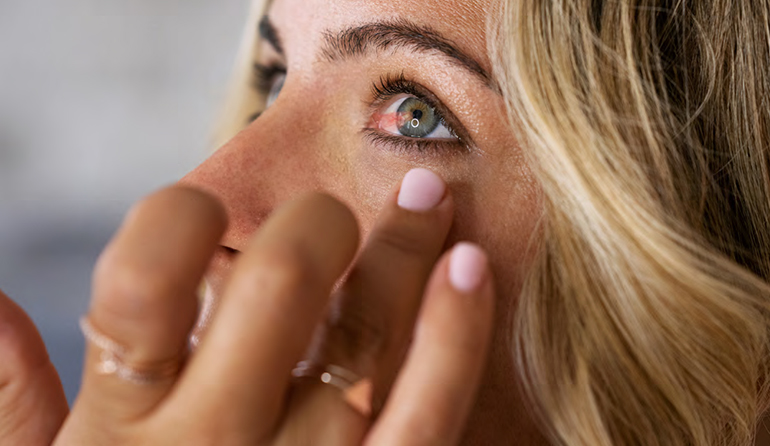
Flashes Of Light In The Eye May Signal A Retinal Tear!

Sudden flashes, sparkles, or shimmering sensations in the eye are often dismissed as minor complaints. However, they are not always caused by harmless conditions

Sudden flashes and light streaks appearing in the eye may sometimes be a sign of migraine attacks, but they can also be early warning signals of much more serious eye conditions such as retinal tears. The retina is an extremely delicate neural layer located at the innermost part of the eye and is responsible for the process of vision. Structural abnormalities that may occur in this layer, especially tears, can lead to serious consequences, including retinal detachment, if left untreated. A retinal tear allows fluid to pass from the edge of the tear into the underlying layers. Much like wallpaper peeling away from a wall, this causes the retina to lift from its original position. If this process is not stopped in time, permanent vision loss may occur. Associate Professor Dr. Nurullah Bulut from the Department of Ophthalmology shared important insights on retinal tears and retinal detachment.

Pay attention to curtain-like shadows and light flashes
Patients experiencing retinal tears or retinal detachment typically present with several key symptoms. These include the sudden sensation of a curtain descending over the eye, the appearance of a dark shadow, brief but frequently recurring flashes of light, and small black dots or thread-like shapes floating in the visual field. Some patients report seeing the detached area as a dark or black region when the eye is open, while describing the same area as a bright white region when the eye is closed. It is important to note that not every occasional light flash indicates a retinal tear. Movement of the vitreous humor, the gel-like substance filling the eye, can also cause light flashes from time to time. However, when these symptoms occur suddenly and frequently, are accompanied by an increase in floaters, or are associated with a noticeable shadow in the visual field, a detailed examination of the retina becomes critically important. Diagnosis of retinal tears and detachment is often possible through a biomicroscopic examination performed after dilating the pupil with eye drops. In cases where visualization is obscured, such as when intraocular bleeding is present, ultrasound imaging may be used to confirm the diagnosis. Early diagnosis in retinal diseases is vital, as every minute that prevents complete retinal detachment plays a crucial role in preserving vision.

Treatment is planned based on the retinal damage
The location and size of the retinal tear, the presence or absence of associated retinal detachment, and the patient’s age are among the many factors that directly influence the treatment plan. In cases where a tear is present without retinal detachment, laser treatment can be used to seal the surrounding area of the tear and prevent the retina from detaching. This procedure is quick, and the recovery process is relatively easy. In more severe cases where retinal detachment has occurred, the treatment process becomes more comprehensive. When the tear is located in the upper parts of the eye, special gas substances injected into the eye can help reposition the retina, followed by laser treatment to reinforce the area. The gas remains in the eye for a certain period, pressing the retina back into place and supporting the healing process. In children and young patients, the placement of a silicone band around the eye may also be preferred. This technique provides external support to the eye and can yield very good results in younger patients. If a retinal tear goes unnoticed or untreated for an extended period, a membrane-like tissue may form on the surface of the retina. This membrane can pull on the retina, causing larger detachments and making treatment far more difficult. In such cases, surgery becomes unavoidable.

Vitrectomy surgery restores healthy vision
Today, the gold standard for treating retinal detachment is vitrectomy surgery. During this procedure, all or part of the vitreous gel filling the eye is removed, the retina is gently repositioned, and special gases or silicone oil are introduced into the eye to secure the retina in place. While gas is naturally absorbed over time, silicone oil requires removal through a separate procedure. Vitrectomy surgeries are performed safely and successfully using modern surgical equipment. When carried out in the early days following the diagnosis of retinal detachment, the success rate of vitrectomy is extremely high, with vision preservation rates reaching up to 95 percent. A sudden increase in floaters, more frequent light flashes, the appearance of shadowy or curtain-like vision, and especially individuals with high myopia should seek immediate ophthalmologic examination without delay. These symptoms are often early warning signs of retinal tears, and timely intervention is critical for preserving vision.

December 2025

Dry Eye Now Common in Children

Professor Huban Atilla, President of the Turkish Ophthalmological Association, warns that prolonged screen time increases the risk of dry eye and strabismus in children.

Once considered an adult condition, dry eye disease is now increasingly common among children. As smartphones, tablets, and computers have become central to daily life, the age of first screen exposure has dropped dramatically. Prof. Dr. Huban Atilla explains, “School-age children spend long hours using computers and tablets to do homework, attend classes, or play games. Unfortunately, the longer the screen time, the greater the strain on the eye surface,” expressing her concern about this growing issue.

The Rising Prevalence of Dry Eye Disease
The incidence of dry eye disease in the general population is increasing every year. One of the main reasons is the frequent use of tablets and smartphones, especially in dark environments during evening hours. Prolonged exposure to illuminated screens not only leads to dryness but also contributes to the rise of refractive errors such as myopia. Extended near work can exacerbate uncorrected vision problems and trigger the development of strabismus. During the pandemic, the increase in online education and gaming hours significantly raised the prevalence of strabismus among children.

Importance of Blinking and Preventive Measures
When using digital screens, the blinking reflex decreases significantly. Normally, we blink about 15–20 times per minute, but during screen use, this number is reduced by half. As a result, tears cannot spread evenly across the eye surface, leading to symptoms such as stinging, burning, watering, and blurred vision. In children, these complaints may appear as frequent blinking, squinting, tic-like movements, or verbal expressions such as “my eyes are burning.” Parents should pay close attention to these signs and seek early evaluation from an ophthalmologist.

Prof. Dr. Huban Atilla recommends a few simple yet effective measures to prevent digital screen–related eye problems in children:

  • Total screen time should be limited.
  • Every 20 minutes, the child should look away from the screen and focus on a distant object (about 6 meters away) for 20 seconds.
  • Devices should be kept at least 40 centimeters from the eyes.
  • The room should be well-lit, and screens should never be used in the dark.

In conclusion, dry eye disease has become a significant health concern affecting not only adults but also children, impacting their overall quality of life. As digital screen use continues to increase, awareness of eye health protection is becoming essential across all age groups. Monitoring children’s screen habits and ensuring regular eye examinations play a crucial role in preventing potential vision problems in the future.

November 2025

Mind Your Blood Sugar Levels!

Sudden fluctuations in blood sugar levels affect the retinal vessels that enable vision, posing a serious risk exclusively to the eyesight of people with diabetes.

Ophthalmologist Dr. Adnan İpçioğlu stated that the incidence of diabetic retinopathy increases, especially in people who have had diabetes for more than ten years. “All diabetic patients are at risk of developing this eye disease,” he said. “It is highly recommended that every person with diabetes have an eye examination at least once a year. The longer a person has diabetes, the greater the risk of developing diabetic retinopathy.” Highlighting the importance of early diagnosis, Dr. İpçioğlu emphasized that patients should have an eye examination immediately after being diagnosed with diabetes and continue routine annual checkups as part of their diabetes management. “Detecting retinopathy findings at an early stage is the key to successful treatment,” he added. “In particular, fundus examination allows early detection of retinal changes and offers patients the chance for effective treatment. After the first five years of diagnosis, diabetic patients should have an eye exam every six months, while those with existing retinal findings should be examined every three months. The frequency of examinations is determined as needed by the ophthalmologist.”

Kasım 2025

How To Prevent Eye-Area Aging?

The eye contour is often the first area to show signs of aging, mainly because the skin around the eyes is extremely thin and delicate.

The eye contour is one of the most active areas of the face, constantly moving with facial expressions and exposed to light and environmental factors throughout the day, conditions that accelerate the aging process. Over time, collagen and elastin production in the skin decreases, leading to a loss of elasticity and the appearance of fine lines around the eyes. Meanwhile, displacement or reduction of the subcutaneous fat layer can cause hollowness or puffiness under the eyes. Genetic predisposition, sleep patterns, stress levels, and alcohol or salt consumption are also influential factors. Because the skin around the eyes is delicate, it requires special care. Direct exposure to sunlight accelerates skin aging, so using sunscreens with UVA/UVB protection year-round, not only in summer, is essential. Maintaining a regular sleep schedule, staying well-hydrated, and using moisturizers and antioxidant-rich products suitable for the eye area are beneficial habits. Applying cold compresses, reducing salt intake, and limiting screen time can also help maintain eye-area health. When necessary, medical or surgical procedures may be considered under professional supervision. In all such treatments, the priority should be preserving natural expression and overall facial harmony.

Kasım 2025

Eye Allergies Can Lead to Vision Loss

If left untreated, allergic conjunctivitis may lead to inflammation, corneal deformation, and even vision loss due to continuous rubbing of itchy and watery eyes.

Seasonal changes and the arrival of autumn often bring along various problems such as sneezing, runny nose, and triggered allergies. Allergies that also affect the eyes can cause symptoms like itching, tearing, burning, stinging, and discharge. As one of the organs most exposed to the environment, our eyes can be significantly impacted by these conditions. Allergic conjunctivitis is the most common allergic eye disease, frequently seen in children, young people, and men. A large number of diagnosed patients also suffer from asthma and other allergic disorders. If left untreated, conjunctivitis may lead to vision loss in the long term due to frequent eye rubbing and damage to the cornea.

Contact Lens Users, Mind Your Hygiene!
Sunlight plays a major role in many eye-related conditions. To protect against problems such as conjunctivitis caused by ultraviolet (UV) rays, it’s important to wear sunglasses with UV protection. Improper use of contact lenses is also one of the factors that increase the risk of allergic reactions. Pollen and microbes that adhere to the lens surface can lead to serious issues ranging from allergies to infections. Therefore, especially during periods of intense weather changes, contact lens users should be extra careful about lens cleaning and hygiene.

Don’t Rub Your Eyes
The most common symptoms of allergic conjunctivitis include excessive tearing, itching, discharge, redness, and crusting or stickiness of the eyelashes upon waking in the morning. If not treated in time, constant eye rubbing may deform the cornea and lead to a condition known as keratoconus. For this reason, allergic conjunctivitis should never be taken lightly.

October 2025

Little-Known Causes of Eye Twitching!

Often dismissed as a harmless result of stress, fatigue, or lack of sleep, eye twitching (Myokymia) can sometimes be an important warning sign from the body.

Eye twitching, which can last from a few seconds to several minutes — and in some cases occur intermittently for days – may be triggered by many different factors. Medically known as myokymia, eye twitching results from involuntary, repetitive contractions (spasms) of the muscles that control the eyelids. Sometimes it is visible to others, while at other times only the person experiences the sensation. Patients often describe it as an eye trembling or say that others think they are winking at them. Eye twitching is usually harmless and resolves on its own within a few days. However, if it lasts longer than two weeks, causes the eyelid to close, or is accompanied by blurred vision or facial spasms, it is essential to consult a doctor to identify possible underlying causes. Ophthalmologist Dr. Emel Çolakoğlu explains three lesser-known causes of eye twitching and offers important warnings and recommendations.

Unhealthy Lifestyle Habits
Unhealthy lifestyle habits play a major role in the causes of eye twitching. Alcohol and tobacco use, excessive caffeine intake (tea, coffee, energy drinks, etc.), lack of adequate sleep, staring at computer or phone screens for long periods without taking breaks, and an unbalanced diet are just a few of these harmful habits. In addition, poor stress management and being constantly under intense stress also stand out as major factors triggering eye twitching.

Hidden Astigmatism
Whether the twitching occurs in the right or left eye is not medically significant for diagnosis. Frequent eye twitching can be a sign of hidden astigmatism, myopia, or hypermetropia, so it’s advisable to consult an eye doctor. If you already wear glasses, twitching in your eyes may also indicate that your prescription needs to be updated.

Brain and Nervous System Disorders
Although rare, eye twitching can sometimes be a symptom of a serious brain or nervous system disorder. In such cases, eye twitching alone is not the only symptom; other neurological signs are typically present as well.

October 2025

Lazy Eye in School-Age Children

Health check-ups of children should be a top priority before and during the school period. Lazy eye (amblyopia), a common childhood condition, can lead to permanent vision loss if not diagnosed early.

Amblyopia, commonly known as lazy eye, occurs when one eye has weaker vision than the other due to underdevelopment of the visual center during infancy or early childhood. It affects approximately 1.5% to 3.5% of the population. Early signs may include frequent blinking, one eye drifting inward or outward, or subtle eye misalignment. In most cases, only one eye is affected, though both eyes can sometimes be involved. Lazy eye develops when one eye is used less than the other, and because children are often unaware of the problem, it may go unnoticed for years. This silent condition can directly impact academic performance and social development. Amblyopia is a hidden issue your child may not realize they have – even without symptoms, a simple pre-school eye examination can help detect and prevent it early.

During reading or close-up activities, skipping lines, leaning too close to the page, tilting the head, frequent tripping, or visible eye deviation may indicate lazy eye. Attention deficit and learning difficulties can also be indirect signs. Parents should be alert to these signals. The critical treatment window is before the age of 7-8; after this period, the chances of recovery decrease and vision loss can become permanent.

Every parent should ensure their child undergoes an eye examination before the school year begins, even if there are no visible complaints. Early detection of amblyopia – a condition that can drastically affect both quality of life and school success – allows timely treatment and prevention. Starting therapy at an early age enables children to achieve healthy visual capacity, perform better in school, and gain confidence in daily life.

Treatment Can Restore Healthy Vision
The main goal in treating amblyopia is to reactivate the weaker eye and strengthen visual function. When caused by refractive errors, the condition can often be corrected with prescription glasses, which improve visual acuity and support eye development. Another effective method is patching therapy, where the stronger eye is covered for certain periods to stimulate the weaker one. This helps reestablish balance between the eyes and yields particularly successful results in younger children. In some cases, orthoptic exercises are also recommended to enhance eye coordination and promote binocular visual development. Consistency and regular follow-ups play a crucial role in the success of treatment.

Healthy Vision is the Key to Academic Success
A comprehensive eye examination before starting school is one of the most valuable investments for a child’s future – ensuring not only academic achievement but also long-term visual health. Academic success is not only about studying hard, but also about seeing clearly. Early detection of amblyopia allows children to start their education with confidence and a healthy vision for life.

October 2025

Obesity and Links to Eye Health

Obesity is a condition that affects the entire world and continues to rise every day. It also impacts many organs in the body, and the eyes are among them.

Obesity and Cataracts
Long term studies have shown that obesity plays a role in the development of cataracts. It is thought that leptin, a hormone released from fat tissue in obese individuals, increases oxidative stress levels in the body, accelerating the formation of cataracts. The increase in inflammatory processes and the presence of obesity related conditions such as diabetes that cause vascular damage may prevent the natural lens from being properly nourished and cleared of waste products. All these factors cause cataracts to develop more rapidly in obese individuals compared to healthy people.

Obesity and Glaucoma
Studies have shown that obesity increases intraocular pressure, although its direct relationship with glaucoma has not been clearly established. However, the most important risk factor for glaucoma is ocular hypertension, or high eye pressure, which is seen more frequently in obese patients. For this reason, obesity is considered an indirect risk factor for glaucoma. Increased intraocular pressure in obese individuals may result from excess fat tissue around the eye exerting pressure, vascular pathologies, and inflammatory processes. Inflammation can cause oxidative stress in the optic nerve and trabecular meshwork, reducing the ability of tissues to clear waste and making them more vulnerable to nutritional deficiencies.

Obesity and Macular Degeneration
Age related macular degeneration, commonly known as macular disease, is one of the leading causes of blindness among elderly individuals. Studies have previously identified hypertension and hyperlipidemia as causes of this disease. The effect of obesity on macular degeneration has also been studied for many years and proven. Among the reasons why obese individuals are more likely to develop macular degeneration compared to those with a normal body mass index are the oxidative stress caused by elevated leptin levels and other inflammatory substances.

Obesity and Retinopathy
Research has shown that diabetic retinopathy, a vision disorder linked to diabetes, appears earlier and more frequently in obese diabetic patients. Similar to people with diabetes, obese individuals also show an increase in vascular growth hormones and inflammatory substances inside the eye. Due to the excess of leptin, obesity is also thought to contribute to diabetic retinopathy and hypertensive retinopathy, which are eye disorders caused by diabetes and high blood pressure.

Obesity and Other Eye Diseases
Some studies have shown that vascular conditions such as retinal artery and vein occlusion occur more frequently in obese patients compared to healthy individuals. This has been linked to increased blood viscosity caused by obesity. Moreover, other obesity related conditions such as hypertension and diabetes, which are more common among obese individuals, are also recognized as causes of retinal vascular blockages. This makes obesity an indirect risk factor. Other, less common obesity related eye diseases include conditions associated with obstructive sleep apnea. Obstructive sleep apnea, which occurs more frequently in obese individuals, can lead to dry eye disease and floppy eyelid syndrome, both of which cause watering, stinging, and blurred vision, as well as conditions such as central serous chorioretinopathy and nonarteritic anterior ischemic optic neuropathy, which can result in sudden vision loss. Although no study has conclusively proven that weight loss can directly reverse these conditions, recent research has shown that individuals who lost weight after undergoing obesity surgery experienced improvements in the vascular structures of the eye.

September 2025

Silent Symptom To Memory Loss May Be Found In The Eyes

According to new research, changes in eye movements may reveal early signs of memory loss.

A recent study has shown that shifts in the way our eyes move could be used to detect memory and cognitive problems at an early stage. Building on previous research, scientists identified differences in “gaze patterns” between individuals with and without diagnosed brain health issues. Both younger and older participants took part in the study. Some had conditions affecting memory or cognitive function. Eye tracking tests conducted on volunteers revealed that people with weaker memory tended to focus on more limited areas of images and displayed less varied gaze patterns.

May shed light on early signs of dementia
The study concluded that these natural gaze responses to visual stimuli are closely linked to memory function. Researchers believe that changes in eye movements may be connected to disruptions in the hippocampus, the brain’s memory center. They suggest that these findings could pave the way for a simple and cost effective method for the early diagnosis of conditions such as dementia and Alzheimer’s disease.

September 2025

Does Instant Coffee Cause Vision Loss?

A recent large scale study has revealed that daily consumption of instant coffee may increase the risk of age related macular degeneration, a condition that can lead to vision loss.

Health data from more than 500,000 people in the United Kingdom Biobank database were analyzed. The study found that individuals who consumed instant coffee faced a higher risk of developing dry type age related macular degeneration, which is a leading cause of vision loss in later years. In contrast, no similar risk was observed among those who drank filter coffee or decaffeinated coffee. This disease usually appears after the age of 55, although genetic factors may trigger it earlier. If left untreated, it can cause significant vision impairment. In participants, degeneration was observed in the central part of the retina, which affects the ability to read, drive, and recognize faces. Experts highlight that certain additives used in instant coffee or compounds related to its production process may have harmful effects on retinal health.

Turkish coffee is preferable
The primary risk factors for macular degeneration are age and genetics. Other contributing factors include high blood pressure, smoking, dietary habits, elevated lipid and cholesterol levels, prolonged exposure to sunlight, and obesity. While age and genetic predisposition cannot be eliminated, the other risk factors can be managed. The Mediterranean diet is recommended for individuals with poor nutritional habits who face a risk of macular degeneration. For this reason, people with a high risk of age related macular degeneration are advised to avoid instant coffee. Instead, filter coffee, Turkish coffee, or espresso can be preferred.

September 2025