







4 Major Factors That Lead To Pterygıum!
Eye redness that may seem harmless can actually be an early sign of a progressive condition that may eventually lead to vision loss. Experts warn that sun exposure, dust, wind and prolonged screen time can all increase the risk. Persistent eye redness should never be ignored.
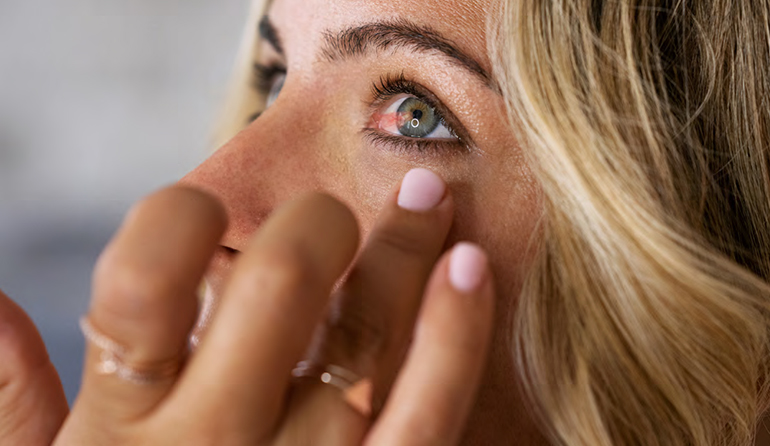
Growth of tissue on the eye, medically known as “pterygium,” has become increasingly common among eye diseases in recent years. Although often considered harmless, pterygium may progress silently and lead to serious consequences if left untreated. The condition typically first appears with redness and bloodshot eyes. Ophthalmology Specialist Dr. Tolga Birgül explains, “Pterygium is usually noticed through intense redness in the inner corner of the eyes near the nose. Patients often recognize it themselves while looking in the mirror or after people around them point it out. Over time, this tissue may extend over the cornea and obstruct the visual field. Although it may initially appear to be a simple redness or bloodshot appearance, it can eventually lead to vision loss if it progresses. For this reason, persistent eye redness should always be evaluated by a physician.” Dr. Tolga Birgül states that patients with pterygium often describe their complaints with expressions such as, “It feels like there is a grain of sand in my eye,” or “People keep asking me why my eyes are so red, whether I did not sleep enough or drank alcohol.” However, he emphasizes that these symptoms may often be caused by tissue growth on the eye. Ophthalmology Specialist Dr. Tolga Birgül discussed four major factors that contribute to pterygium and shared important warnings and recommendations regarding its symptoms and treatment.
Sunlight and ultraviolet exposure
One of the most important factors in the development of pterygium is prolonged exposure to sunlight. Research shows that pterygium is seen more frequently in individuals who are exposed to intense sunlight for extended periods.
Environmental irritation
Environmental factors including dust, sand and wind increase the risk, especially among people who work outdoors. Frequent exposure to dust, sand and foreign particles may continuously irritate the ocular surface, causing chronic irritation. Over time, this irritation can lead to thickening of the tissue (conjunctiva) and create the conditions for tissue growth extending toward the cornea.
Chronic dry eye
Prolonged use of computer and phone screens may also lead to dry eye. Ophthalmology Specialist Dr. Tolga Birgül states, “We encounter this condition more frequently, especially in people who spend long hours in front of a computer without taking proper eye breaks and in those who spend extended periods looking at phone screens. Insufficient moisture on the ocular surface may also facilitate the development of pterygium.”
Natural Tendency Toward Dry Eye
In some individuals, the ocular surface may naturally be more sensitive and have difficulty maintaining proper moisture balance. This condition may cause the eye surface to become more easily irritated by external factors. When adequate moisture cannot be maintained, the eye’s protective layer weakens and the conjunctival tissue may gradually thicken and extend toward the cornea. In people experiencing dry eye, this process may be triggered more easily, increasing the risk of developing pterygium.
Pay attention to these symptoms!
- Persistent redness and bloodshot appearance in the eyes
- Burning, stinging and tearing sensations
- A raised tissue growth forming on the inner part of the eye
- Redness that creates an aesthetic concern
- Unexpected development or worsening of astigmatism
How is pterygium treated?
Treatment for pterygium is planned according to the stage and progression of the condition. Not every pterygium requires surgery. If the tissue remains unchanged and stable for a long period, it may simply be monitored. However, surgical treatment becomes necessary in cases where the pterygium is actively growing and advancing toward the cornea. Dr. Tolga Birgül emphasizes that a comprehensive eye examination is essential in order to make this distinction and notes that the most important aspect of treatment is preventing recurrence after surgery. “In pterygium surgery, simply removing the tissue growth is not enough. The real priority is preventing it from recurring after the operation. For this reason, we use specialized surgical techniques. After removing the tissue, and before closing the area with methods such as conjunctival flaps or autografts, we microscopically clean the remaining surface using a special diamond-tip burr system. This technique also removes microscopic residual tissue that may remain behind and significantly reduces the risk of recurrence,” he explains.
May 2026