


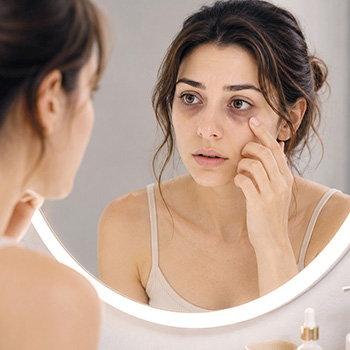

4 Major Factors That Lead To Pterygıum!

Eye redness that may seem harmless can actually be an early sign of a progressive condition that may eventually lead to vision loss. Experts warn that sun exposure, dust, wind and prolonged screen time can all increase the risk. Persistent eye redness should never be ignored.

Growth of tissue on the eye, medically known as “pterygium,” has become increasingly common among eye diseases in recent years. Although often considered harmless, pterygium may progress silently and lead to serious consequences if left untreated. The condition typically first appears with redness and bloodshot eyes. Ophthalmology Specialist Dr. Tolga Birgül explains, “Pterygium is usually noticed through intense redness in the inner corner of the eyes near the nose. Patients often recognize it themselves while looking in the mirror or after people around them point it out. Over time, this tissue may extend over the cornea and obstruct the visual field. Although it may initially appear to be a simple redness or bloodshot appearance, it can eventually lead to vision loss if it progresses. For this reason, persistent eye redness should always be evaluated by a physician.” Dr. Tolga Birgül states that patients with pterygium often describe their complaints with expressions such as, “It feels like there is a grain of sand in my eye,” or “People keep asking me why my eyes are so red, whether I did not sleep enough or drank alcohol.” However, he emphasizes that these symptoms may often be caused by tissue growth on the eye. Ophthalmology Specialist Dr. Tolga Birgül discussed four major factors that contribute to pterygium and shared important warnings and recommendations regarding its symptoms and treatment.

Sunlight and ultraviolet exposure
One of the most important factors in the development of pterygium is prolonged exposure to sunlight. Research shows that pterygium is seen more frequently in individuals who are exposed to intense sunlight for extended periods.

Environmental irritation
Environmental factors including dust, sand and wind increase the risk, especially among people who work outdoors. Frequent exposure to dust, sand and foreign particles may continuously irritate the ocular surface, causing chronic irritation. Over time, this irritation can lead to thickening of the tissue (conjunctiva) and create the conditions for tissue growth extending toward the cornea.

Chronic dry eye
Prolonged use of computer and phone screens may also lead to dry eye. Ophthalmology Specialist Dr. Tolga Birgül states, “We encounter this condition more frequently, especially in people who spend long hours in front of a computer without taking proper eye breaks and in those who spend extended periods looking at phone screens. Insufficient moisture on the ocular surface may also facilitate the development of pterygium.”

Natural Tendency Toward Dry Eye
In some individuals, the ocular surface may naturally be more sensitive and have difficulty maintaining proper moisture balance. This condition may cause the eye surface to become more easily irritated by external factors. When adequate moisture cannot be maintained, the eye’s protective layer weakens and the conjunctival tissue may gradually thicken and extend toward the cornea. In people experiencing dry eye, this process may be triggered more easily, increasing the risk of developing pterygium.

Pay attention to these symptoms!

  • Persistent redness and bloodshot appearance in the eyes
  • Burning, stinging and tearing sensations
  • A raised tissue growth forming on the inner part of the eye
  • Redness that creates an aesthetic concern
  • Unexpected development or worsening of astigmatism

How is pterygium treated?
Treatment for pterygium is planned according to the stage and progression of the condition. Not every pterygium requires surgery. If the tissue remains unchanged and stable for a long period, it may simply be monitored. However, surgical treatment becomes necessary in cases where the pterygium is actively growing and advancing toward the cornea. Dr. Tolga Birgül emphasizes that a comprehensive eye examination is essential in order to make this distinction and notes that the most important aspect of treatment is preventing recurrence after surgery. “In pterygium surgery, simply removing the tissue growth is not enough. The real priority is preventing it from recurring after the operation. For this reason, we use specialized surgical techniques. After removing the tissue, and before closing the area with methods such as conjunctival flaps or autografts, we microscopically clean the remaining surface using a special diamond-tip burr system. This technique also removes microscopic residual tissue that may remain behind and significantly reduces the risk of recurrence,” he explains.

May 2026

What Are Prescription Sunglasses? What Are They Used For?

For those who want to see clearly while also protecting their eye health on sunny days, prescription sunglasses offer a practical and comfortable solution. Especially for individuals with refractive errors, they provide both clear vision and UV protection at the same time in situations where standard sunglasses may not be sufficient.

Prescription sunglasses are specially designed eyewear used by people with vision problems to both improve visual clarity and protect the eyes from the sun’s harmful UV rays. Unlike regular sunglasses, they feature lenses produced according to the wearer’s prescription. This allows users to achieve both sun protection and clear vision simultaneously in outdoor environments. Today, UV400 protection has become the standard in these lenses, providing a high level of protection against both UVA and UVB rays. In addition, polarized lens options offer more comfortable vision by reducing reflections, especially while driving and in open outdoor areas. Photochromic lenses may also be preferred depending on individual needs. These lenses automatically darken or lighten according to light intensity, adapting to different lighting conditions.

How Are Prescription Sunglasses Obtained?
The first step in obtaining prescription sunglasses is a comprehensive eye examination. After receiving a prescription with current vision measurements, the individual visits an optical store. The user then selects a sunglass frame suitable for their facial structure. Prescription sun lenses are specially produced according to the prescription and mounted into the selected frame by an optical professional. At this stage, details such as lens color, thickness and coating type, including anti-reflective or hard coatings, are determined according to the user’s needs. Prescription sunglasses have become an important part of daily life, both for improving visual comfort and for providing protection against UV rays. With the right lens and frame selection, clearer and more comfortable vision can be achieved outdoors.

May 2026

Watch for Night Vision Problems in Children

Difficulty moving around in dark environments, frequently bumping into objects or feeling uneasy when the lights are turned off are often interpreted as fear or shyness in children. However, in some cases, these behaviors may be early signs of eye conditions that affect night vision.

Children becoming restless in dark environments or having difficulty moving around in the evening is often considered temporary behavior. However, experts warn that certain behavioral changes may be associated with eye problems affecting night vision. Night vision disorders that emerge during childhood may not always be easily recognized. While some children can see normally during the day, they may struggle to navigate in low-light environments or adapt slowly to changes in lighting conditions. Behaviors such as frequent falls in the evening, hesitation while walking downstairs or reluctance to separate from parents in the dark should be carefully observed by families.

According to experts, reduced night vision may be linked to retinal diseases, certain hereditary eye disorders, vitamin A deficiency or various refractive errors. However, it is also emphasized that not every symptom necessarily indicates a serious condition and that a definitive evaluation can only be made through a comprehensive eye examination. Specialists note that children are often unable to clearly express their vision problems. Behaviors such as sitting too close to the television, becoming restless in dim environments or looking at visual materials from a very close distance may also be important warning signs. Since many children tend to accept their vision difficulties as normal and may not complain about them, parents are advised to pay close attention to behavioral changes.

Experts also emphasize that eye examinations in children should not only be performed after vision problems develop, but should instead be carried out regularly at certain age intervals. Early examinations are considered highly important for assessing potential risks and protecting children’s visual health. In addition, early diagnosis may help control possible vision problems before they progress and contribute to maintaining children’s quality of daily life.

May 2026

4 Powerful Fruits to Support Eye Health

In an age where digital screens are at the center of our lives, our eyes are under more strain than ever. However, it is possible to ease this burden and support eye health with the right foods rich in antioxidants and vitamins.

Digital screens have become an inseparable part of modern life. Long hours spent in front of computers, smartphones, and tablets place an increasing strain on the eyes each day. Complaints such as dryness, fatigue, stinging sensations, and blurred vision have become commonplace for many people. This picture shows that eye health is influenced not only by external factors but also by lifestyle and dietary habits. In particular, biological processes such as oxidative stress and inflammation can affect ocular tissues over time. Although it may be difficult to completely change the pace of digital life, it is possible to reduce these effects. A diet rich in antioxidants, vitamins, and plant-based compounds plays an important role in supporting eye health. This support can be achieved through natural foods that are easily accessible in daily life. Certain fruits, in particular, stand out for their ability to support visual function and help reduce eye fatigue thanks to their powerful nutritional content.

Blueberries: Antioxidant Power
Despite their small size, blueberries have a strong nutritional profile and are especially rich in anthocyanins. These compounds play a role in combating oxidative stress, which accelerates the aging process in the eyes. Research suggests that anthocyanins may help protect retinal cells and reduce cellular damage. When consumed regularly, blueberries may contribute to reducing eye fatigue and supporting long-term eye health. They can be easily added to the daily diet, for example in breakfast bowls, yogurt, or smoothies.

Oranges: Lens Protection with Vitamin C
Vitamin C is a powerful antioxidant that plays a critical role in maintaining the structure of the eye’s lens. Oxidative damage that accumulates over time is one of the contributing factors in the development of cataracts. Studies indicate that adequate intake of vitamin C may help reduce the risk of cataracts. For this reason, citrus fruits such as oranges are a simple yet effective choice for supporting eye health. Consuming one serving of citrus fruit per day can provide a meaningful benefit in this regard.

Papaya: Support for Dryness and Sensitivity
Papaya is a noteworthy option for those experiencing dryness and sensitivity in the eyes. The provitamin A compounds and carotenoids it contains help protect the ocular surface. At the same time, papaya contains anti-inflammatory components that may help reduce low-level inflammation in the eyes. This can contribute to relieving discomfort, especially after prolonged screen use. It can be consumed fresh or easily added to fruit salads and smoothies.

Kiwi: Protective Effect for the Retina
In addition to its high vitamin C content, kiwi contains carotenoids such as lutein and zeaxanthin. These compounds are particularly important for retinal and macular health. Nutritional studies suggest that regular intake of such components may help maintain visual quality. In this respect, kiwi is a practical option that can be included in the daily diet. It can be preferred as a snack or a light dessert. Eye health is often associated only with genetic factors or aging. However, processes such as oxidative stress, vascular health, and inflammation are directly linked to nutrition. A diet rich in antioxidants may help reduce cellular damage, protect ocular tissues, and slow the effects of age-related changes. It should be remembered that nutrition alone is not sufficient. Daily lifestyle and habits also play a key role in protecting eye health.

April 2026

Eye-Friendly Reading Habits

Proper lighting, an ideal reading distance, and regular breaks are essential to reduce eye strain while reading. With a few simple habits, you can protect both your comfort and your eye health.

Prolonged reading, when combined with poor lighting and incorrect posture, can lead to eye fatigue, blurred vision, and headaches. This can reduce reading enjoyment and cause a general feeling of fatigue by the end of the day. Eye health experts emphasize that proper lighting while reading is critical for both comfort and eye health. The light source should be positioned on the left side and slightly above, and it should be neither too bright nor too dim. Soft light that reflects onto the page, rather than shining directly into the eyes, helps prevent unnecessary strain on the eye muscles. This not only extends focus time but also enhances overall reading comfort. Especially in the evening, care should be taken to ensure that desk lamps illuminate the entire page evenly.

The distance between the book and the eyes should be at least 40 centimeters. This distance ensures clear vision while preventing eye strain. Reading while lying down not only strains the neck and shoulder muscles but also makes it more difficult for the eyes to focus. For this reason, the healthiest reading position is an upright posture with proper back support. Taking short breaks every 30 minutes and looking at a distant point helps relax the eye muscles. Taking deep breaths during these breaks also contributes to overall physical relaxation. In addition, drinking enough water helps maintain the eyes’ moisture balance and reduces dryness. Frequent blinking supports the natural lubrication of the ocular surface.

By supporting your reading habits with these small yet effective measures, you can protect your eye health in the long term while also improving your comfort as you move from page to page.

5 Golden Rules for Eye Comfort While Reading

  • Position the light source on the left side and slightly above.
  • Keep at least 40 cm between your eyes and the book.
  • Focus on a distant point every 30 minutes.
  • Drink plenty of water to keep your eyes hydrated.
  • Do not neglect your natural blinking reflex.

April 2026

Half of Patients Unaware of Glaucoma

Nearly 70 million people worldwide are affected by glaucoma, and about half remain unaware of the disease. Typically emerging after the age of 40 and progressing silently without noticeable symptoms, glaucoma is the second leading cause of blindness. Unfortunately, around 10 percent of patients are already at an advanced stage by the time treatment begins, resulting in permanent vision loss.

Prof. Dr. Kıvanç Güngör, President of the Turkish Ophthalmological Association, has warned the public about glaucoma, a disease that progresses silently in the eye. Stating that approximately 2.5 million people in Türkiye are estimated to be affected by the condition, Güngör said, “Half of these patients are unaware that they have glaucoma. Although millions of people in our country are affected, only around 300,000 patients receive regular treatment. According to the World Health Organization, more than 70 million people worldwide are affected by glaucoma, and approximately 6.5 to 7 million cases result in blindness. The number of glaucoma patients globally is expected to exceed 110 million by 2040. Glaucoma is the second most common cause of blindness in the world after cataracts. The disease can occur at any age, starting from birth, but it is most commonly seen after the age of 40. Since the damage to the optic nerve is irreversible, vision loss caused by glaucoma cannot be restored, and the disease may result in permanent vision impairment and blindness.”

Delayed Treatment May Lead to Blindness
Prof. Dr. Kıvanç Güngör emphasized, “Regular eye examinations and periodic measurement of intraocular pressure are essential for early diagnosis and for preserving vision. If diagnosed early, the progression can be halted. Since glaucoma is a chronic condition, lifelong monitoring of patients is crucial. The primary goal of treatment is to preserve visual function. Our first line of treatment is usually medication. If we detect damage during periodic examinations of the optic nerve using diagnostic devices, we need to lower intraocular pressure with various eye drops and stop the progressive loss in the visual field. If medication does not provide sufficient results, laser treatments and surgical options may be required. Laser and surgical procedures are applied using different techniques depending on the stage of the disease. If treatment is delayed or insufficient, glaucoma can result in blindness.”

April 2026

Early Signs of Memory Loss May Be Hidden in Eye Movements

The eyes reveal not only what we see but also how the mind works. Subtle changes in visual perception may carry early signals of memory loss.

Memory loss is often a silent and difficult process to recognize. Minor forgetfulness experienced in daily life is usually not taken seriously. However, some changes in mental processes may begin to appear in different ways much earlier than expected. Recent findings suggest that one of these early warning signs may be hidden in eye movements. Changes in eye movement patterns may serve as early indicators of impairments in memory and cognitive function. When the responses of individuals from different age groups to visual stimuli are examined, clear differences emerge between people with lower cognitive performance and healthy individuals. These comparisons reveal the strong connection between mental processes and visual behavior.

According to the findings, individuals with lower memory performance focus on more limited areas while examining images and display more uniform gaze patterns. Even when viewing different images, they tend to direct their attention toward similar points. This suggests that visual exploration behavior is reduced and that the brain’s capacity to process new information may be weakened. In contrast, eye movements in healthy individuals are more dynamic and exploration oriented. Shifts in gaze toward different areas of an image indicate that the mind is actively collecting and evaluating information. This difference is closely related to cognitive flexibility and attention processes.

These changes are believed to be associated with the hippocampus, which is the memory center of the brain. The way the visual world is perceived is considered a reflection of underlying mental processes. These findings open a promising path for the early detection of dementia and similar conditions. Eye movement tracking may become an important complementary tool in the future because it is a low cost and accessible method.

March 2026

Is Eye Rubbing in Children Really Harmless?

The habit of eye rubbing, which is frequently observed in children, is often considered a simple reflex but it may be an early sign of certain serious eye diseases.

Children rubbing their eyes is often interpreted by parents as fatigue, lack of sleep, or temporary itching. However, this seemingly harmless behavior may sometimes indicate an underlying and important eye problem. Especially when eye rubbing becomes frequent and repetitive, it should be regarded not only as a behavior but also as a warning sign that requires careful attention. Eye health plays a critical role in both the physical and cognitive development of children. For this reason, ignoring symptoms that appear minor may lead to more serious problems in the future.

Silent Risk That Can Begin Early: Keratoconus
One of the conditions that specialists particularly emphasize is keratoconus. In this disease, the cornea, which is the transparent front layer of the eye responsible for focusing light, becomes thinner and gradually protrudes forward. This structural change disrupts visual clarity and may lead to significant vision loss over time. Although keratoconus is most commonly detected during adolescence, it is known that the disease may begin during childhood. Because noticeable symptoms often do not appear in the early stages, diagnosis is frequently delayed. This delay may allow the disease to progress further.

Among the most important early warning signs are;

  • frequent eye rubbing
  • rapid changes in eyeglass prescription
  • seeing lights as scattered or shadowed
  • inability to see clearly despite wearing glasses
  • light sensitivity and glare

These symptoms should not be underestimated and must be evaluated by an eye care specialist.

Eye Rubbing Is Not Only a Symptom but Also a Risk Factor
Eye rubbing is not only a symptom but also an important factor that may accelerate disease progression. Frequent and forceful eye rubbing can apply mechanical pressure to the cornea and increase thinning. In children with allergic eye diseases, itching is usually more intense and eye rubbing is more common. This situation may trigger the development of keratoconus or cause an existing condition to progress more rapidly. For this reason, parents should help children avoid rubbing their eyes and the underlying causes of itching should always be investigated.

Do Not Overlook Genetic Risk
Genetic factors are known to play an important role in the development of keratoconus. The risk increases significantly in children who have a family history of the disease. For this reason, children with a positive family history should undergo regular and detailed eye examinations. Children are often unable to clearly express visual problems. For them, the way they see the world appears normal. This makes parental observation even more important.

Vision Problems Can Affect Academic Performance
Vision is one of the fundamental components of the learning process. A large portion of the information children receive is acquired through visual input. For this reason, reduced visual quality does not remain only a physical issue but also directly affects academic performance. Children who cannot clearly see the board, who have difficulty recognizing written text, or who become tired quickly while reading may develop problems such as difficulty maintaining attention, reduced interest in classroom activities, reading difficulties and loss of self confidence. Over time, these challenges may lead to a noticeable decline in school performance.

Warning Signs Parents Should Watch For
Certain behaviors may provide important clues that a child is experiencing vision problems. The following signs should be carefully monitored

  • watching television from a very close distance
  • holding books or screens very close to the eyes
  • squinting to see the board clearly
  • frequent eye rubbing
  • sensitivity to light
  • frequent headaches
  • rapid changes in eyeglass prescription

If one or more of these signs are observed, an eye specialist should be consulted without delay.

Early Diagnosis Can Prevent Vision Loss
Although keratoconus is a progressive disease, it can be controlled when diagnosed early. Thanks to modern treatment methods available today, disease progression can be slowed and in some cases stopped. At this point, the most important step is regular eye examinations. Specialists recommend that children undergo eye evaluations at regular intervals even when no symptoms are present.

March 2026

Hidden Eye Diseases May Surface During Ramadan

With the arrival of Ramadan, complaints such as blurred vision, flashes of light, and the sudden appearance of black spots or floaters may increase. These visual symptoms can be important warning signs of previously undiagnosed retinal diseases.

Prolonged fasting and sudden blood sugar fluctuations after iftar require special attention in terms of eye health. Undiagnosed diabetes and diabetes-related diabetic retinopathy may begin to show their first signals as dietary patterns change during Ramadan.

Associate Professor Burak Erden states that diabetic retinopathy is one of the most serious complications of diabetes and often progresses silently. During prolonged fasting, blood sugar fluctuations may occur. If a person has undiagnosed diabetes, these fluctuations can lead to leakage or dilation in the capillaries of the retina, the most sensitive layer of the eye. Symptoms may present as blurred vision or light flashes. Diabetic retinopathy is among the most serious complications of diabetes that can result in vision loss. The earlier it is diagnosed, the greater the chance of preventing progression or treating existing damage.

Examination before ramadan is critical
Associate Professor Burak Erden says: “Many eye diseases, particularly retinopathy, may progress in early stages without any noticeable symptoms. Routine eye examinations therefore play a crucial role. Timely examinations allow early diagnosis of many ocular conditions. Undiagnosed diabetes, vascular damage caused by hypertension, and glaucoma risk can be detected during a comprehensive check-up. Changes in metabolism and decreased fluid intake during Ramadan may alter intraocular balance, making pre-fasting examinations especially important.”

Risk of permanent vision loss
“Diabetes can cause hemorrhages in the retina and macular edema. If not detected in time, these conditions may lead to permanent vision loss. In cases diagnosed early, vision loss can often be prevented. However, many patients delay examinations until significant damage has already occurred, resulting in irreversible consequences” says Associate Professor Burak Erden.

Damage to retinal capillaries
Associate Professor Burak Erden also states that diabetic retinopathy may cause vision loss of up to 90 percent. Diabetes disrupts the structure of retinal capillaries, leading to cell loss, increased vascular permeability, and fluid accumulation in the macula. He adds: “Over time, new vessels may form in the retina. These vessels can bleed and lead to membrane formation inside the eye. As a result, severe vision loss and painful increases in intraocular pressure may occur.”

Dry eye may also intensify with fasting
In addition to retinal diseases, dry eye symptoms may also become more pronounced during Ramadan. Associate Professor Burak Erden says: “Prolonged dehydration can reduce tear quality, leading to severe dryness and blurred vision. Individuals with a family history of diabetes, those over the age of 40, and patients with high myopia are strongly advised to undergo a comprehensive eye examination before Ramadan.”

February 2026

Healthy Vision: Key to Academic Success

According to experts, 83 percent of success in the learning process is related to vision. In Turkey, one in three children has a vision disorder, and if not detected early, these conditions may permanently affect both academic performance and eye health.

Experts emphasize that a decline in academic performance in children should not always be attributed to learning difficulties. Associate Professor Osman Bulut Ocak, an ophthalmologist at Dünyagöz Etiler Hospital, states that one in three children in Turkey has either distance or near vision problems. Many children fall behind in school not because of learning deficiencies, but because they cannot see clearly. Vision accounts for 83 percent of the learning process. If vision disorders are not detected early, permanent problems such as amblyopia, which becomes more difficult to treat in later years, may develop. Regular eye examinations during school age are therefore of great importance.

The most common eye problems in children include myopia, hyperopia, astigmatism, strabismus, and amblyopia. Warning signs for families include difficulty seeing the board clearly, skipping lines while reading, squinting, sitting too close to the television, frequent eye rubbing, headaches, and fatigue during study sessions. Digital screen use also negatively affects eye health. Spending extended periods in front of tablets, smartphones, and computers may cause eye strain, dryness, and latent ocular deviations. Screen time should not exceed one hour per day for children up to age five and should be limited to 1.5 to 2 hours for children aged seven and older.

Healthy vision is one of the cornerstones of academic success. Children should undergo regular eye examinations both before starting school and throughout their education. Even a simple vision screening during the educational process can help a child begin school life with greater confidence and stronger performance. Experts recommend at least one comprehensive eye examination per year as the most effective preventive measure.

February 2026