

Personalized Lens in Cataract Surgery

Cataract surgeries are based on replacing the clouded intraocular lens. During the surgery, the patient can regain clear vision thanks to the lenses placed
in the patient’s eye.

Cataract surgeries are based on replacing the clouded intraocular lens.  During the surgery, the patient can regain clear vision thanks to the lenses placed in the patient’s eye. So which lens is suitable for which patient, which criteria are important in lens selection? Batıgöz Health Group Çankaya branch Eye Health and Diseases Specialist Assoc. Dr. Uğur Ünsal answered the questions about cataract surgery.

The Only Treatment Surgery

Cataract is the haze and blurring of the natural intraocular lens inside the eye. Cataracts cannot be treated with drops or any other method, the only treatment is surgery. Cataract surgery is the removal of the clouded intraocular lens and the placement of a new intraocular lens. The surgery is usually performed with topical drop anesthesia applied to the patient’s eyes, and takes an average of five to ten minutes.

In infants, congenital cataracts can lead to reduced vision and loss of vision. Eye examination of babies in the first 12 weeks of life is important in this regard. Cataract surgery is also performed in infants and children and general anesthesia is preferred. There are three groups of lenses used in cataract surgery. The first group is the monofocal lens. In this lens, the rays coming into the patient’s eye fall on the back of the eye from a single focus. The patient does not need glasses when looking far away. But he/she needs to use near glasses. The second group of lenses are Edof lenses, which have an extended focus that allows both distance and middle distance vision. While this type of lens provides the patient with distance, intermediate and some near vision, some patients may need a low-numbered near lens. A third group of lenses are trifocal lenses, popularly known as smart lenses, which provide vision at far, intermediate and near distances. These lenses provide satisfactory vision at distance, near and intermediate distances.

Patient Needs are Important

If the patient also has astigmatism, it would be more appropriate to use astigmatized models of these lenses. Just as we do not buy a normal pair of glasses when we buy glasses or undergo an eyeglass examination, but if we have astigmatism, we use astigmatized lenses, this option is also available in lenses today. In other words, if a monofocal lens is found suitable for the patient, but the patient also has astigmatism, it is beneficial to prefer a monofocal lens with astigmatism or a trifocal lens with astigmatism, and if astigmatism is present, it is beneficial to prefer a trifocal lens with astigmatism. A monofocal or monofocal astigmatic lens can be preferred for all patients who will undergo cataract surgery, but it is beneficial to choose trifocal or trifocal astigmatic intraocular lenses only for suitable patients.

Patients with retinal problems at the back of the eye, severe eye pressure or corneal problems at the front of the eye should not be implanted with smart lenses or trifocal intraocular lenses. The most important criteria affecting cataract surgery are the technological infrastructure used during surgery, the needs of the patient and the experience of the physician. When these criteria come together, much better results will be obtained. When a personalized lens is preferred after detailed eye examinations and modern medical facilities are used during surgery, both patient happiness and physician happiness will increase.

January 2025

Visual Impairment Can Make Your Child Lonely

Children with visual impairment have lower school achievement, their self-confidence is negatively affected, and this can cause them to have difficulty playing games with their friends and withdraw from social interactions.

Today, refractive errors such as lazy eye, strabismus, myopia, hyperopia and astigmatism are commonly seen in children. Taking some precautions against visual impairments in childhood, eye checks and treatments provide individuals with healthy vision both in childhood and adulthood.

Light your child’s room correctly

Eye health is of great importance for children’s overall health and development. Vision plays a fundamental role in how children perceive the world, learn and carry out their daily activities. Children living in metropolitan areas spend most of their social life indoors in front of phones, tablets or computers. Prolonged screen exposure increases the risk of strabismus and myopia and causes eye fatigue and dry eyes. Reading without proper lighting and ergonomic conditions can also trigger visual impairment in children.  A large part of children’s learning process takes place through vision. Activities such as reading on the blackboard, getting information from books, interacting with digital screens require good eyesight. Children with vision problems may struggle with these activities, which can negatively affect their academic success. Vision problems can negatively affect children’s self-confidence, making social interactions difficult. Children who have difficulty playing games with their friends or performing daily activities may withdraw from social life. For this reason, it is of great importance for children to have regular eye checks in order to diagnose and treat vision problems early.

Digital screen exposure impairs distance vision the most

Children’s living habits have led to a rapid increase in the number of myopia, or nearsightedness. Factors such as excessive use of digital devices, spending more time indoors and decreased exposure to natural daylight increase the risk of developing myopia. Myopia not only necessitates the need for glasses or contact lenses, but also increases the risk of developing serious eye diseases later in life. Regular eye checks allow myopia to be detected in the early stages and ensure that the necessary measures are taken to slow its progression.

Early detection facilitates the resolution of vision problems

Eye problems in children can often be treated more easily and effectively when diagnosed at an early age. Common eye problems such as lazy eye (amblyopia), strabismus, refractive errors (myopia, hyperopia, astigmatism) can be treated with early intervention. If not diagnosed early, these problems can lead to permanent vision loss. Regular eye examinations are important not only to detect existing vision problems, but also to monitor overall eye health. During the examination, ophthalmologists check not only for visual defects, but also for signs of eye diseases, which are rare in children but can be serious. This way, any abnormalities can be recognized and treated early on. Ophthalmologists also provide guidance to children on the rules of screen use and how to maintain eye health.

Healthy vision is crucial for healthy growth

Regular eye check-ups for children are vital to ensure their healthy growth and development. Early diagnosis and treatment can help prevent potential vision problems and contribute to children’s overall health. Parents should not neglect their children’s eye health and should consult an ophthalmologist for regular eye examinations. Children who grow up without vision problems in childhood have fewer vision problems in adulthood.

December 2024

Rheumatic Diseases May Affect Your Eye Health

Contrary to popular belief, rheumatism is not limited to joints, muscles and bones, but can affect many organs. One of these organs is the eye. Therefore, it is important for patients diagnosed with rheumatism to be examined by a specialist ophthalmologist.

The eye can be a target for rheumatic diseases. Rheumatic diseases can cause diseases such as uveitis, scleritis, inflammation of the sclera, the white layer of the eye, or dry eye. Uveitis is the general name given to inflammation of the uvea, one of the inner layers of the eye. Rheumatic diseases can affect vessels of all sizes as well as connective tissues. The eye, which is unique in terms of its vascular structure, can be the target of rheumatic diseases. Because of these features, rheumatic patients should also be monitored for involvement of the eye tissues.

Some medications used in treatment may have negative effects on the eye

Some drugs used in the treatment of rheumatic diseases can have adverse effects on the eye and glaucoma can be caused by systemic steroid use. Another drug used in the treatment of rheumatic diseases is hydroxychloroquine, which is cheap, easily accessible and highly effective. This drug, which is a derivative of quinine originally used in the treatment of malaria, is generally recognized as a safe drug in terms of side effects. As a result of drug accumulation in the retina, the mesh layer of the eye, narrowing of the visual field may occur. These side effects end when the drug is discontinued under the supervision of a doctor. It was observed that the visual field returned to its previous level in the patient in whom the drug was discontinued. For this reason, it is recommended that patients using these quinine-derived drugs should be examined by an ophthalmologist at 6-12 month intervals in relation to the dose they use and have appropriate optical coherence tomography (OCT), multifocal electroretinography (mfERG) and fundus autofluorescence tests, taking into account their clinical characteristics, especially the visual field.

December 2024

Regular Exercise Can Prevent Eye Diseases

Several studies have shown that exercise is a good way to reduce the risk of eye diseases. Research has shown that exercise acts as a protective mechanism against certain eye diseases.

Regular exercise can slim your waistline and improve your mood. Several studies in humans have suggested that exercise can help prevent serious eye diseases such as macular degeneration. Researchers say the new study is interesting because it directly examines how physical activity changes cells and tissues in the eye.

Exercise supports healthy blood vessels in the eye

After four weeks of research, he applied a laser to the eye to simulate the changes that occur in people with age-related vision loss. After this treatment, those who were physically active had up to 45% less eye damage than those who were not. The study suggests that exercise may protect against the overgrowth of blood vessels that occurs in eye conditions such as macular degeneration.

Regular physical activity can improve eye health

Scientists are still working to understand how exercise protects the human eye. Their discoveries could unlock treatments for a range of eye conditions. If you already have an eye disease, exercise can help you manage it better. One study found that people who engage in moderate physical exercise are less likely to develop glaucoma than people who are inactive. Physical activity can also help people with diabetes to keep their disease under control. This reduces the risk of complications, including diabetic retinopathy, the leading cause of vision loss among working-age adults.

December 2024

Obesity Triggers Eye Diseases

Today, obesity and related diseases, which are becoming increasingly common due to reasons such as sedentary life, excessive calorie foods and sitting work, are increasing in our country.

Stating that obesity negatively affects the vessels and hormones in the body and causes chronic diseases such as diabetes and hypertension, Op. Dr. Altınbay pointed out that this situation triggers eye diseases. Op. Dr. Altınbay said, “Studies have shown that obesity causes cataracts, glaucoma (eye pressure), yellow spot, retinopathy (eye disorder due to diabetes) and dry eye disease that causes watery eyes, stinging sensation and blurred vision. Currently, there are no studies that show a definitive result that these diseases can be cured when an obese person loses weight. However, in a recent study, it was also observed that there was an improvement in eye vascular structures in individuals who lost weight after bariatric surgery.”

The leptin hormone secreted from adipose tissues in obese people is thought to accelerate cataract formation by increasing the level of oxidative stress in the body. However, there is also the view that the natural lens cannot be nourished and cleaned from waste materials as a result of diseases that cause vascular damage such as obesity-related diabetes. All these cause cataract formation in obese people faster than other healthy individuals. It is important for everyone, whether they have eye disease or not, to see specialist physicians for routine examinations once a year.

November  2024

6 Ways To Prevent Eye Infections

Conjunctivitis, popularly known as red eye disease, is one of the most common eye disorders in both children and adults. If conjunctivitis is not treated in a timely and correct manner, it can exacerbate and cause permanent eye damage.

Stating that bacterial or viral infections and allergic reactions are among the most common causes of conjunctivitis, Ophthalmologist Op. Dr. Burcu Usta Uslu from Anadolu Sağlık Merkezi Hospital said, “Eye redness can occur for many reasons, but if it is an infectious redness, you should be very careful about its contagiousness and treatment, so the symptoms should be closely monitored.” Op. Dr. Burcu Usta Uslu listed the measures that can be taken to protect against conjunctivitis, a disease that can be easily transmitted from person to person or from one eye to another:

  1. Do not go outside without sunglasses, especially on sunny days.
  2. As soon as you come back from outside, wash your hands and face for at least 20 seconds without irritating them, rubbing them, and even take a bath if possible.
  3. Apply cold compresses to your eyes from time to time.
  4. Avoid dry eyes by using cooled artificial tears that do not contain preservatives.
  5. In consultation with your doctor, use antihistamines, steroids, i.e. eye drops containing cortisone or immunomodulators such as cyclosporine.
  6. Never scratch or rub your eyes vigorously, as this can damage the cornea and increase the risk of keratoconus and secondary contamination and infection.

November  2024

Heart Disease Symptoms Appear in the Eyes

Heart disease can cause symptoms in different organs. The health of your heart is reflected in your eyes. Heart diseases can cause some problems in the eyes.

Every year, 17 million people in the world lose their lives due to heart disease. Regular health screenings ensure that heart diseases that progress silently without any symptoms are recognized at an early stage and successful treatment methods are applied. Heart disease is a term that covers any disorder that occurs in the heart and affects the heart. Heart disease includes blood vessel diseases such as coronary artery disease, heart rhythm problems (arrhythmias) and congenital heart defects. The term heart disease is often used interchangeably with the term cardiovascular disease.

Experts say that ophthalmologists can detect signs of heart disease during a comprehensive eye examination. A new study reveals that the retinas of people with heart disease show signs of eye strokes. Eye strokes cause cells to die when the eye is deprived of blood flow and oxygen. This creates a scar called a retinal ischemic perivascular lesion. These signs can be detected when ophthalmologists use an imaging tool called optical coherence tomography, or OCT, to look closely at the retina. OCT scans of the retina are a valuable way to detect diseases and dysfunctions not just in the eyes, but throughout the body, says Joseph Nezgoda, an ophthalmologist and Academy spokesperson and retina specialist. Eye scans can detect signs of Alzheimer’s, Parkinson’s and other underlying health conditions.

How eye exams detect heart disease

The eye is the only place in the body where a doctor can see the live movement of blood vessels, nerves and connecting tissues without the need for an invasive procedure. This is why ophthalmologists are often the first to detect health problems including high blood pressure, high cholesterol, strokes and more. While the scars left behind by eye strokes may be present in small numbers in healthy people, they are much more numerous in those with heart disease. The researchers reached these conclusions by analyzing the medical records of 84 people with heart disease and 76 healthy people, all of whom had retinal OCT scans.

Diagnosing heart disease early can save lives

The new study adds to the list of health conditions that an eye exam can help detect. “Your ophthalmologist can take an image of your eye to help detect cardiovascular diseases earlier,” says Nezgoda. For people with heart disease, the number one cause of death worldwide, early detection and treatment can help prevent a heart attack or stroke. In the future, ophthalmologists may be able to refer their patients to a cardiologist if they notice eye strokes on an OCT scan, especially if the patient has not had a comprehensive health check-up or has no family history of heart disease.

November 2024

Beware of Eye Injuries at Home

Most people think that eye injuries occur in industries or construction sites, but in reality many eye injuries happen inside our homes.

A staggering 90% of eye injuries are actually preventable. However, while many people think that these injuries occur in industries or construction sites, in reality many eye injuries occur in the safety of our own homes. With October being Eye Safety Awareness Month, it is even more important that we raise awareness of simple measures we can take to protect our eyes from everyday risks at home. Even mundane activities such as handling household chemicals, cooking, or even gardening can pose potential hazards that can seriously damage our eye health. Understanding these hazards and taking precautions can greatly prevent eye injuries at home.

Major Eye Safety Risks at Home

We unknowingly put our eyes at risk when using various common household items. For example, a simple trip or fall at home can cause pens, furniture corners or other sharp objects to come into contact with the eyes, causing serious injury. Also, splashes of hot oil, especially when cooking, pose a serious risk to our eyes. A sudden splash of hot oil can cause burns or long-term damage to the eye. Misuse of kitchen cleaners and other harsh chemicals can also cause eye irritation, burns or permanent damage. Toys with small parts in the home pose a particular risk, especially for children. These toys can easily come into contact with the eyes or get into the eyes through carelessness. Tools such as lawn mowers and weed whackers used in the garden are also very dangerous. When these machines are in operation, small stones or other foreign objects can be thrown quickly and cause eye injuries. Similarly, chemicals used in gardening – fertilizers, herbicides and pesticides – can cause serious injury when they come into contact with the eyes. Chemical splashes can be prevented by proper handling and safe storage.

How to Prevent Eye Injuries at Home?

Consider the following measures to make your home a safer environment and reduce the risk of eye injuries;

  • Wear Appropriate Protective Eyewear: Wearing protective eyewear when working with airborne particles or hazardous chemicals is critical to protecting eye health. Wearing goggles, especially when gardening, cleaning or repairing, significantly reduces the risks to your eyes. This simple precaution can make the difference between a minor incident and serious eye damage.
  • Eliminate Tripping Hazards: Keep your home free of clutter that can lead to accidents. Toys, cables or items left unorganized on the floor can pose a hazard. Secure your carpets and make sure that areas with steps or stairs are well lit and equipped with sturdy railings.
  • Prepare Your Garden Before Maintenance: Remove toys or debris from your lawn to prevent them from becoming projectiles when you mow your lawn or use other machinery.
  • Use Chemicals Safely: Always read the labels of household cleaners, fertilizers and other chemical products and use them as directed. Never mix chemicals that can cause dangerous reactions, such as bleach and ammonia. Also, keep such chemicals in safe areas out of the reach of children and pets.
  • Avoid Touching Your Eyes: Always avoid touching your eyes when handling chemicals or after touching potentially contaminated surfaces.

What to do in an emergency?

It is very important to have a plan to effectively respond to eye injury emergencies at home. Here’s what to do in common situations:

  • Serious Injuries: If an object enters the eye, do not try to remove it. Seek emergency medical attention immediately. Improper intervention in such cases can cause further damage to the eye.
  • Small Foreign Objects: While hospital care is recommended, some small particles can be removed using tear drops.

Chemical Exposure: Any chemical exposure should be washed off immediately with water and then go to the hospital to make sure there are no chemicals left.

October 2024

Gender Difference Affects Eye Health

It may surprise you how different vision and eye health can be between the sexes. For example, men have a higher risk of suffering serious eye injuries, while women are generally more susceptible to various eye diseases.

Women face a greater risk of certain eye conditions, such as glaucoma, which encompasses a group of conditions that damage the optic nerve, leading to irreversible vision loss, and age-related macular degeneration, which gradually erodes central vision. This increased vulnerability in women is largely attributed to longer life expectancies; the more years we live, the more likely we are to face these vision problems. Early detection is the most effective defense against these potentially devastating conditions. In addition, women are more prone to chronic dry eye and diffuse refractive errors, which are usually managed with glasses or contact lenses.

Men, on the other hand, are not immune to hormone-related vision changes, although they do not experience hormonal changes as frequently or dramatically as women. During puberty, it is common for boys to develop temporary myopia as their eyes grow with their bodies. Not all cases correct naturally, but fortunately this type of myopia can usually be corrected with glasses. Men are statistically more prone to eye injuries because they are more likely to engage in high-risk occupations and sports. There is also a tendency among men to neglect wearing protective equipment and to minimize or ignore injuries when they occur.

October 2024

When Should The Babies First Eye Examination Be Done?

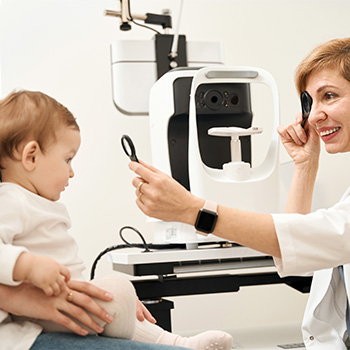
Eye examination in infants is performed by dilating the pupil and examining the anterior and posterior eye sections with the help of devices.

The first eye examination in a baby must be performed by an ophthalmologist in the newborn period. In this period, it is essential for the healthy development of vision that the path that the light, which we call the visual axis, follows to the visual layer behind the eye after entering the eye, is clear. Determining whether this path is anatomically clear and determining that all intraocular structures are anatomically normal is the basis of the newborn eye examination. Congenital drooping of the eyelid (congenital ptosis), mass formations that prevent the opening of the eyelid, congenital disorders of the transparent layer called the cornea, congenital cataracts, congenital diseases of the visual layer of the eye called the retina and the visual nerve (optic nerve), congenital high eye pressure are conditions that should be detected early in this period. The first examination should be performed by dilating the pupils of the baby with drops in order to perform a healthy newborn eye examination and to prevent congenital structural problems from being missed.

The second eye examination of the baby should be performed in the 6-8 month period and it should be evaluated whether the eyes move in coordination, the baby’s focusing and tracking of objects. The main purpose of the examination in this period is to have an idea about whether the baby’s visual function is developing in accordance with his/her age. The presence of strabismus in the eyes during this period will both prevent the development of depth perception and lead to laziness in later life as a result of the sliding eye not learning to focus and see. Early detection and treatment of strabismus is important in preventing vision loss. The presence of undetected refractive errors results in the inability of the eye to learn to see and the eye to remain lazy as a result of incomplete development of visual acuity. In every examination, the retina layer behind the eye should be evaluated by an ophthalmologist in terms of early childhood diseases.

October 2024