Hello Ms. Olmsted, could you introduce yourself to our readers and share the story of how you first entered the industry?
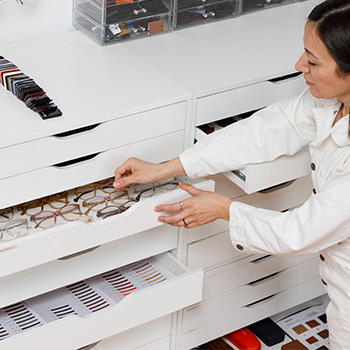
Hello, I’m Selin Olmsted and originally from Istanbul. I began my career as a menswear designer and worked in that field for over a decade before transitioning into eyewear. My path changed when I joined Warby Parker in New York—first as a freelancer, then full-time. There, I had the privilege of learning from Kenny Schwartz, co-founder of Oliver Peoples and an industry legend whose mentorship was invaluable. After nearly three years as a senior designer, I founded the first independent eyewear design studio in the U.S. Now celebrating its 10th year, our studio supports global eyewear brands with design, trend forecasting, product development, import, and production services.
How did Selin Olmsted Studio come to life, and on which core goals and values did you build your brand?
During my time at Warby Parker, I had the chance to attend Vision Expo East in New York, which opened my eyes to the creativity and originality of independent eyewear brands. Around that time, I also met Selima Salaun from Selima Optics, and our conversation really stuck with me. We talked about how the U.S. lacked formal eyewear design programs and local manufacturing, and how most designers—myself included—had entered the industry from other creative or optical fields almost by accident. It became clear that there was a gap: independent brands needed dedicated design support. That realization inspired me to launch Selin Olmsted Studio as the first independent eyewear design studio in the U.S.
What does eyewear design mean to you, and which elements most strongly influence your creativity?
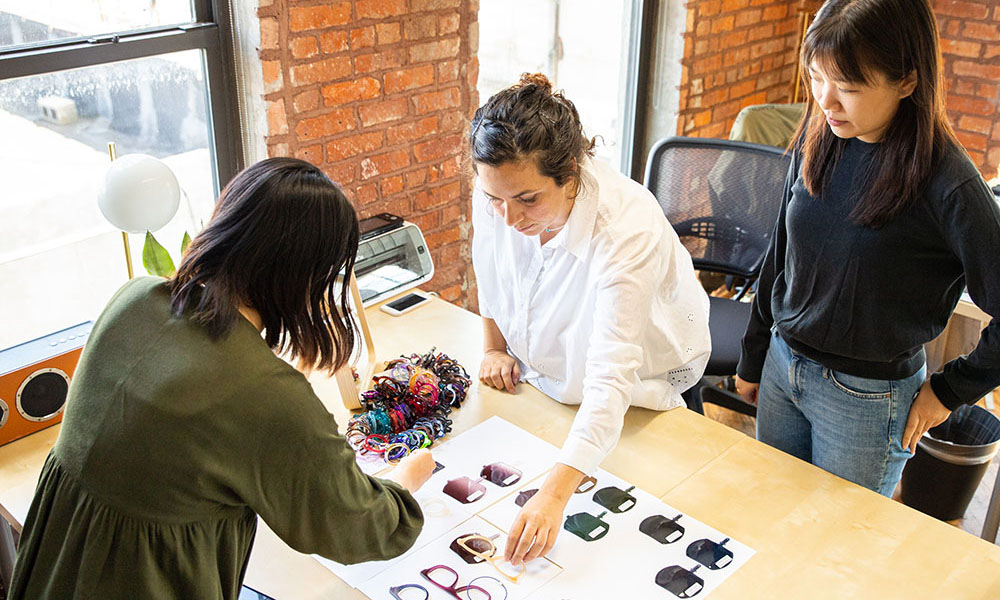
Eyewear design is more than a profession for me—it feels like my purpose. When I see someone wearing glasses on the street, I imagine how the shape and color suit them, and what other combinations could create something new and beautiful. Yes, it solves a medical need, but it is also a style statement we wear on the most visible part of our faces, often for 10–12 hours a day. That gives us, as designers, both responsibility and opportunity: eyewear must fit well, look great, and give confidence. Creatively, I enjoy blending different worlds into a single design—merging sport with lifestyle, sport with fashion, or reinterpreting the dandy aesthetic with a minimal, modern lens. I also love reimagining familiar shapes through unexpected materials, colors, or details. At the same time, I’m deeply inspired by advances in manufacturing. Refinements in tooling, innovations in CNC surfacing, and multi-color lamination techniques broaden the possibilities and move the process forward.
Do factors such as functionality, facial fit, and lightness limit the creative process in your view? How would you define your design Dna?
On the contrary, these factors ensure that creativity results in something both meaningful and wearable. For us, design means resolving every angle, radius, and surface with care. The front and temple must flow seamlessly, avoiding awkward transitions, so the eye perceives harmony. Every part of the frame—even the hidden details—deserves thoughtful attention. I love when subtle elements are discovered later by the wearer, creating a personal and genuine connection. When evaluating a design, I often remind my team: Would I spend my own hard-earned money on this? Would I feel confident wearing it on a date? These questions keep us honest. Our mission is to design eyewear that evokes emotion, instills confidence, and carries a touch of magic. We also prioritize delivering the highest perceived value at the intended retail price point. And when projects allow, we explore bio-friendly materials, advanced manufacturing techniques, and sustainable packaging—because today, design carries responsibility beyond aesthetics.
What are the main advantages and challenges of working with manufacturers based in Italy, Japan, and China?
Italian manufacturers offer advantages such as low minimum order quantities, flawless polishing and tumbling in acetate, and superior color applications in injection plastics. However, compared to China, they are more limited in production innovations. High mold costs remain a challenge in Italy, and the country’s more limited production capacity can sometimes lead to delays. Japanese manufacturers excel in titanium craftsmanship and attention to detail, as well as polishing and color variety in acetate, but long lead times and design restrictions can be challenging. Chinese manufacturers stand out for fast communication, innovation, and adaptability to our requests, though their minimum order quantities are higher compared to Italy and Japan, which can pose difficulties.
In your collaborations with prestigious brands, you maintain your unique design identity while reflecting each brand’s character. How do you achieve this balance, and are there any upcoming partnerships?
We always start by putting the brand’s identity and its customer at the center of the design process. When developing a front shape, temple, or color story, we ask ourselves repeatedly: Would this customer wear it? Would they want it? Would they purchase it? Sometimes we even create or reference visuals of the customer so we can picture them clearly and design with that person in mind. The brand’s Dna acts as our roadmap—it guides decisions, helps us edit, and ensures we’re staying true to their character while still bringing our design language forward. We recently wrapped up some exciting Spring/Summer 2026 sun eyewear styles for Raen’s collaborations with world-renowned surfers Mikey February and Coco Ho, set to launch in Q1 of 2026.
How do the concepts of sustainability and environmental responsibility influence your choice of materials? Which materials stand out in your collections?
A few years ago, several of our clients began shifting from standard materials to bio-acetate and bio-based nylons such as bio-TR90. That encouraged us to deepen our own research into sustainable material options and manufacturing techniques—not just for eyewear, but also for packaging. What we’ve found is promising: while many of these materials are not yet 100% bio-based (most are around 66%), ongoing R&D is steadily improving the ratios, and we expect fossil-fuel ingredients to be replaced bit by bit over time. One material we’re particularly excited about is CRT-Acetate (Acetate Renew), developed through Eastman’s patented molecular recycling technology. It transforms discarded plastics into virgin raw material for acetate production through molecular recycling, while still giving us access to the full range of traditional acetate colors. Beyond frames, we’re also inspired by bio-based /plant-based bonded fabrics for eyewear cases, which help extend the sustainability story into packaging.
Your models Kosmos and Myrtle are truly captivating. Could you share their key features and the details that excite you most?
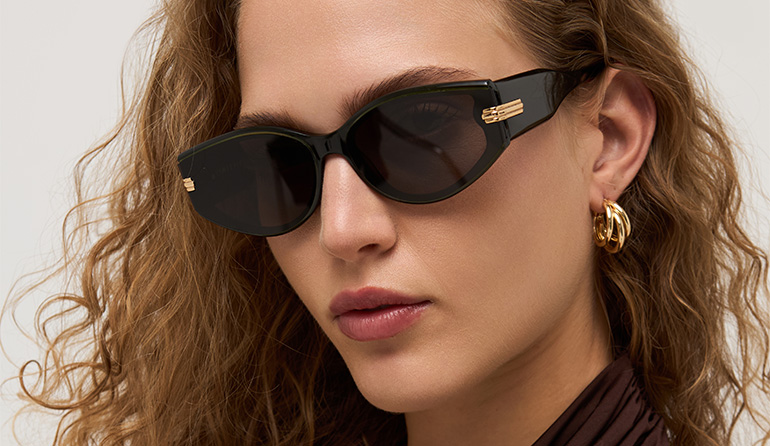
Kosmos and Myrtle were designed for Carla Colour, a New York-based independent fashion eyewear brand. Kosmos is a sculptural, futuristic bat-eye frame—bold, playful, and otherworldly. It was conceived to evoke the feeling of a cosmic journey, transforming how you see and how you are seen. Myrtle was inspired by Gena Rowlands’ unforgettable character in the 1977 cult film Opening Night. It’s an oversized geometric aviator with gold detailing, embracing pure drama and presence. Both are crafted from Italian eco-acetate and paired with bio-nylon lenses that provide 100% UVA/UVB protection. They come in cases made of the world’s first sustainable cactus leather-like fabric, along with 100% recycled cleaning cloths.
You present extensive and influential work on global eyewear trends. How do you prepare your Eyewear Trend Reports, and what are the key highlights you foresee for 2026?
Preparing our reports is a year-round process. We track inspiration from multiple sources—fashion runway shows, cultural movements, art, design, neighboring industries and material innovations—then filter them through the lens of eyewear. We also pay close attention to retail data and talk with industry partners to understand what’s moving in the market. The goal is to distill all of this into clear themes that not only inspire but also serve as a strategic foresight tool for brands. For 2026, we have identified several guiding themes: Sculptural, which focuses on bold architectural forms and frame structures that feel like wearable art; Sentimental, which leans into nostalgia, craft, and the imperfect beauty of handmade details; Punk Quotidien, which captures everyday rebellion with attitude, grit, and individuality; Ultralight, which emphasizes minimalism, lightness, and advanced comfort; and Surrealism, which takes eyewear into an otherworldly-like territory, playing with unexpected proportions, visual tricks, and a sense of the uncanny. When all these themes come together, we see the new year steering the industry toward eyewear that is more expressive, technically more innovative, and capable of forging a deeper emotional connection with the user
You have shared your expertise at many events, such as last year’s Silmo Istanbul Akademik. What are the main benefits of the rise in industry-specific education for the optical world?
Industry-specific education is one of the most important developments for the optical world right now. For so long, eyewear has been treated primarily as a medical device, but not always as a fashion accessory or style product. The rise of dedicated education helps bridge that gap. For optical store owners and opticians, education means gaining a deeper understanding of trends, product and material innovations, and customer behavior. This knowledge supports smarter decisions in retail. Just as importantly, it builds stronger connections with manufacturers and designers. For optical students and young designers, it shows that there is a real path in eyewear design as a career. It introduces them to the creative and technical sides of the field, helps them connect with industry players, and inspires them to bring fresh perspectives into the industry. For me personally, speaking at places like Silmo Istanbul Academik is about sharing knowledge but also planting that spark—because when education grows and connections are made, the whole industry advances together.
Silmo Istanbul Optical Fair will be held for the 12th time from Nov. 19–22, 2025. How would you assess its development and contributions to the industry?
Silmo Istanbul has grown into one of the most important platforms for the optical industry in the region. Over the years, it has expanded in both scale and influence, attracting not only Turkish professionals but also a steadily growing international audience. This creates a valuable meeting point where independent brands, distributors, major manufacturers, opticians, and designers can connect and exchange ideas. It provides visibility and opportunities for local and international brands and manufacturers to collaborate and expand into new markets, such as Turkiye, Eastern Europe, Middle East, Russia, Central Asia and North Africa.
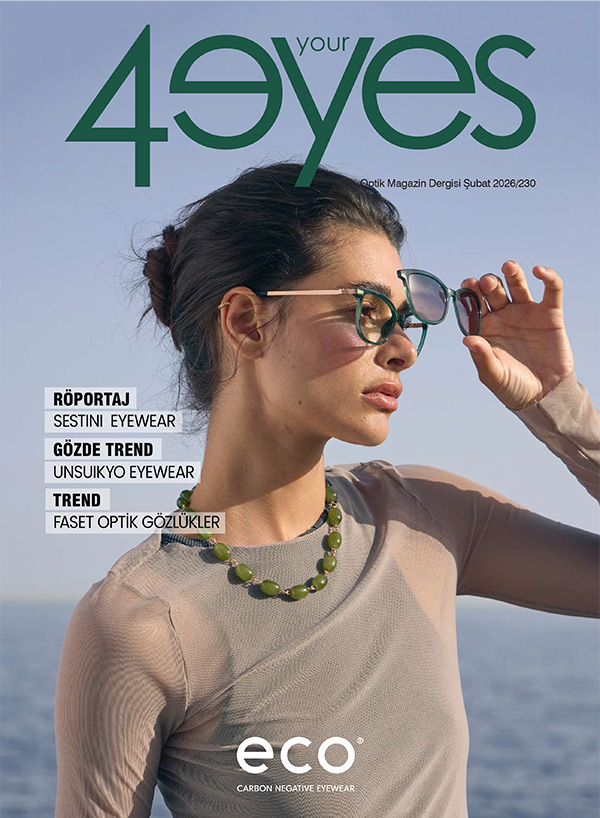
Thank you very much for this valuable interview. Lastly, we would appreciate your thoughts on our magazine, 4 your eyes.
Thank you—it’s an honor to be included. 4 your eyes plays an important role in Türkiye and neighboring countries by creating a platform that informs, inspires, and connects optical professionals. I truly value how you combine business insights with creative directions, giving readers a fuller view of where the industry is headed while showcasing new seasonal collections from both independent brands and major fashion houses. It’s a publication that makes a real contribution, and I’m delighted to be part of it.
September 2025