Sophisticated Lines
As one of the most recognized German fashion brands in the premium segment, Joop! continues to impress confident and style-conscious individuals.
Joop! is one of the most recognized German fashion brands in the premium segment, designed for design-savvy, confident men and women. Joop! stands for self-evident glamor and combines trend awareness with a touch of extravagance. The brand’s menswear and womenswear, bags and shoes, jewelry, watches, eyewear, bodywear, beachwear, hosiery and lifestyle products in the luxury segment impress fashionistas with their innovative designs, high-quality materials and craftsmanship. Since its establishment in the 1980s, Joop! has quickly become recognized for its timeless, sophisticated styles that appeal to fashion-conscious men and women of all ages.
Who is Wolfgang Joop?
Wolfgang Joop, born November 18, 1944, is a German fashion designer. He is the founder of the fashion and cosmetics company Joop! and the fashion brand Wunderkind. Joop was born in Potsdam to editor and writer Gerhard Joop and his wife Charlotte. He grew up on his grandparents’ farm in Bornstedt until his family moved to Braunschweig in 1954, when his father was hired as editor-in-chief of the cultural magazine Westermanns Monatshefte. After receiving his Abitur degree at the Wilhelm-Gymnasium in Braunschweig in 1964, Joop began studying advertising-psychology at the Braunschweig University of Technology in 1966, but did not finish. After leaving school, he worked as a restorer. In 1968, he began his studies in art education, which he also did not finish. Joop began his career in 1970, when he and his then wife Karin Benatzky entered a competition organized by the German women’s magazine Constanze and won three first prizes. This success gave him the chance to pursue a career as fashion editor at the Hamburg-based women’s magazine Neue Mode in 1970, but Wolfgang Joop resigned in 1971 and continued to work independently as a freelance journalist and designer. Joop achieved international success with his first fur collection in 1978. In 1985 he was invited as a guest lecturer in fashion design at the University of the Arts in Berlin. In 1987 he was awarded an honorary professorship.
German Fashion Spreads with Joop!
Joop was founded in 1986 by German fashion designer Wolfgang Joop as a designer label in Hamburg, Germany. Selling designer clothing under his own surname since 1981, Wolfgang Joop eventually built a successful licensing business offering luxury womenswear, menswear, childrenswear, accessories and homeware. Wolfgang Joop added an exclamation mark to the brand name to distinguish the brand from himself as a Creative Director. A second collection of denim and sportswear, Joop! Jeans was launched in 1988. In 1987, the company’s wide range of fragrances, launched in 1987, attracted the most attention. Unorthodox, the brand was also innovative in 1989 when it created the first pink fragrance for men, Joop! Homme, the first pink fragrance for men, in 1989, it was a real success, capable of opening new territories and breaking the rules. Joop! began to make a name for itself more and more for its seductiveness, its expressive attitude, its unique signature and the strong personality of its fragrances. Ethereal and eccentric, Joop! fragrances still today express the audacity of the unexpected.
In the mid-nineties, when Joop! fragrances were introduced to the American market, the menswear and womenswear collections were presented at New York Fashion Week and sold by American retailers such as Saks Fifth Avenue. In its early years, Joop presented leather clothing collections in Italy, and reintroduced leather to its collection in 1996, taking advantage of new processes that revolutionized the leather industry. Much lighter and easier to work with, the new leather allowed for color possibilities beyond the traditional black and brown. In 1998, Wolfgang Joop sold 95% of his shares in Joop! to an investor while remaining creative director of the brand. In 2001, Joop sold the remaining 5% and left the company. The holding company Wünsche AG of Hamburg, itself heavily in debt and unable to turn Joop! into a global player as planned, declared bankruptcy at the end of 2001. In 2003, Joop! was sold by the liquidator of Wünsche AG to three of the company’s former licensees in equal shares, with business units in apparel, accessories/leather and fragrance/cosmetics. In 2006, the fashion licensee, the Swiss-based Holy Fashion Group, paid the accessories/leather licensee Egana Goldpfeil and today owns the clothing and accessories segment of Joop. The fragrance and cosmetics segment remains with Coty in New York. Joop. Jeans and children’s wear collections were discontinued in the late 2000s but have recently been relaunched. The Holy Fashion Group, whose owners are the descendants and former owners of Hugo Boss, is based in Kreuzlingen, Switzerland. Joop, Joop! Collection and Joop! Casual labels, Joop offers contemporary womenswear and menswear as well as footwear and accessories, underwear under the Joop! Bodywear label, underwear, jewelry, watches under the Joop! Time label, watches, fragrances and Joop! Living in the world markets, primarily in Germany, Austria and Switzerland. The company has retail stores in Hamburg and Düsseldorf, an online shop and outlet stores. Joop! announced in 2020 that it will expand its men’s collection to the UK, aiming to double its revenues. The brand opened a showroom on Wapping Wall Street in London in 2020.
Wolfgang Joop’s Sense of Style
Joop’s design identity with exclamation mark is the hyperreal, hyperbolic badge of the designer. With his strong sense of personal identity and the projection of style, he has brought the American concept of the designer to Germany. Again and again, he appears charismatically, if a little too prominently, in his own images. Wolfgang Joop brilliantly understood the impulse of contemporary fashion marketing to personify and project. Often expressing his admiration for the work of American minimalists and marketing geniuses Donna Karan and Calvin Klein, Wolfgang Joop provides some certainty in the ambiguous realms of style. Joop’s statements on fashion tend towards populism, but his dressing is always on the rational side of democracy. After the fall of the Berlin Wall in 1989, the famous designer drew attention by naming a fragrance Joop! Berlin after the fall of the Berlin Wall in 1989. Fashion should not just be a blatant expression of money, it should be humorous and give dignity to the wearer, and among his greatest achievements are denim garments in the same optimistic spirit of American style and ready-to-wear populism. But Joop’s denim collections are beyond the norm. Differences in fit, size and style are at least the basis for tailoring and individualization. Joop’s principle is that the ready-to-wear customer, even in denim, should be served with a kind of customized distinction and satisfaction, again very much in keeping with the ethos of traditional American sportswear. Wolfgang Joop claims that jeans are the ‘alter ego of fashion’ and believes that jeans are part of everyday life. For this reason, the designer’s collections are both a choice for everyday wear and a fit for contemporary high style.
Joop! Eyewear
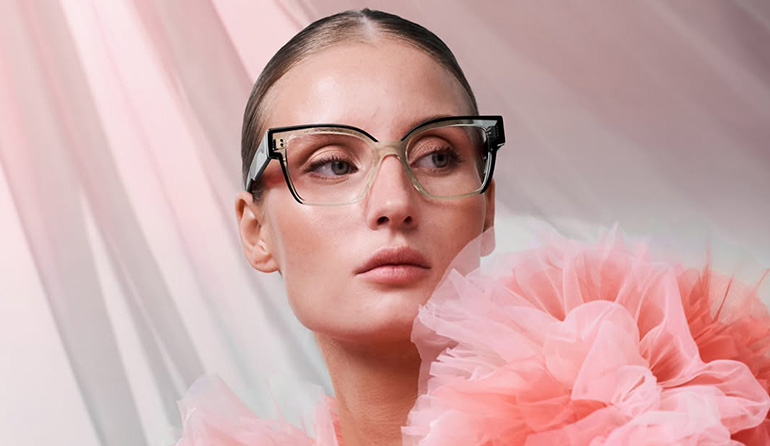
As one of the licensed brands in the portfolio of the Menrad Group, which is a German company with over 120 years of experience in the industry, Joop! Eyewear capitalizes on new trends each season with its collections, bringing a creative impetus to the market and offering highly stylish, wearable styles despite their exaggerated accents. Joop! Eyewear, urban worlds of color collide with a modern language of form and sophisticated designs. Eyewear models deliver a winning performance with versatility, expressiveness and originality. As a brand, Joop! is constantly striving to evolve. Setting out to combine sustainability and glamor, the brand has developed a strategy that benefits both the environment and customers, finding the answer to this question in the slogan ‘sustainability’. Sustainability is becoming an increasingly important issue in eyewear. Joop! Eyewear has recognized this need and started to set new standards. The German brand offers collections worthy of its international reputation for innovative, trend-setting design and high product quality. Joop! Eyewear strengthens this position with the Bio Acetate eyewear collection and becomes one of the first recognized premium brands in eyewear to focus on sustainability.
Joop! Eyewear first produced its prescription models from bio acetate in its Spring/Summer 2022 collection. With a focus on sustainability, materials that are biodegradable and thus have less impact on the environment during production and at the end of their life cycle. Joop Eyewear! uses partially recycled acetate as well as bio acetate, which differs from traditional acetate by its even higher content of natural substances. In addition, the brand uses environmentally friendly plasticizers derived from natural resources, ensuring that its products emit fewer greenhouse gases throughout their entire life cycle. The materials used in Joop! eyewear collections are biodegradable and Fsc® certified. Today, Joop! remains a leading player in the fashion industry. The brand’s timeless aesthetics and high-quality craftsmanship are appreciated by customers around the world. Joop! has a rich history built on the foundations of elegance, sophistication and timeless style. The brand’s commitment to quality and sustainability has helped it maintain its position as a leading luxury fashion brand.
Chronology:
1944: Wolfgang Joop was born in Germany.
1986: The Joop! brand was founded by Wolfgang Joop, based in Germany.
1988: The denim collections of Joop! Jeans label began to be offered to the public.
1989: Joop! Homme, a sophisticated perfume was presented.
1998: Wolfgang Joop and his business partner Joop! sold 95% of their shares to an investor, while Joop remained creative director of the brand.
2001: Wolfgang Joop sells the last 5% of his shares and leaves the Joop! brand.
2003: Joop. was sold by the liquidator of Wünsche AG to three of the company’s former licensees in equal shares, with the business units of clothing, accessories/leather and fragrance/cosmetics.
2006: Fashion licensee Switzerland-based Holy Fashion Group paid accessories/leather licensee Egana Goldpfeil and now owns Joop’s apparel and accessories segment.
2010: French model Patrick Petitjean appears in Joop! Fall/Winter 2010 campaign.
2014: Joop! 2014 Spring/Summer collection campaign featured famous models Vika Falileeva and Lars Burmeister.
2018: British model Edward Wilding was one of Joop! 2018 Fall/Winter collection and Joop! Jeans campaign.
2020: Joop! announces the expansion of its men’s collection to the UK, aiming to double revenues.
2024: New Joop! 2024 Spring/Summer Collection has been launched. The collection explores the picturesque color palette of the French Riviera. Vibrant colors and all shades of blue reflect the sea, sky and landscape, creating a bright, summery atmosphere.
July 2024