84 Years of American Quality

Coach shapes lifestyles with its brand story that blends American craftsmanship with a global vision, standing as a symbol of authentic and inclusive modern luxury.

Coach was born in 1941 under the name Gail Leather Products a humble Manhattan loft on 34th Street. At that time, this family-run business, where six artisans hand-stitched wallets and cardholders, was not yet a brand in the sense we understand today. But even in those early years, a philosophy based on craftsmanship, quality, and trust in well-made products was taking meaningful shape. In New York—a city synonymous with ambition and speed—Coach chose to move slowly and deliberately. Every wallet was hand-stitched. Every piece of leather was selected for its texture and durability. Every fold was intentional. This wasn’t just accessory production—it was about shaping permanence. At a time when American luxury had yet to be fully defined, Coach began forging its own identity—not by imitating Europe’s leading ateliers, but by drawing inspiration from a deeply American symbol: the baseball glove. Weathered, softened, familiar… the baseball glove became a symbol of lived-in luxury and the heart of Coach’s leather story. Coach’s early products, known for being soft, functional, and durable, embodied that same character. These were objects designed to be touched, used, and loved over time. In a quiet alley in New York, a tiny workshop quietly sparked a movement. Without logos or flash, it resonated with those who valued substance over show and integrity over trends. Even before it became a global brand, Coach was already living by a set of values that defined American modern luxury. Those values are still present in every collection—from bags to eyewear. That original Dna —raw, warm, and leather-scented —still beats at the heart of Coach. Coach didn’t just find a voice; it helped define modern American luxury.

The Heart of Leather and Craftsmanship
In 1946, Miles Cahn and his wife Lillian joined the enterprise, bringing leather‑working expertise and business savvy. Miles noticed how baseball‑glove leather softened with wear. He pioneered a tanning process that created durable yet responsive, richly colored leather-a signature “glove‑tanned” quality. Lillian influenced the transition into women’s handbags, recognizing an emerging demand. Their vision reshaped Coach from a niche workshop into a maker of timeless pieces. In 1961, the Cahns completed a leveraged buy‑out to take full control. That same year, Coach hired Bonnie Cashin-recognised as a trailblazing sportswear and accessory designer. Cashin reinvented Coach’s aesthetic: she introduced durable hardware like the iconic turnlock, side pockets, coin purses, vivid colors, and streamlined tote silhouettes. These innovations transformed Coach items into stylish essentials, firmly anchoring its reputation for functional elegance.

Expansion and Accessible Luxury
In the mid-1970s, Coach shifted its manufacturing to China while keeping design operations in New York. In 1979, with Lewis Frankfort becoming Vice President of Business Development, the brand evolved into a $6 million business. Coach opened its first standalone store on Madison Avenue in 1981. In 1985, the Cahn family sold Coach to Sara Lee for $30 million and chose to pursue goat farming and cheese production instead. Frankfort succeeded Miles Cahn in 1996 to become Ceo, bringing Coach to malls and retail chains across the country. In 1997, Ceo Frankfort appointed Reed Krakoff as Creative Director. Krakoff reshaped Coach’s image, making it lighter, more functional, and stylish. The brand went public in 2000 through Sara Lee and began trading as Coach, Inc. as of June that year.

Crisis and Rebirth
The 1990s and 2000s brought fierce competition from emerging, youth-oriented brands like Michael Kors and Kate Spade. Under Lewis Frankfort’s leadership, Coach prioritized volume and expansion, often at the expense of quality. As a result, the brand lost 30% of its market share and began to be seen as outdated and overly mass-market. Its discount and outlet strategies further eroded its brand value. While global sales had reached $600 million in 2001, by 2013 they had declined to $5 billion. That same year marked a turning point: Victor Luis was appointed President and Cco of Coach, becoming Ceo in 2014. In June 2013, Stuart Vevers took the reins as Creative Director, breathing new life into the brand. The British designer whose résumé included Loewe, Mulberry, Givenchy, and Calvin Klein-infused Coach with fresh energy. He brought back glove-tanned leather, introduced new silhouettes, and merged bold motifs with the brand’s heritage to connect with a modern global audience. Coach stores were redesigned, and discount strategies were reined in. In 2015, the brand unveiled its Coach 1941 luxury collection, reaffirming its commitment to quality, strength, and core values. That same year, Coach made a statement by naming Selena Gomez as global brand ambassador. The year 2017 marked the implementation of Coach’s global growth strategies, repositioning efforts, and brand identity renewal. In January 2017, Coach acquired Stuart Weitzman, followed by the acquisition of Kate Spade in May. In October, Coach changed its parent company name to Tapestry Inc., fully embracing its identity as a luxury lifestyle brand.

A New Era: Style, Sales, & Global Reach
Under the Tapestry umbrella, Coach has expanded beyond handbags into ready-to-wear, accessories, eyewear, fragrance, footwear, and watches. Still headquartered on 34th Street, where its original workshop was founded, Coach now operates approximately 986 stores worldwide. The brand’s rebirth—sparked in 2013 under CEO Victor Luis—has swiftly borne fruit through restructuring, strengthening, and a full transformation into a lifestyle brand. So much so that Coach’s fiscal 2025 revenue forecast has been raised to $6.95 billion. This financial outlook reflects the brand’s strong influence and popularity among Gen Z and millennial consumers. In the third quarter of the 2025 fiscal year, Coach’s sales rose by 15%, while its profit margin hit a record 79%. Viral products such as the Tabby and Brooklyn bags, and the now-iconic cherry bag charm on social media, helped drive a surge in young customers—who now make up 70% of new clientele. Craftsmanship, high-quality leather, and an elevated in-store experience continue to reinforce Coach’s artisanal image. Today, in its 84th year, Coach moves forward as a symbol of authentic and inclusive modern luxury—honoring American craftsmanship through a global lens.

Coach Eyewear
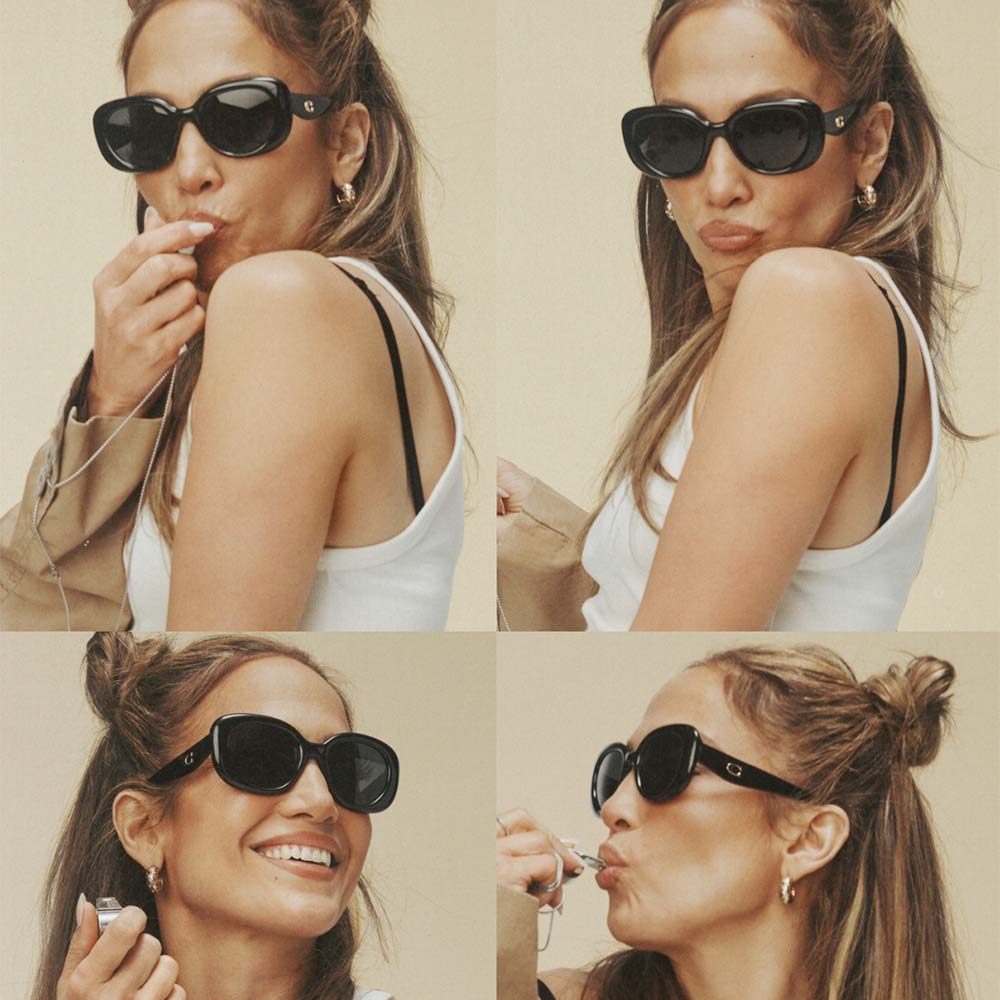
Offering a stylish perspective on modern luxury, Coach Eyewear expanded its accessory range with a global licensing agreement signed in January 2012 with eyewear giant Luxottica. This allowed the brand to bring its “American modern luxury” identity to high-quality optical and sun eyewear. In June 2021, the collaboration with EssilorLuxottica was renewed through mid-2026, with an option for extension. EssilorLuxottica’s unmatched manufacturing, lens technology, and global distribution amplify Coach’s ability to reach traditional and digital consumers, delivering brand consistency and premium quality across over 150 countries. Designer frames and sunglasses highlight Coach’s DNA: refined, functional, and instantly recognizable. Drawing from runway collections and Coach’s leather heritage, eyewear shapes range from classic cat-eyes with vintage nods to bold square rims that reflect contemporary confidence. Colors feature a balance between timeless neutrals—black, tortoise, burgundy—and seasonal accents like olive or pale blue. Hardware accents, such as metal inlays, laser engraving, and the iconic “Kissing C’s” buckle, echo Coach’s legacy of artisanal detail. Coach Eyewear stands at the intersection of heritage craftsmanship and contemporary relevance. It extends Coach’s lifestyle narrative—crafted, modern, inclusive—through a wearable accessory that adapts to a global customer’s day-to-night pace. This section perfectly complements the brand’s modern luxury repositioning under the Tapestry umbrella, offering not just style, but consistency, quality, and personality in every frame. The SS 2025 Coach Eyewear collection was introduced with refined silhouettes and sun-smart functionality. From oversized acetate sunglasses with gradient lenses to sleek metal frames blending retro elegance with lightweight wearability, the line emphasizes comfort and sophistication. These models feature advanced lens coatings—anti-reflective, scratch-resistant, and blue-light filters—underscoring Coach’s commitment to marrying style with daily-life utility. Shapes include elegant cat-eye, rounded pilot, and architectural browline styles, crafted to complement both fashion-forward and classic eye shapes.

Chronology
1941
Coach is born in a Manhattan loft as a family-run workshop producing small leather goods. The brand is inspired by the patina and durability of baseball gloves.

1961
Miles Cahn takes the lead and introduces the first Coach handbags, which quickly become synonymous with sturdy, understated luxury.

1979
Lew Frankfort joins Coach, paving the way for its transformation into a global fashion brand.

1985
Sara Lee Corporation acquires Coach, expanding its retail presence across the United States.

1996
Reinvention begins. Under Reed Krakoff’s creative direction, Coach reinvents its image, introducing bold accessories and contemporary silhouettes.

2000
Coach goes public on the New York Stock Exchange, symbolizing its growth into a major player in accessible luxury.

2001
Flagship store opens on Madison Avenue in New York, reflecting Coach’s elevated retail experience.

2008
The Coach Foundation was established, with a focus on empowering women and children.

2012
Coach signs global eyewear licensing deal with Luxottica, marking its entry into the eyewear industry with a focus on craftsmanship and style.

2014
Stuart Vevers becomes Creative Director, infusing the brand with a new spirit inspired by American pop culture and heritage.

2017
Coach rebrands its parent company as Tapestry Inc., joining Kate Spade and Stuart Weitzman under one luxury umbrella.

2021
Eyewear license with EssilorLuxottica is renewed through 2026, reaffirming Coach’s commitment to high-quality optical and sun collections.

2025
Spring/Summer 2025 Coach Eyewear Collection debuts, featuring sleek, playful, and elevated designs that celebrate versatility and individuality.

July 2025