Global Color Legend Turns 60!

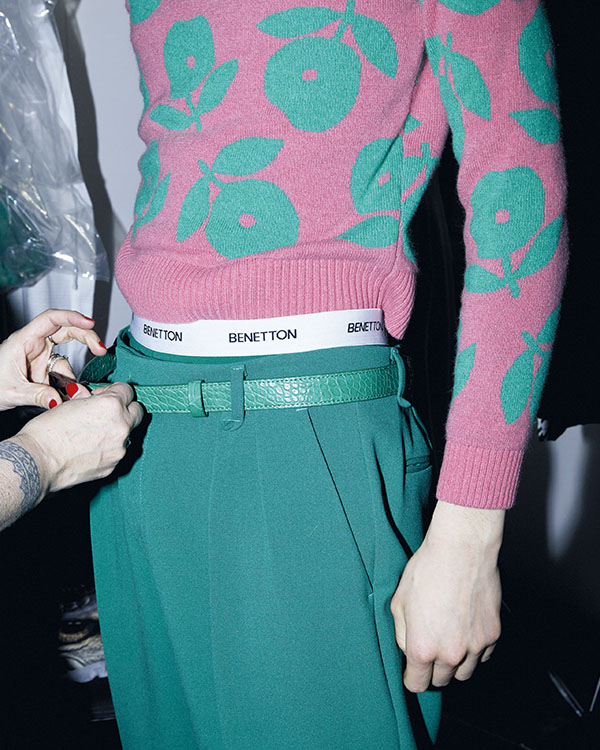
The story of four siblings from Treviso began with a hand-knit yellow sweater. For 60 years now,
Benetton has been uniting people through the universal language of color.

The story of Benetton is the tale of a family dream born in Treviso, Italy. When Luciano Benetton lost his father in 1945, at the age of only ten, the legacy he received was not wealth but the values of hard work and the understanding that he now carried the responsibility for his family. To support them, Luciano began selling newspapers on the streets while continuing his education. Despite the financial hardship, he cared for his two younger brothers and his little sister with affection and without letting them feel the weight of difficulties. His cheerful spirit and diligence made him a role model for his siblings even in those challenging years. By the 1960s, his sister Giuliana knitted him a yellow sweater to wear to work. The vivid color and impeccable craftsmanship of this handmade piece drew admiration everywhere he went, sparking a powerful idea in Luciano’s mind. He returned home convinced that Giuliana’s skill and his own business sense could be combined to create something meaningful for their family. The Benetton siblings, full of enthusiasm for the project, sold their accordion and bicycle to raise the amount of money they needed. Celebrating the strength of color, craftsmanship, and family bonds, the global fashion company now known for its brands United Colors of Benetton, Sisley, Undercolors of Benetton, Playlife, and Killer Loop was founded in 1965 with only modest capital.

Global Color Legend Grows
Even after selling their accordion and bicycle, they still needed 300,000 lire to buy a knitting machine. At that time Luciano was twenty, Giuliana was eighteen, and the two took out a loan to purchase one. They began selling their first collection in a small shop near their house and named it Très Jolie, meaning “very cute” in French. The Très Jolie collection included twenty sweaters—round neck, turtleneck, and V-neck—in bright shades ranging from yellow to blue and green. Although at first they sold only twenty sweaters a week, within four months they had paid off their loan. As the business grew, their younger brothers Carlo and Gilberto also joined them. By offering an alternative to the grey, black, and beige tones that dominated the market, the Benetton siblings created a fresh, sporty Italian style defined by vivid colors, soft textures, comfort, and elegance. With the opening of their first Paris store in 1969, Benetton gained momentum toward global expansion, and by 1978 it was exporting sixty percent of its production. The product range diversified, expanding from knitwear into polos, rugby shirts, cashmere sweaters, jackets, sweatshirts, hats, eyewear, and bags. The 1980s and 1990s marked Benetton’s rise among the world’s most iconic fashion brands. By 1989, its global presence had extended to Eastern Europe and the Soviet Union. Under the steady leadership of Luciano and his siblings, Benetton grew consistently, opening new stores worldwide and earning a prestigious place in international fashion scene. From the early 1990s, Benetton stood out not only for its Italian-made rainbow-colored collections but also for its bold advertising campaigns that gave visual voice to unsaid truths and addressed social issues. Some of these campaigns were praised, while others drew criticism, yet all became integral to Benetton’s identity. The early groundbreaking works signed by Creative Director Oliviero Toscani, who joined Benetton in 1982, transformed fashion into a tool of communication and created one of the most debated yet influential brand positions of the era. Like every major global fashion icon, Benetton too faced downturns and challenges throughout its sixty-year journey.

Transformations and Restructuring
The 2000s were a period of major transformation and restructuring for Benetton. As global fashion competition intensified, the brand focused on strengthening its production and distribution networks while preserving its universal identity. In 2003, the Benetton siblings stepped back from their executive roles yet continued to preserve the family spirit and sense of unity that defined their company. In 2012, when a majority share was acquired by Edizione, simplification and quality optimization became key priorities within Benetton’s production processes. The return of Luciano Benetton to the management in 2018 brought new energy and a renewed connection to the brand’s origins. When Massimo Renon took over as Ceo in 2020, he set a global vision focused on sustainable growth. That same year, the Green B program was launched, confirming Benetton’s commitment to environmental responsibility. Although 2023–2024 brought certain financial challenges, the restructuring process was carried out without harming the brand’s reputation. Under the leadership of the new Ceo Claudio Sforza, a strategy emphasizing operational efficiency and enhanced store experience was adopted. Today, Benetton applies the experience of more than half a century to reinterpret sustainability, diversity, and inclusivity in contemporary fashion. The brand continues to represent Italian creativity, the universal language of color that embraces all races, and the courage to renew itself with the same vibrant energy.

Uniting Differences with Colors
Since the mid-1980s, Benetton has followed a path that left a lasting mark on both fashion and social communication through its products and advertising campaigns. The brand’s vivid knit sweaters shone in the 1984-85 collections under the title All the Colours in the World, marking the first shift from pastel tones to strong neon contrasts. The 1989-90 Autumn/Winter season featured the Breastfeeding campaign, whose image of a Black woman nursing a white baby created a powerful global reaction. In the 1991 Autumn/Winter campaign titled Priest & Nun, a striking photograph of a priest and a nun kissing positioned the brand as a voice for social commentary as well as fashion. The 1992 Spring/Summer collection, through the Real Life / AIDS – David Kirby campaign, used the photograph of a real AIDS patient to confront the unseen realities of suffering and turned the brand’s message into a manifesto. In the 1993-94 season, Benetton shifted toward active ready-to-wear with the Rugby Colour Block collection, establishing the sportswear trend. By 1996, the Hearts campaign, featuring three pig hearts, once again drew the world’s attention with its provocative tone. That same year, Benetton stores around the globe were redesigned with the United Colours display celebrating youth and multiculturalism. The 1998 Spring/Summer collection Capsule Colours introduced limited-edition jackets and tracksuits in vivid hues, accented by logo bands and gradient zippers.

Strong Messages Continue
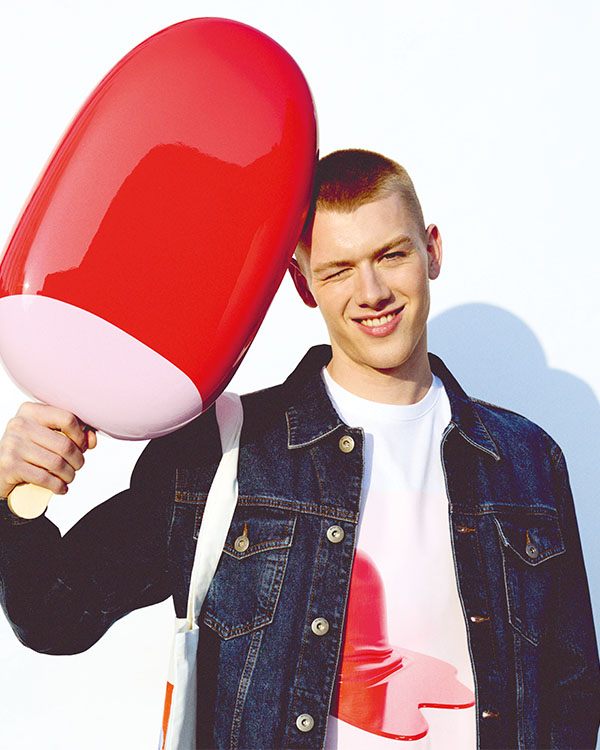
At the beginning of the 2000s, Benetton expanded into sports sponsorship by partnering with a Formula 1 team and reflected this collaboration in store displays through the Speed Colours concept. In its 2004 and 2005 collections, the brand used organic cotton for the first time, taking an early step toward sustainability. The 2008 Spring/Summer collection Denim & Colours moved beyond Benetton’s classic knitwear line, presenting bright color combinations in denim jackets and pants. In 2010, the Global Village campaign brought together models of different ethnic backgrounds, reinforcing the idea that “diversity under one color is beautiful.” The 2023-24 Autumn/Winter collection Circular Colours established the visual language of circular fashion design. With the 2024 Spring/Summer collection, Benetton reinterpreted the in-store experience by merging the physical and digital worlds through its social media campaign Colour Rebels, targeting a new generation of digital-native consumers.

Benetton Eyewear
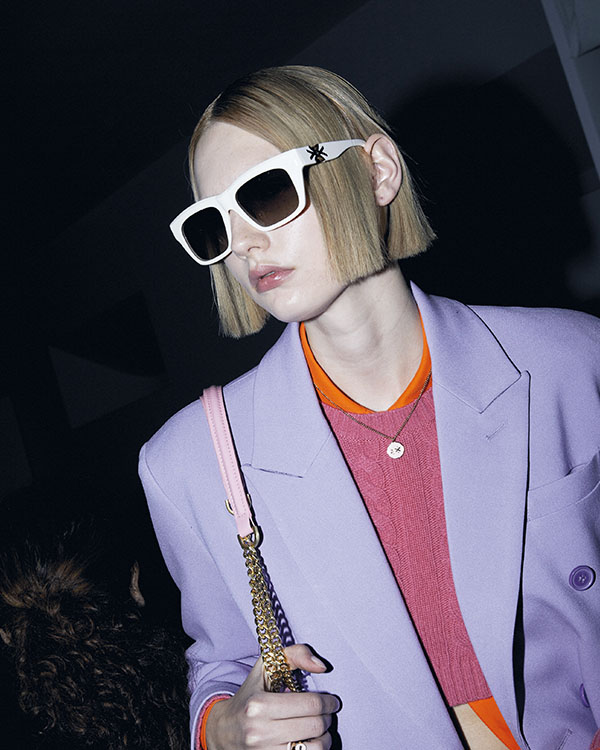
Symbolizing color and freedom, Benetton has carried its strong brand identity into the eyewear world with the same passion and confidence. Since its very first collections, Benetton Eyewear has reflected the diversity, inclusivity, and dynamism that define the brand’s fashion approach. Playful color combinations, contrasting details, and simple yet characterful silhouettes complete the energetic style that has become Benetton’s signature. Benetton signed its first global license agreement for the design, production, and worldwide distribution of optical and sunglass collections with Allison S.p.A. in 2006. After Allison underwent structural changes and adopted the name AVM 1959 in 2015, the collaboration was renewed for two additional years. In September 2017, Benetton announced a new global license agreement with Mondottica International, continuing the design, production, and distribution of its optical and sunglass collections. The first result of this ongoing collaboration was the Spring/Summer 2018 eyewear collection. Since that debut, Benetton Eyewear under the Mondottica umbrella has maintained its philosophy of making fashion accessible and fun for everyone while enhancing its technical quality. The collections stand out with vivid acetate surfaces, transparent color transitions, and minimalist metal frames. The design language is always simple yet positive, while the bold use of color remains the most recognizable part of Benetton’s Dna. Both in optical and sunglass lines, Benetton Eyewear follows a youthful, dynamic, and urban aesthetic, treating eyewear not only as a fashion accessory but also as an expression of attitude. Today, across all collections for adults and children alike, Benetton Eyewear continues to charm wearers of every age with a warm and genuine approach that translates the colorful spirit of the brand’s Dna into timeless eyewear forms.

CHRONOLOGY

1965
Benetton was founded by Luciano, Giuliana, Carlo, and Gilberto Benetton.

1974
The Sisley brand was added to the portfolio.

1982
The first Benetton store opened in Tokyo.

1992
The AIDS-themed Toscani campaign marked the beginning of Benetton’s social communication language.

1997
Entry into the sportswear segment with the Playlife brand.

2006
First global eyewear license agreement signed with Allison S.p.A.

2017
New global eyewear license agreement signed with Mondottica International.

2020
Launch of the Green B sustainability strategy.

2025
Benetton celebrates the 60th anniversary of its story built on color, diversity, and responsibility.

November 2025