







Early Signs of Heart Disease May Appear in the Eyes
Although heart disease is commonly associated with symptoms such as chest pain, shortness of breath and palpitations, experts say the eyes may also provide important clues about cardiovascular health.
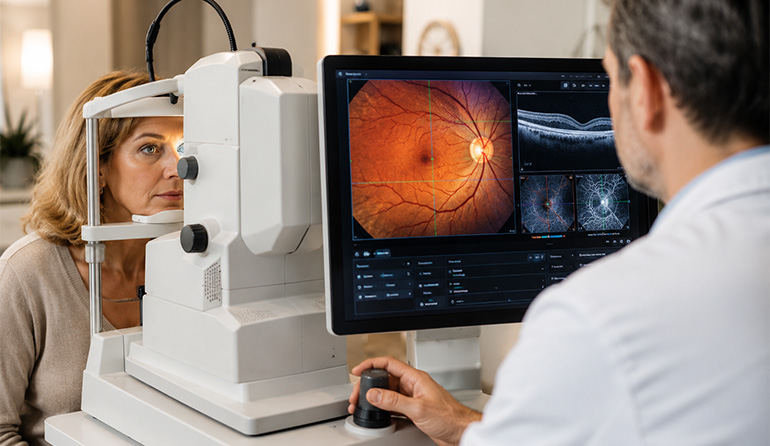
Each year, nearly 17 million people worldwide die from cardiovascular diseases, making early diagnosis increasingly important. Recent studies suggest that comprehensive eye examinations can reveal not only vision problems but also early signs of cardiovascular disease before symptoms develop. In particular, retinal imaging with Optical Coherence Tomography (OCT) provides valuable information about the circulatory system by examining the retinal blood vessels at the micron level. Research has shown that microscopic retinal ischemic perivascular lesions, which develop when the eye does not receive sufficient blood and oxygen, are found more frequently in individuals with heart disease. These findings provide further evidence of the close relationship between cardiovascular health and retinal health.
For this reason, ophthalmologists may detect early signs of systemic conditions such as hypertension, high cholesterol, diabetes, atherosclerosis and an increased risk of stroke during routine eye examinations, in addition to diagnosing eye diseases. In a U.S. study, OCT images from 84 people with heart disease were compared with those of 76 healthy individuals. The results showed that retinal ischemic lesions were significantly more common in patients with heart disease. Researchers believe these findings suggest that eye examinations could become a valuable complementary screening tool for assessing cardiovascular risk in the future. Regular eye examinations are particularly important for people with a family history of heart disease, hypertension or diabetes, as well as for those over the age of 40. Sometimes, the heart’s first warning sign may appear not in the chest, but in the retina, the deepest layer of the eye.
August 2026